

 ENG
ENG
 English
 Español
Home / News / Industry News / Are Safety Razors Better for Sensitive Skin? An OEM Blade Maker Explains
Message Feedback

Industry News
Sep 21,2026
Are Safety Razors Better for Sensitive Skin? An OEM Blade Maker Explains
Ask a room full of people with reactive skin whether they should switch to a safety razor, and you will hear confident but contradictory answers. We have been manufacturing razor blades in Shanghai since 1997, so we tend to look at this question from the edge of the blade outward. The honest answer is that a safety razor is often better for sensitive skin, but only when three things line up: one sharp edge, a light hand, and a blade that keeps its geometry instead of tugging. When those three align, the improvement is real and repeatable. When one of them is missing, people blame the razor for something the blade or the technique caused.
Content
- 1 The Short Answer, Without the Marketing Spin
- 2 Why a Single Blade Often Irritates Less
- 3 What Sensitive Skin Is Usually Reacting To
- 4 The Blade Itself Does Most of the Work
- 5 Cartridge vs Safety Razor: A Straight Comparison
- 6 When a Safety Razor Makes Irritation Worse
- 7 Building a Gentle Set-Up Around Your Skin
- 8 Beyond the Jawline: Brows, Legs and Travel
- 9 A Routine for Reactive Skin
- 10 What Brand Owners Should Ask Before Sourcing
- 11 The Bottom Line
The Short Answer, Without the Marketing Spin
A safety razor holds a single exposed edge. Because only one edge meets the skin at any moment, there is less friction, less scraping and far less chance that hair is pulled before it is cut. Cartridge razors answer that problem with lubricating strips, pivoting heads and multiple blades, which is genuine engineering rather than a gimmick. The trade-off is that the first edge in a stack tends to lift the hair so a following edge can cut it slightly below the surface. For skin that reacts to friction, that design is a compromise, not a free upgrade.
It also does not mean that every safety razor is automatically gentle. Blade gap, blade exposure and comb shape vary enormously between models. A mild razor paired with a rough blade will still irritate a sensitive face, which is why we usually tell people to think about the edge first and the handle second.
Why a Single Blade Often Irritates Less
Fewer edges, less scraping
Irritation is usually cumulative. Each additional edge dragging across the same patch of skin adds a little more abrasion. One well-aligned edge removes hair at skin level in a single clean cut, so the skin is asked to tolerate less.
No tug and pull
A dull or poorly coated blade grips hair before it slices it. That pulling sensation is what many people describe as razor burn waiting to happen, and it is felt most on the neck, jawline and bikini line. A sharp edge with a smooth coating cuts without that resistance.
Cleaner rinsing, less buildup
A single blade is easy to rinse clear. Cartridges pack cut hair, shaving cream and dead skin cells between their edges, where they can sit against the skin on the next stroke. Anywhere debris collects, bacteria collect with it, and reactive skin notices.
What Sensitive Skin Is Usually Reacting To
Sensitive skin after shaving typically shows up as redness, warmth, tightness, small bumps or ingrown hairs. The razor is only one suspect. Fragranced gels, alcohol-heavy aftershaves, very hot water, dry shaving and shaving over unprotected skin all produce the same result. If irritation is persistent, painful or spreading, that is a conversation for a dermatologist rather than a product page. But if the reaction appears mostly along the path of the razor, friction and edge quality deserve a closer look before anything else.
The Blade Itself Does Most of the Work
In our own production, four variables decide how a blade behaves on delicate skin: the grade of stainless steel, the sharpening angle, the consistency of the edge along its full length, and the coating applied afterwards. A blade sharpened to an inconsistent angle will feel rough in some spots and skip in others, which pushes the shaver into extra pressure and extra passes. Coatings matter just as much. We invest in magnetron sputtering equipment and apply nano-chromium and PTFE-based layers so the edge glides instead of grabbing, which is exactly what a reactive face needs.
For background on how these choices change the shaving experience, this look at blade quality and sensitive skin is worth reading before you buy anything new.
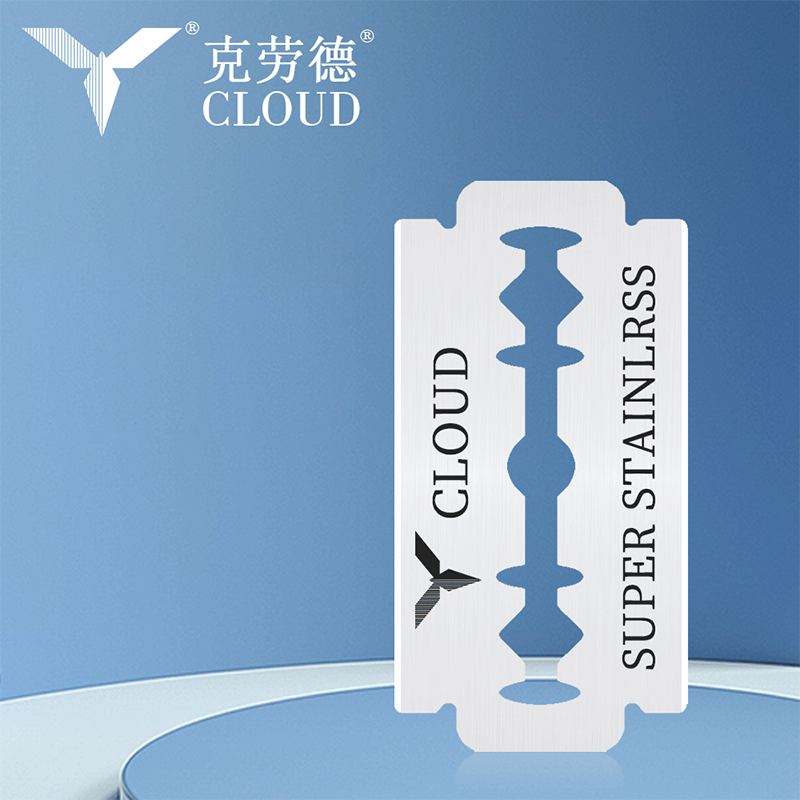 Super Steel 74 Blades Double Edge Razor BladesThe Super Steel 74 Blades Double Edge Razor Blades by Cloud are precision-engineered for exceptional sharpness, durability, and performance. Each blade features a fine...View Product →
A double edge blade such as our Super Steel 74 is a good example of the principle in practice: a consistent, evenly ground edge that lets a shaver use the weight of the razor instead of muscle.
Cartridge vs Safety Razor: A Straight Comparison
| Factor | Cartridge razor | Single-blade safety razor |
|---|---|---|
| Edges per stroke | Two to five | One |
| Skin contact | Multiple edges plus a lubricating strip | One edge, minimal surface area |
| Pressure needed | Often pressed to make the head work | Almost none; head weight is enough |
| Clogging and rinsing | Debris trapped between blades | Rinses clear in seconds |
| Cost per shave | Higher, with frequent head replacement | Lower, blades replaced more often |
| Learning curve | Short | Steeper for the first few weeks |
When a Safety Razor Makes Irritation Worse
We hear these complaints constantly from first-time safety razor users, and almost all of them come down to technique rather than equipment.
- Pressing down as if the razor were a cartridge, which turns a gentle edge into a scraper.
- Holding the head at the wrong angle, so the blade scrapes instead of slicing.
- Shaving against the grain on the very first pass, before the skin has adapted.
- Keeping a blade long past its useful life, when it starts tugging.
- Shaving dry or with too little lather, leaving the edge to drag unprotected.
- Chasing a perfectly smooth result with repeated touch-up strokes in the same spot.
Change those six habits and the same razor usually stops being a suspect.
Building a Gentle Set-Up Around Your Skin
A mild, closed-comb razor with moderate blade exposure suits most reactive faces. Heavier handles help, because the extra weight encourages a lighter hand, and twist-to-open designs make blade loading safer and simpler for anyone who has cut a fingertip on a wrapped blade.
 74 Stainless Steel Double Edge Twist Open T-Shaped Manual Razor74 Stainless Steel Double Edge Twist Open T-Shaped Razor Handle is available in three standard sizes to suit various preferences—basic, enhanced, and extended handle v...View Product →
Pair a handle like that with a blade you trust, start with one pass with the grain, and give your skin two weeks to adjust before deciding whether safety razors are right for you.
Beyond the Jawline: Brows, Legs and Travel
Sensitive skin is not limited to faces. Underarms, legs and the brow area all react to friction, and they benefit from the same logic: one small, controlled edge beats a wide, multi-blade head that forces the wrist into awkward angles. For eyebrow shaping in particular, a narrow blade gives far better visibility and control, which is why so many people still prefer a simple brow tool over anything electric.
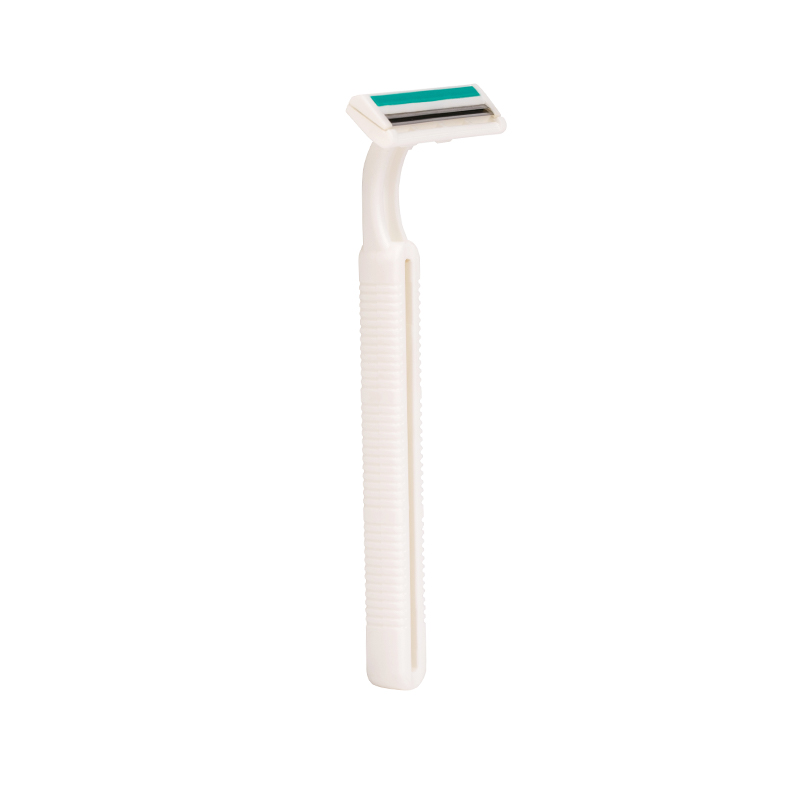 Reusable Razor Female For Sensitive SkinThe Cloud Reusable Razor Female For Sensitive Skin features a dual-blade system designed for efficient and effective shaving. The two layers of blades are evenly distr...View Product →
For body shaving on reactive skin, look for a reusable razor with a rounded head and an easy-rinse design, keep strokes short, and never shave over the same area twice without fresh lather.
A Routine for Reactive Skin
- Soften the hair with warm water for two to three minutes in the shower or bath.
- Cleanse gently, then apply a slick, fragrance-free shaving cream and let it sit for thirty seconds.
- Shave with the grain on the first pass, using the weight of the razor rather than pressure.
- Rinse the blade after every few strokes so it never drags debris back across the skin.
- Rinse with lukewarm water, pat dry with a clean towel, and skip alcohol-based products.
- Finish with a calming, fragrance-free balm while the skin is still slightly damp.
- Replace the blade at the first sign of tugging, not on a fixed calendar date.
What Brand Owners Should Ask Before Sourcing
If you are developing a product line aimed at sensitive skin, the questions are different from a consumer's. You need consistency batch after batch, documented edge inspection, coating uniformity, and a manufacturing partner who understands why a blade that feels aggressive in January must not feel milder in June. As an OEM and ODM blade manufacturer with eight automated lines and an ISO 9001 based quality system, we spend most of our conversations on exactly those points.
Our frequently asked questions cover the practical side of ordering, sampling and customization if you would like to dig deeper.
The Bottom Line
For most people with sensitive skin, a safety razor is the better instrument, because one controlled edge creates less friction than several edges working at once. It is not magic, though. Pair a mild razor with a well-coated, evenly sharpened blade, keep your angle honest and your pressure light, and the difference shows up within a couple of weeks. Industries like ours exist to make that blade, and we have found over the years that the best shave is rarely about how many edges you own. It is about how well one of them is made.
Related Products
Looking for a Reliable Blade?
Work with a Manufacturer.
Inquiry Us Now

-
 +86-400 9915 887
 -
 +86-021-57644936
 -
 [email protected]
 -
 No. 2066, Yushu Road, Songjiang District, Shanghai, China
QUICK LINKS
 Home
HomePRODUCTS
QR CODE
Copyright © 2025 Shanghai Cloud Blade Manufacturing Co., Ltd. All rights reserved.
 Custom Double Razor Blade Factory
