

 ENG
ENG
 English
 Español
Home / News / Industry News / Are Safety Razors Dangerous? The Truth About Cuts, Skin, and Safe Shaving
Message Feedback

Industry News
Sep 28,2026
Are Safety Razors Dangerous? The Truth About Cuts, Skin, and Safe Shaving
If you have ever watched someone snap a double edge blade in half with bare fingers, you have probably wondered how anyone shaves with one of these on purpose. It is one of the most common questions we hear, and after nearly three decades of manufacturing razor blades in Shanghai, we are glad people ask it.
The short answer: a safety razor is sharp, and anything sharp deserves respect, but "dangerous" is the wrong word for a well made razor used with reasonable care. The injuries we hear about rarely come from the razor design itself. They come from technique, blade condition, and skin that was already irritated before the razor touched it.
Content
- 1 The Short Answer: Sharp Is Not the Same as Dangerous
- 2 Why It Is Called a Safety Razor
- 3 The Real Risks and What Causes Them
- 4 Safety Razor Versus Cartridge Razor: Which Cuts More Often?
- 5 Blade Quality and Consistency: A View From the Factory Floor
- 6 A Practical Safety Checklist for New Users
- 7 Who Should Take Extra Care With Any Blade
- 8 Choosing a Safer Setup
- 9 Final Thoughts: Respect the Blade, Not Fear It
The Short Answer: Sharp Is Not the Same as Dangerous
Any blade that cuts hair at skin level can also cut skin. That is true of a safety razor, a cartridge razor, an eyebrow razor, and every surgical blade that leaves our production line. What changes is the level of risk, and that risk is governed by three things:
- Blade exposure: how far the cutting edge extends past the guard and cap.
- Pressure and angle: how hard you press and how steeply you hold the head against your skin.
- Edge consistency: whether the blade is evenly sharpened and coated, or whether it drags and skips.
Safety razors score well on the first point. The guard limits how deep the blade can sink, so a momentary mistake usually leaves a small nick rather than a serious cut. The second point is entirely in your hands. The third is where manufacturing quality stops being a comfort issue and becomes a safety issue.
Why It Is Called a Safety Razor
The name is not marketing. It comes from the guard, the bar or comb that sits directly under the cutting edge. Before guarded razors became standard, a straight razor offered no barrier between a long edge and your skin. The safety design wrapped that edge in a rigid head and left only a thin strip of steel in contact with the face.
How the Guard Works
The guard stretches the skin slightly ahead of the stroke and physically stops the blade from sinking below a set depth. The cap above the blade controls the angle at which the edge meets the hair. Together they turn a very sharp object into a tool with predictable behavior.
Aggressiveness Is Not the Same as Danger
An aggressive head has more blade exposure and a wider gap, so it removes more hair per pass but forgives less error. Beginners usually do better with a mild head, while experienced shavers may find that a very mild razor forces extra passes, and extra passes cause irritation of their own. For the full picture of head geometry, our team has written a detailed guide to safety razor design and materials.
The Real Risks and What Causes Them
Most reported problems are minor and settle within a few days, but they are worth understanding. The table below summarizes what we see most often.
| Problem | Typical cause | Practical fix |
|---|---|---|
| Nicks and weepers | Too much pressure, or a dull blade that tugs | Let the razor's weight do the work and replace the blade every three to seven shaves |
| Razor burn | Steep blade angle, too many passes, thin lather | Keep the head shallow, limit passes, and build a slick lather |
| Ingrown hairs | Cutting hair far below the skin surface | Shave with the grain first and avoid pulling the skin tight |
| Cuts from a loose blade | Blade not seated evenly in the head | Check alignment and tighten twist-to-open and three-piece heads fully |
| Irritation or infection | Damp blade stored in a closed, humid space | Rinse, shake, and air dry the blade after each shave, and never share a razor |
| Cuts around brows and lips | A long blade used in narrow, curved areas | Switch to a short single edge or eyebrow blade and keep the guard flat on the skin |
Notice how few of these rows describe a razor failing. They describe a shaver, a blade, or a routine that needs adjusting.
Safety Razor Versus Cartridge Razor: Which Cuts More Often?
This is the fairest version of the question, and the honest answer is that no one keeps a reliable injury registry that separates razor types. What we can say from manufacturing experience is that the two designs fail in different ways.
- A cartridge razor is forgiving. The pivoting head and lubrication strip reduce the consequences of a bad angle, which is why many people can use one half asleep.
- A cartridge razor is not automatically gentler on skin. Several blades pulled at once can tug hair and cut below the surface, which is a common route to razor bumps.
- A safety razor exposes one edge, so each stroke is closer to a single clean cut, and many users find this reduces irritation once the technique settles.
- A safety razor has a learning curve. The first two or three shaves are the riskiest, and that is exactly when people press too hard.
Blade Quality and Consistency: A View From the Factory Floor
This is the part of the conversation we know best. Consistent sharpness is a safety feature. A blade that glides smoothly needs almost no pressure, and a blade that drags invites you to press harder, which is how most nicks happen.
Our plant in Songjiang, Shanghai, runs eight automated production lines and produces around 300 million blades a year. After the edge is ground, it passes through magnetron sputtering, where nano chromium and chromium nitride alloys are deposited onto the steel, followed by a polymer coating on the very tip. Those layers reduce friction, protect against corrosion, and keep the edge sharp for longer, so you are not fighting a tired blade halfway through a pass. The whole process is managed under an ISO 9001 quality system with automated inspection at the end of the line.
If you are buying blades in bulk or sourcing them for a private label program, ask about edge consistency and coating rather than price alone. A batch that varies from blade to blade is exactly the kind of inconsistency that shows up as irritation on your customers' faces.
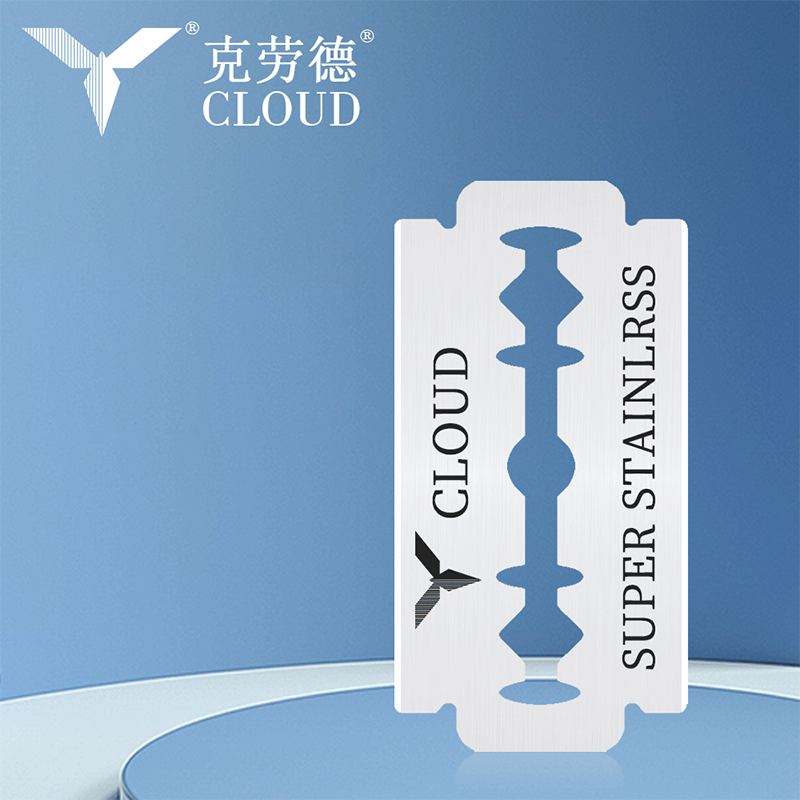 Super Steel 74 Blades Double Edge Razor BladesThe Super Steel 74 Blades Double Edge Razor Blades by Cloud are precision-engineered for exceptional sharpness, durability, and performance. Each blade features a fine...View Product →
A Practical Safety Checklist for New Users
- Shave after a warm shower, or hold a warm towel against your face for a minute to soften the hair.
- Apply a slick lather and give it thirty seconds to work before the first stroke.
- Set the angle by laying the cap flat on your skin, then tilting the handle down until the blade just begins to engage, roughly thirty degrees.
- Use no downward pressure. Guide the razor, do not push it.
- Take short strokes and rinse the head often so cut hair does not clog the guard.
- Start with one pass with the grain. Add a second pass across the grain only if your skin tolerates it.
- Rinse with cool water, pat dry, and apply a fragrance-free balm or moisturizer.
- Dry the blade after use and replace it as soon as it starts to tug, rather than waiting for a calendar date.
Who Should Take Extra Care With Any Blade
Sharpness is not the only variable. Some skin types and some medical situations raise the consequences of even a small cut:
- People taking blood thinners, or living with a clotting disorder.
- Anyone with active acne, open lesions, or freshly exfoliated skin.
- People in the middle of an eczema or psoriasis flare.
- Users with very reactive skin who have reacted badly to blades before.
- Travellers sharing a razor, which is a hygiene problem rather than a sharpness problem.
- Anyone shaping eyebrows or removing upper lip hair, where the blade sits close to the eye and a short guarded tool matters more than a long one.
If you have a diagnosed skin condition or a bleeding disorder, ask a dermatologist or clinician before changing your grooming routine. For everyone else, the risk of a safety razor is closer to the risk of a kitchen knife: real, manageable, and mostly a matter of paying attention.
Choosing a Safer Setup
Start With a Mild Head and a Stable Handle
A short, well balanced handle gives you more control than a long plastic one, and control is what keeps the blade angle steady. Twist-to-open and three-piece designs are easy to inspect, which matters, because a blade that is not seated correctly is one of the few genuinely design-related hazards.
 74 Stainless Steel Double Edge Twist Open T-Shaped Manual Razor74 Stainless Steel Double Edge Twist Open T-Shaped Razor Handle is available in three standard sizes to suit various preferences—basic, enhanced, and extended handle v...View Product →
Consider Single Edge Blades for Tight Areas
Single edge blades present one shorter cutting edge instead of two, which makes them easier to control along the jawline, behind the ears, and anywhere the skin curves sharply. They are also the format used for barbering and medical prep, where a steady edge matters more than speed.
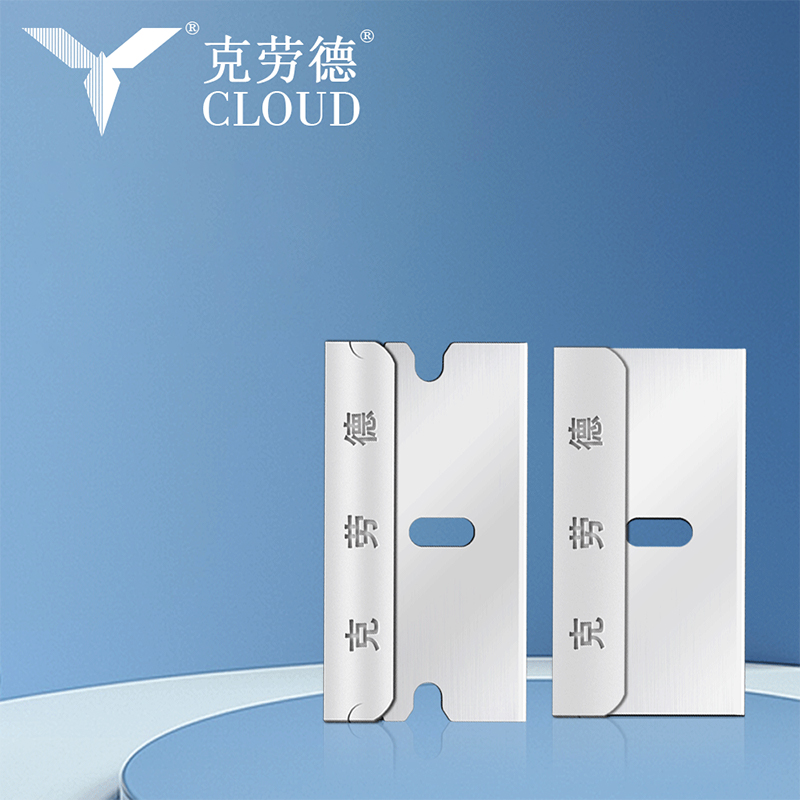 Multipurpose Single Edge Safety Razor BladesCloud’s Multipurpose Single Edge Safety Razor Blades are expertly engineered to deliver reliable cutting performance across a wide range of applications. Whether used ...View Product →
Match the Blade to the Job
Short guarded blades for brows and facial detail, standard double edge blades for a full face shave, and heavier single edge blades for barbering or clinical preparation. Reaching for a full length blade to tidy your eyebrows is one of the most avoidable mistakes we hear about.
Final Thoughts: Respect the Blade, Not Fear It
So, are safety razors dangerous? They are as dangerous as any well designed cutting tool, which is to say not very, provided you keep the head tight, the blade clean, the pressure light, and your expectations patient for the first week. The myth of danger survives mostly because a safety razor looks more serious than a plastic cartridge. In practice, that seriousness is what makes people slow down and shave properly, and a careful shave is a safe shave.
If you are sourcing blades for a brand or a retail range and want to talk through coatings, edge angles, and consistency testing, our team is happy to help. You can also browse our frequently asked questions for quick answers on blade handling, storage, and selection.
Related Products
Looking for a Reliable Blade?
Work with a Manufacturer.
Inquiry Us Now

-
 +86-400 9915 887
 -
 +86-021-57644936
 -
 [email protected]
 -
 No. 2066, Yushu Road, Songjiang District, Shanghai, China
QUICK LINKS
 Home
HomePRODUCTS
QR CODE
Copyright © 2025 Shanghai Cloud Blade Manufacturing Co., Ltd. All rights reserved.
 Custom Double Razor Blade Factory
