

 ENG
ENG
 English
 Español
Home / News / Industry News / Manual Disposable Razor for Sensitive Skin: Why Blade Quality Changes Everything
Message Feedback

Industry News
Jun 04,2026
Manual Disposable Razor for Sensitive Skin: Why Blade Quality Changes Everything
Most people choose a manual disposable razor based on price and packaging. Few think about what the blade is actually made of — until their skin starts reacting. Redness, razor burn, and persistent irritation are rarely caused by shaving technique alone. More often, they trace back to blade quality: the steel, the edge geometry, and what's coating that edge before it contacts your skin.
This guide breaks down what separates a razor that genuinely works from one that merely looks the part, with a particular focus on manual disposable razors for men and women designed for comfort and longevity — including the reusable options that are quietly changing how the category is defined.
Content
- 1 Why the Blade Material in a Manual Disposable Razor Matters
- 2 The Hidden Cost of Cheap Disposable Razors
- 3 What Makes a Razor Truly Suitable for Sensitive Skin
- 4 Reusable vs. Disposable: Finding the Right Balance
- 5 How to Choose the Right Manual Razor for Your Needs
- 6 Cloud Blade's Manufacturing Approach to Quality and Sustainability
Why the Blade Material in a Manual Disposable Razor Matters
Steel is not a uniform commodity. The grade of stainless steel used in a razor blade directly determines how sharp the edge can be ground, how long it holds that sharpness, and how resistant it is to the micro-corrosion that happens every time a wet blade sits between uses.
High-quality blade steel — particularly imported cold-rolled stainless steel with controlled carbon content — allows manufacturers to grind edges down to angles below 20 degrees while maintaining structural integrity. Lower-grade steel chips or bends at those geometries, producing a blade that starts sharp but degrades within the first few strokes.
Coating technology compounds this effect. A precision-ground blade coated with chromium, ammoniated chromium alloy, and Teflon performs fundamentally differently from an uncoated or single-coated alternative. Chromium resists corrosion at the molecular level. The alloy coating reinforces the edge against mechanical stress. Teflon reduces friction between blade and skin — meaning the razor glides rather than drags, which is the single most important variable for users with sensitive or reactive skin.
Manufacturers using magnetron sputtering coating technology can apply these layers at nano-scale precision, ensuring uniform thickness across every millimeter of the blade edge. That uniformity translates directly into a consistent, predictable shave — the kind where there are no surprise catches or pressure points halfway through a stroke.
The Hidden Cost of Cheap Disposable Razors
A low-cost disposable razor carries two costs that don't appear on the price tag: one borne by your skin, and one by the environment.
On the skin side, dull or poorly coated blades require more passes to achieve the same result as a sharp one. Each additional pass increases friction, disrupts the skin barrier, and raises the risk of ingrown hairs and post-shave inflammation. For anyone with sensitive skin, this cycle — shave, react, wait, repeat — is familiar. The fix is rarely a new technique. It's usually a better blade.
The environmental picture is equally difficult to ignore. Conventional single-use plastic razors are manufactured from mixed materials — plastics bonded to metal components — that make them practically impossible to process in standard recycling streams. Billions of plastic razors enter landfills globally each year, where the plastic housing remains for centuries while the steel slowly oxidizes. The carbon footprint extends upstream as well: manufacturing a new plastic handle for every replacement cycle consumes energy and fossil-fuel-derived materials that a reusable design avoids entirely.
This is precisely why the design distinction between a truly disposable razor and a reusable-handle razor matters — not just as a marketing point, but as a functional and environmental specification.
What Makes a Razor Truly Suitable for Sensitive Skin
Three engineering choices determine whether a razor is genuinely skin-friendly or simply marketed as such.
The first is blade count and geometry. Single-blade designs reduce the total number of skin contacts per stroke. Each additional blade passes over the same skin surface in rapid succession — effective for thick hair, but potentially over-stimulating for reactive skin. A single blade disposable razor designed for women with sensitive skin areas trades aggressive closeness for gentleness, which is the correct trade-off for that use case.
The second is the lubrication strip formulation. Modern strips have moved well beyond basic glycerin. Effective formulations now incorporate aloe vera, vitamin E, jojoba oil, or hyaluronic acid — ingredients that release progressively during the shave as water activates the polymer matrix. These don't just reduce friction; they actively support the skin barrier during the mechanical disruption of shaving.
The third factor is handle control. A poorly balanced or slippery handle causes users to apply uneven pressure — pressing harder on difficult areas and inadvertently scraping over bony contours. Ergonomic handle design with textured grip zones addresses this mechanically, reducing the user error component of sensitive-skin irritation. This is not a cosmetic feature. It's a functional one.
Reusable vs. Disposable: Finding the Right Balance
The framing of "reusable vs. disposable" often misses a practical middle ground that many users actually need: a razor with a durable, reusable handle and replaceable blades, designed with the same attention to sensitive-skin performance as the best single-use options.
Fully disposable razors serve a real purpose — travel, hospitality, professional environments where hygiene protocols require individual units, and situations where storage or blade management isn't practical. Their convenience is genuine. The problem has never been the concept; it's been the execution at the low-cost end of the market.
A reusable razor designed specifically for sensitive skin occupies a different position. The handle is built to last. The blade cartridge is replaced rather than the entire unit. Over time, this reduces plastic consumption substantially while maintaining — or exceeding — the per-shave performance of disposable alternatives. For users who want to reduce waste without adopting the steeper learning curve of traditional safety razors, this category represents a practical, accessible entry point.
The key distinction is blade quality. A reusable handle paired with low-grade replacement cartridges delivers no improvement. The blade specification must remain consistent across replacements — which is why manufacturing source and quality control matter as much for refillable designs as for single-use units.
How to Choose the Right Manual Razor for Your Needs
The right razor depends on three variables: your skin type, your usage context, and how you prioritize convenience versus sustainability.
| User Profile | Recommended Type | Key Feature to Prioritize |
|---|---|---|
| Women, sensitive skin | Single-blade or reusable with lubrication strip | Teflon coating + aloe/vitamin E strip |
| Men, daily shaving | Multi-blade disposable or refillable | Chromium-alloy edge, ergonomic handle |
| Travel / hospitality use | Compact disposable | Consistent sharpness from first use, hygienic packaging |
| Eco-conscious users | Reusable handle + replaceable blade | Durable handle material, high-quality replaceable cartridge |
| Professional / salon use | Individual disposable units | Sterile packaging, reliable per-use performance |
For travel specifically, compact design matters as much as blade quality — a razor that doesn't perform reliably on the first stroke (without a warm-up phase) is a poor fit for on-the-go use. Travel-ready disposable shaver options should be evaluated on immediate sharpness and protective cap design, not just size.
For daily users with sensitive skin, the evaluation framework is simpler: fewer blades, better coating, gentler strip. Those three attributes consistently outperform higher blade counts when skin reactivity is the primary concern.
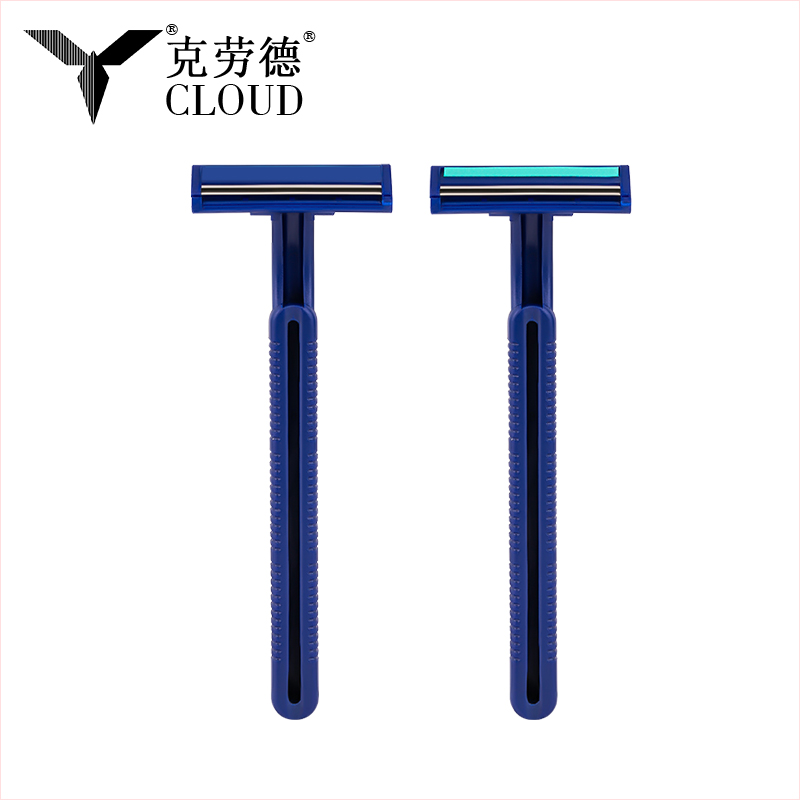
Cloud Blade's Manufacturing Approach to Quality and Sustainability
Shanghai Cloud Blade Manufacturing Co., Ltd. has been producing professional razor blades since 1997. The facility in Songjiang District covers 7,000 square meters of production space, operates eight automated production lines, and outputs over 300 million blades annually — under ISO 9001 certification throughout.
The company's investment in magnetron sputtering coating machines — first in 2004 and upgraded again in 2017 — reflects a deliberate technical choice. Nano-nitrogen alloy technology applied through this process strengthens blade edges at the molecular level, while the layered application of nano-chromium, ammoniated chromium alloy, and Teflon coatings produces edges that are sharper on first use and more durable across multiple shaves than conventionally manufactured blades.
In 2021, the company added automated blade spot welding and inspection equipment, removing manual sampling error from the quality control process. Every blade is verified against dimensional and sharpness standards before leaving the line — a manufacturing discipline that directly affects the end-user experience, whether the product is a premium reusable razor or a high-volume disposable unit.
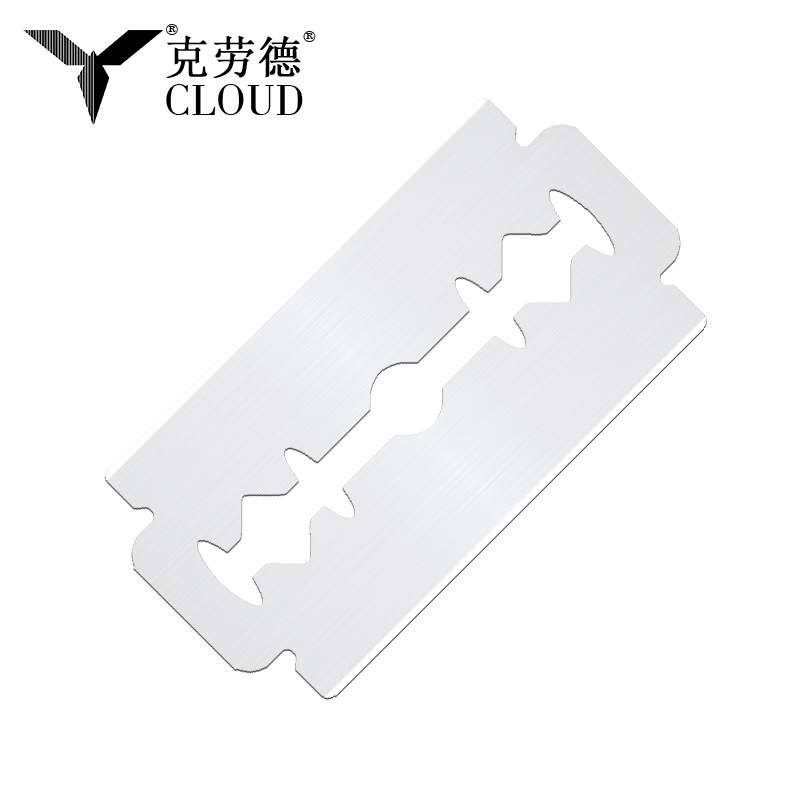
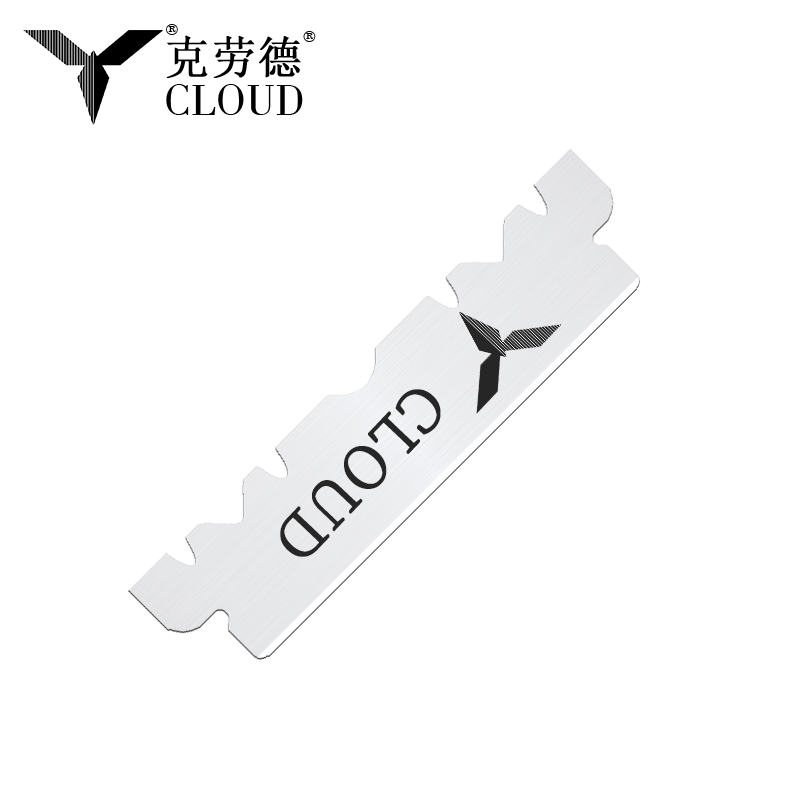
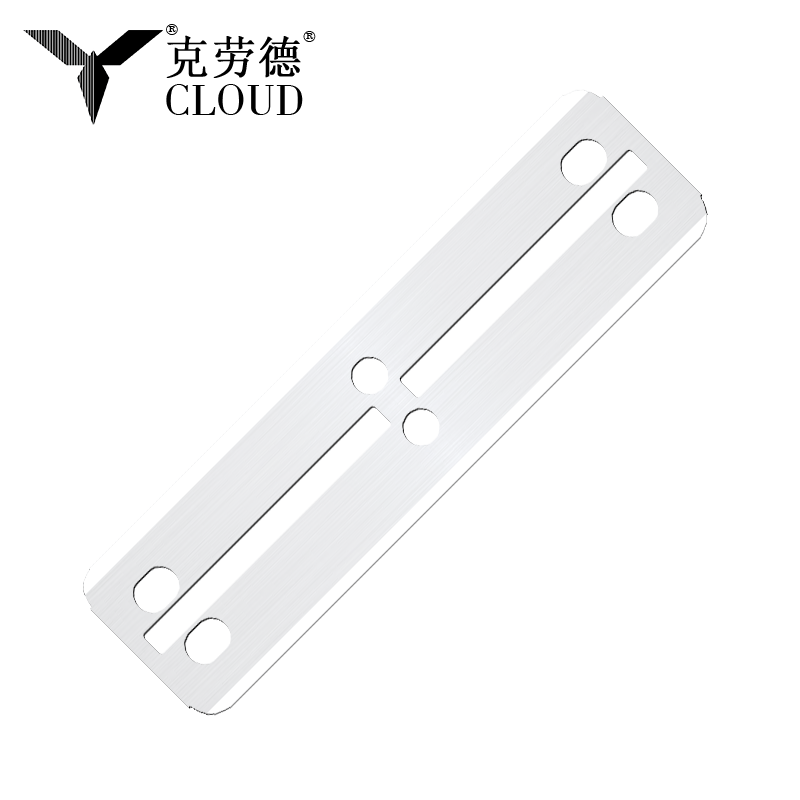
The Cloud Blade full razor and blade range spans disposable razors, refillable designs, double and single edge blades, eyebrow razors, and shaving handles — giving buyers at every level of the market access to the same underlying manufacturing quality. For B2B buyers and OEM clients, this breadth means consistent blade specifications across different product formats without sourcing from multiple suppliers.
The push toward reusable and eco-conscious designs is not a recent pivot for the company. The engineering foundations — durable steel, precision coating, quality-controlled production — are exactly what reusable razor formats require. The shift in market demand toward sustainability aligns naturally with what precision blade manufacturing already does well.
Related Products
Looking for a Reliable Blade?
Work with a Manufacturer.
Inquiry Us Now

-
 +86-400 9915 887
 -
 +86-021-57644936
 -
 [email protected]
 -
 No. 2066, Yushu Road, Songjiang District, Shanghai, China
QUICK LINKS
 Home
HomePRODUCTS
QR CODE
Copyright © 2025 Shanghai Cloud Blade Manufacturing Co., Ltd. All rights reserved.
 Custom Double Razor Blade Factory
