

 ENG
ENG
 English
 Español
Home / News / Industry News / What Is a Safety Razor? Complete Guide to Design, Materials, Uses, and Buying Insights
Message Feedback

Industry News
Sep 01,2026
What Is a Safety Razor? Complete Guide to Design, Materials, Uses, and Buying Insights
If you have seen a razor with a thin metal frame, a handle, and what looks like a guard, you have likely come across a safety razor. The key question is not just what it is, but why it remains relevant. A safety razor is a shaving tool designed to cut hair at the skin level while keeping the blade edge separated from the skin by a protective guard. That separation is what makes it “safe” compared with a straight razor, and that same design is why millions of shavers still choose it today.
Content
What Exactly Is a Safety Razor?
A safety razor is a shaving implement with a protective device positioned between the edge of the blade and the skin. The blade is held at a fixed angle, and the guard prevents the cutting edge from making direct contact with the skin. This allows the razor to slice through hair rather than scrape or pull it.
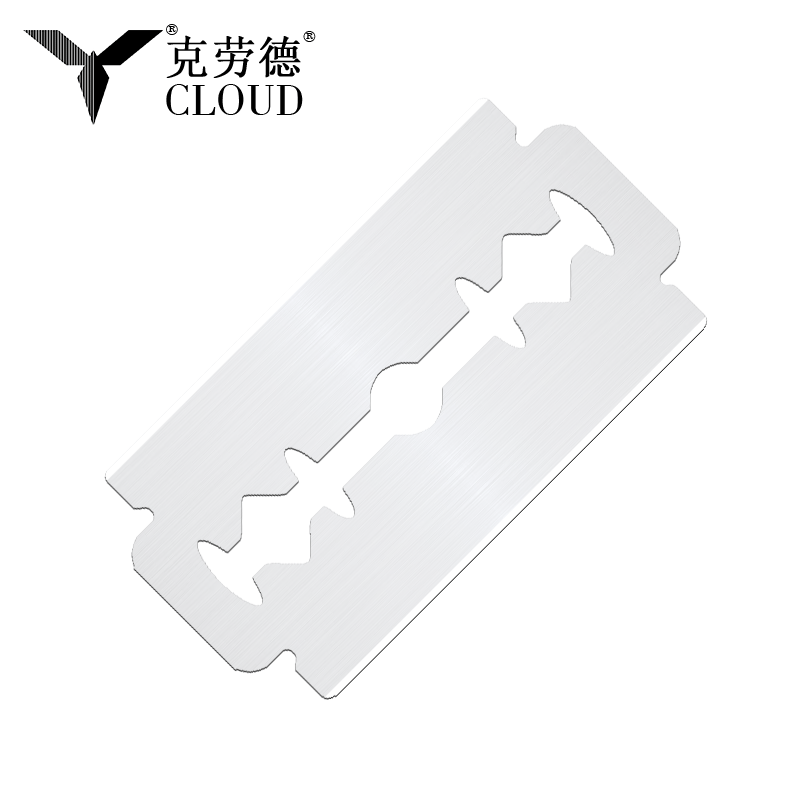
The most common forms are double-edge and single-edge razors. A double-edge razor has two cutting edges, one on each side of the blade. A single-edge razor has one exposed cutting edge and is often used for precise trimming or in clinical settings. Both use replaceable blades, which is a central feature of the design.
A Brief History of Safety Razor Design
Safety razors were introduced in the early 20th century as a way to make shaving safer than a straight razor. The key innovation was the guard, which allowed the blade to cut close to the skin without exposing the full cutting edge. Over time, designs evolved into the double-edge and single-edge configurations we see today. Because the blades are replaceable, the same handle can last decades.
How a Safety Razor Works
When you shave with a safety razor, the blade rests at a set angle between the guard and the cap. The guard holds the skin taut and the blade slices the hair close to the surface. Because the blade is thin and sharp, it does not tug or pull at the hair. Instead it cuts cleanly, which reduces the risk of razor burn and ingrown hairs.
Different safety razor designs offer different levels of aggressiveness. A mild razor has a smaller blade gap and is less likely to irritate sensitive skin. A more aggressive razor provides a closer shave but requires more skill. This is why choosing your first safety razor is about matching the razor to your skin and experience level.
The angle matters. Most shavers find that holding the handle at roughly 30 degrees to the skin gives the best balance between closeness and comfort. The blade does the work, not the pressure.
Safety Razor vs Cartridge Razor
Comparing safety razors with cartridge razors comes down to cost, waste, and control. A cartridge razor has a plastic head with multiple blades that you replace as a unit. A safety razor uses a single metal blade that is much cheaper to replace.
| Factor | Safety Razor | Cartridge Razor |
|---|---|---|
| Blade cost | Low, blades are inexpensive | High, cartridges cost more per shave |
| Waste | Metal blades and some plastic-free handles | Plastic cartridges and packaging |
| Control | Single blade, adjustable angle | Multiple fixed blades, less control |
| Irritation | Less tugging, fewer ingrown hairs | Can cause razor burn with multiple passes |
The cost difference becomes apparent quickly. A single blade may cost a fraction of what one cartridge costs, and the handle itself is a one-time purchase. Over a year, the savings can be significant. In addition, the metal blades are recyclable, whereas cartridge heads are usually not.
For many people, a safety razor offers a closer shave with less skin irritation. The initial cost of the handle is usually the only barrier, while blades are affordable and widely available.
How to Choose a Safety Razor
Choosing a safety razor starts with looking at the handle and head. The handle should offer a secure grip, whether it is made of stainless steel, ABS plastic, or a combination. The head should hold the blade evenly. If you are new to this style, a T-shaped manual razor with a familiar handle geometry is easier to learn with.
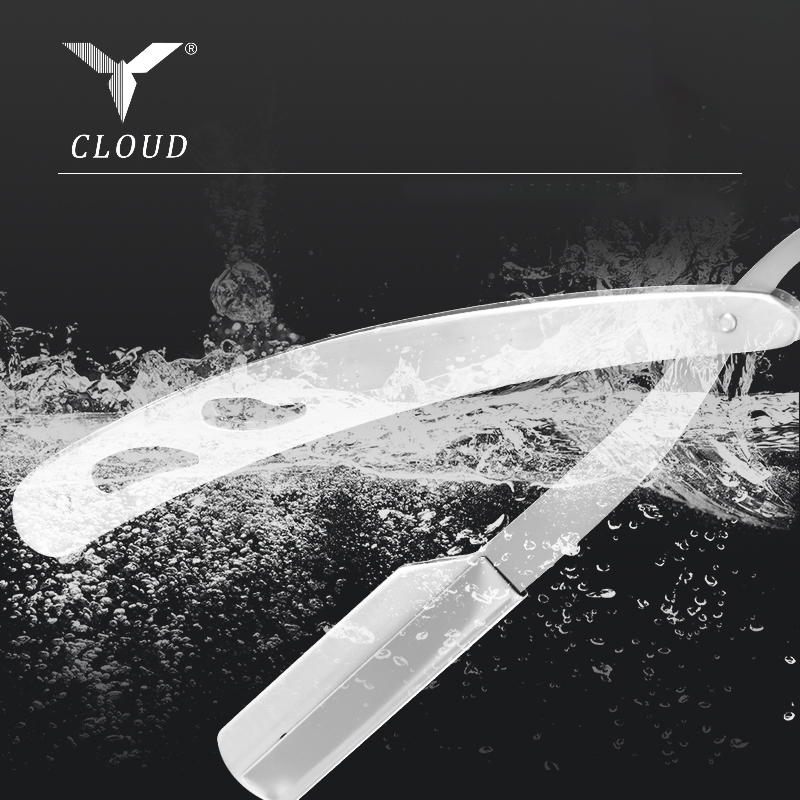 Manual Razor Set with Stainless Steel or ABS-Wrapped HandleAvailable in two models: a fully stainless steel version for durability and easy sterilization, or an ABS-wrapped stainless handle for improved grip and reduced hand fatigue.View Product →
Check that the blade sits flat in the head and is held with even pressure. Some razors have a twist-to-open mechanism, which makes blade changes easier. Others use a butterfly or three-piece design. Think about how often you are willing to change blades and how much you value simplicity.
- Handle grip and weight
- Blade exposure and clamping
- Compatibility with standard double-edge or single-edge blades
- Materials and build quality
Another consideration is the blade itself. Some blades are coated for smoother glide, while others are designed for sensitive skin. You can also choose between different blade widths. A standard double-edge blade is a safe starting point, while a larger blade may offer more cutting coverage.
Blade Materials and Manufacturing Quality
The quality of a safety razor depends heavily on the blade material. Most high-quality blades are stainless steel, which resists corrosion and maintains an edge. Many manufacturers apply a thin coating, such as chromium or polytetrafluoroethylene, to reduce friction and extend blade life. This coating is part of what makes a blade glide over the skin without dragging.
Manufacturing tolerances matter. A blade that is ground and honed within tight tolerances will cut more consistently. At Shanghai Cloud Blade Manufacturing Co., Ltd., for example, blades are produced on automated lines with inspection steps to maintain uniformity. You can learn more about the company and its production approach on the main page.
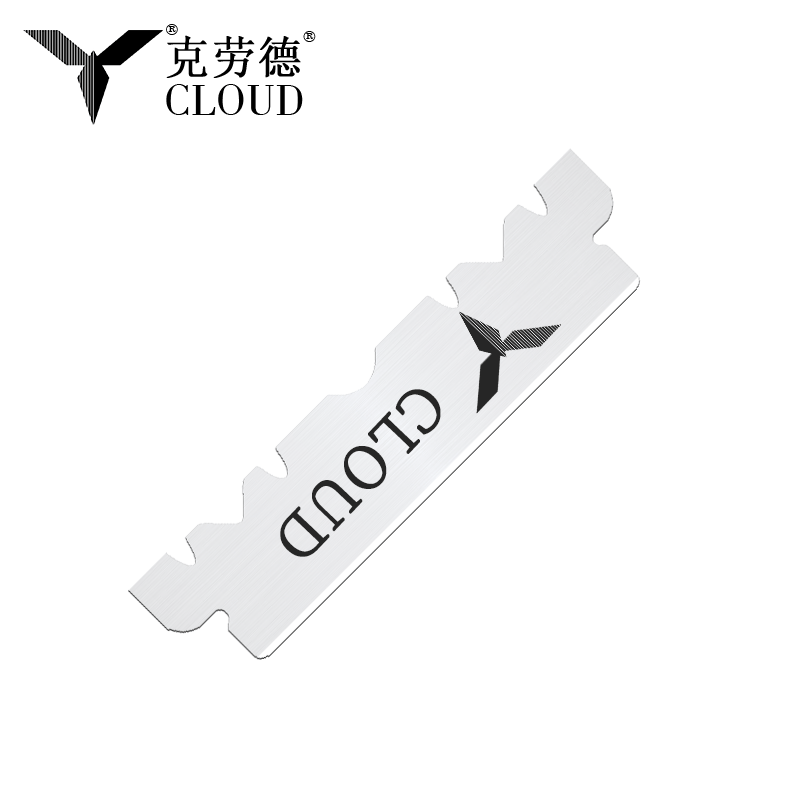
 Half 74 Blade Razor Blades for Precision CuttingHalf-sized blades measuring 42.8mm by 10mm, designed for precise control in tight spaces. Made from premium rolled steel with a sharp edge, suitable for professional and industrial use.View Product →
When evaluating a blade, look at the cutting edge under strong light. A well-honed edge will appear even and free of nicks. If you are sourcing safety razor blades for your own product line, this is the detail that matters most.
Getting Started with a Safety Razor
If you have never used a safety razor, start with a good shaving cream or soap. Apply a thin layer of lather, hold the razor at a 30-degree angle, and use short strokes of one to three centimeters. Let the weight of the razor do the work. Shaving with the grain of the hair helps reduce redness and irritation.
You can also use a single-edge safety razor for more detailed work, such as trimming facial hair or shaping eyebrows. These blades are often sold in a format that is simple to handle and replace. A practical guide to using razor blades correctly can help you maintain the tools and avoid common mistakes. You might want to read this guide on blade use and aftercare.
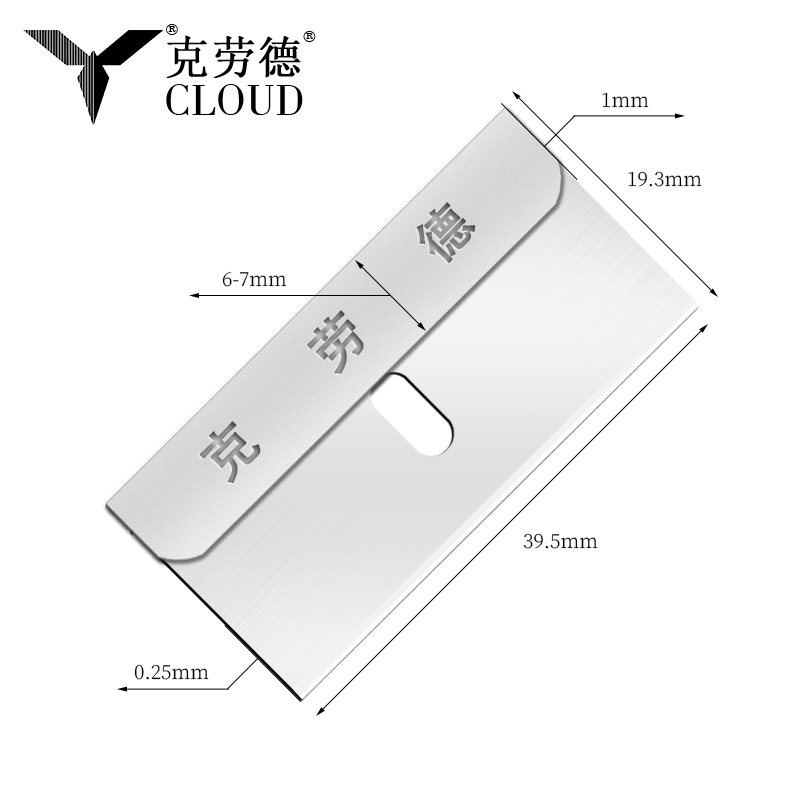
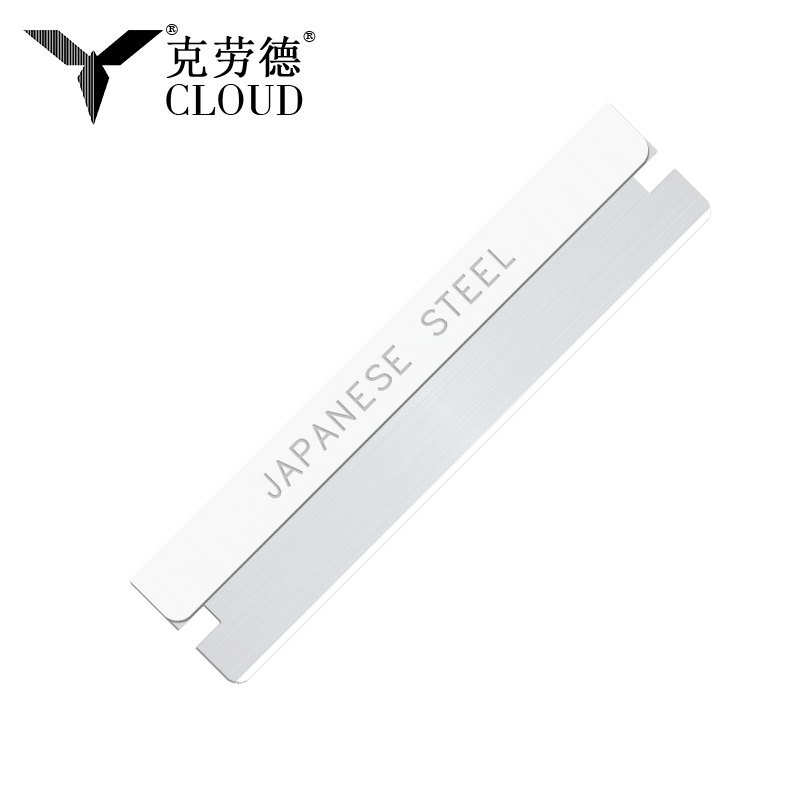
 Multipurpose Single Edge Safety Razor BladesSingle-edge blades with dimensions of 39mm by 19mm, available in Japanese steel options. Versatile for scraping, trimming, and fine cutting in various applications.View Product →
After each shave, rinse the blade and shake off excess water. Store the razor in a dry place. With proper care, a blade can last for several weeks, and the handle can last for years.
Maintenance and Lifespan
With regular care, a safety razor handle can last many years. The blade lifespan depends on your hair type, shaving frequency, and the coating on the blade. Some people change blades after five shaves, others after fifteen. A simple test is to notice when the blade starts to tug or skip. At that point it is time to replace it. Cleaning is straightforward: rinse the head under warm water after each shave and tap out any hair, then allow the razor to air dry.
Final Thoughts
A safety razor is not just a historical artifact. It is a practical, economical, and less wasteful way to shave. The protective guard makes it safe for beginners, while the single cutting edge gives experienced shavers the control they want. Whether you are looking for a closer shave, a lower cost per shave, or a more durable tool, the safety razor is a solid choice.
Related Products
Looking for a Reliable Blade?
Work with a Manufacturer.
Inquiry Us Now

-
 +86-400 9915 887
 -
 +86-021-57644936
 -
 [email protected]
 -
 No. 2066, Yushu Road, Songjiang District, Shanghai, China
QUICK LINKS
 Home
HomePRODUCTS
QR CODE
Copyright © 2025 Shanghai Cloud Blade Manufacturing Co., Ltd. All rights reserved.
 Custom Double Razor Blade Factory
