

 ENG
ENG
 English
 Español
Home / News / Industry News / 904 Steel Explained: Composition, Properties, and How It Compares to 316L
Message Feedback

Industry News
Sep 07,2026
904 Steel Explained: Composition, Properties, and How It Compares to 316L
904 steel is almost always shorthand for 904L, a high-alloy austenitic stainless steel listed in standards as UNS N08904 and EN 1.4539. It was developed for one job: surviving corrosive environments that quickly destroy ordinary stainless grades. That makes it an excellent material for chemical plants, heat exchangers, and seawater systems, but a poor choice for razor blades, knife edges, or anything that must stay sharp. Here is what 904L actually contains, how it compares with the far more common 316L, and where it should and should not appear in your material specifications.
Content
What Is 904 Steel (904L)?
904L belongs to the austenitic family of stainless steels, which means its crystal structure is face-centered cubic. That structure gives it excellent toughness, ductility, and weldability, even at low temperatures. What separates 904L from everyday grades such as 304 and 316 is the amount of alloying elements it carries: roughly 23-28% nickel, 19-23% chromium, 4-5% molybdenum, and 1-2% copper.
The typical composition looks like this:
| Element | Typical Range (wt%) | Why It Is There |
|---|---|---|
| Carbon (C) | 0.020 max | Low carbon prevents chromium carbide precipitation during welding |
| Chromium (Cr) | 19.0-23.0 | Forms the protective passive oxide film |
| Nickel (Ni) | 23.0-28.0 | Stabilizes the austenitic structure and adds toughness |
| Molybdenum (Mo) | 4.0-5.0 | Resists pitting and crevice corrosion in chlorides |
| Copper (Cu) | 1.0-2.0 | Improves resistance to sulfuric and phosphoric acids |
| Manganese (Mn) | 2.0 max | Deoxidizer and sulfur control |
| Silicon (Si) | 1.0 max | Minor strengthening and deoxidation |
| Iron (Fe) | Balance | Base metal |
The low carbon limit is deliberate. It keeps 904L free from chromium carbide precipitation around weld seams, which is why the material performs well in fabricated chemical equipment without post-weld heat treatment.
904L vs 316L: The Differences That Matter
Most comparisons start with 316L because it is the default marine-grade stainless. Both 316L and 904L are austenitic, both are non-magnetic in the annealed condition, and both form easily. The practical differences come down to chemistry, corrosion resistance, hardness, and cost.
| Property | 316L | 904L |
|---|---|---|
| Nickel content | 10.0-14.0% | 23.0-28.0% |
| Molybdenum content | 2.0-3.0% | 4.0-5.0% |
| Copper addition | None | 1.0-2.0% |
| Resistance to pitting in chlorides | Good | Superior |
| Resistance to sulfuric and phosphoric acid | Moderate | Excellent |
| Resistance to stress-corrosion cracking | Moderate | Superior |
| Hardness and scratch resistance | Harder in service | Softer, dents and scratches more easily |
| Relative material cost | Baseline | Significantly higher |
| Typical applications | Medical devices, food equipment, marine hardware | Chemical processing, heat exchangers, seawater systems |
The corrosion advantage is real. 316L handles many mild chloride environments, but it pits and stress-cracks in hot chlorides and performs only moderately in sulfuric acid. 904L was formulated for exactly those conditions, and its copper addition gives it a measurable edge where reducing acids are present.
What 904L Is Not: A Cutting Material
Here is the part that matters for blade buyers. 904L is softer than 316L. It has lower yield strength and lower hardness, and austenitic stainless steels cannot be hardened by heat treatment. A razor blade edge, by contrast, lives or dies by hardness. The edge is a microscopic wedge that must resist deformation and chipping for the entire service life of the blade.
That is why blade manufacturers do not use 904L. Edged tools are made from martensitic stainless steels such as 420J2, 440A, or X50CrMoV15, hardened to roughly 54-60 HRC, or from cold-rolled stainless strip engineered for disposable razor blades. If a supplier promotes 904L razor blades, treat the grade name as marketing, not as a performance claim.
If you want the technical details on which steel grades actually appear in razor blades, our guide to steel grades used in single-edge razor blades gives a practical breakdown of the common options.
In our own production, we select stainless steel for the demands of the cutting job rather than for its grade-name appeal. A hair-cutting blade needs a hard, stable edge that survives repeated contact with hair and skin; a chemical vessel needs corrosion resistance. Two different metals for two different jobs.
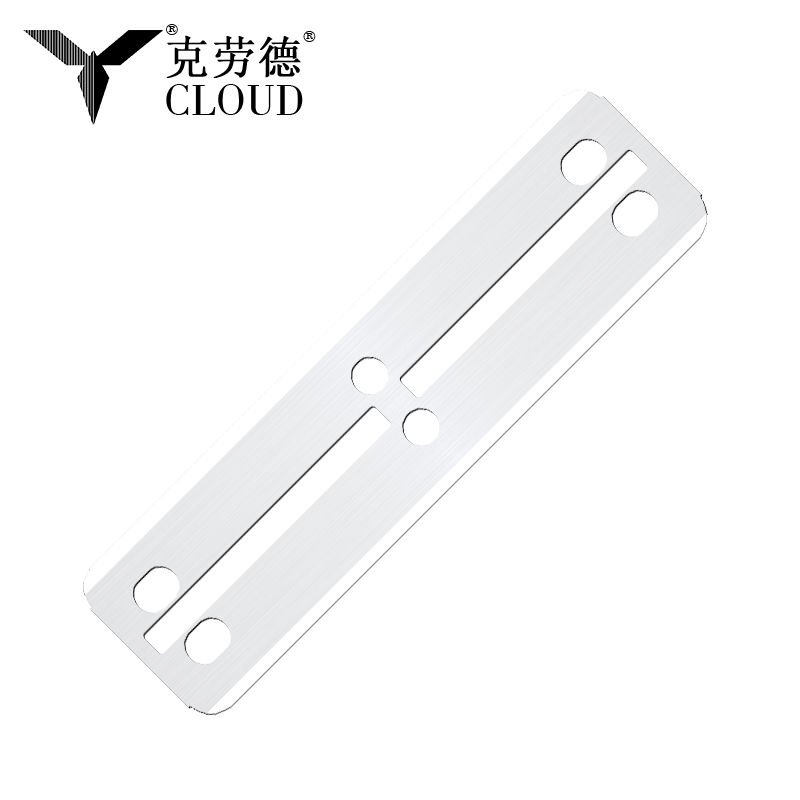
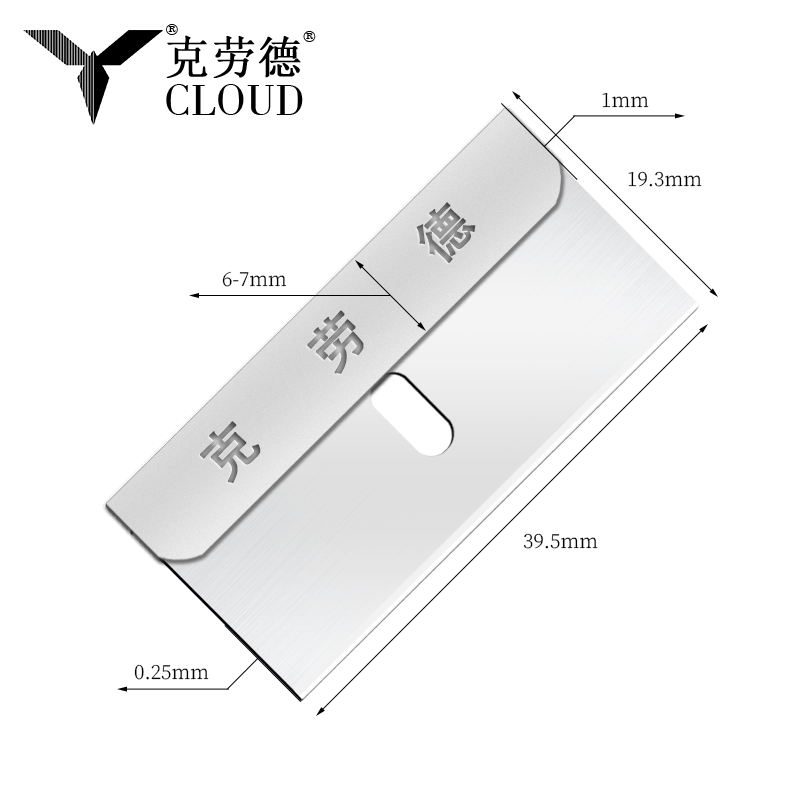
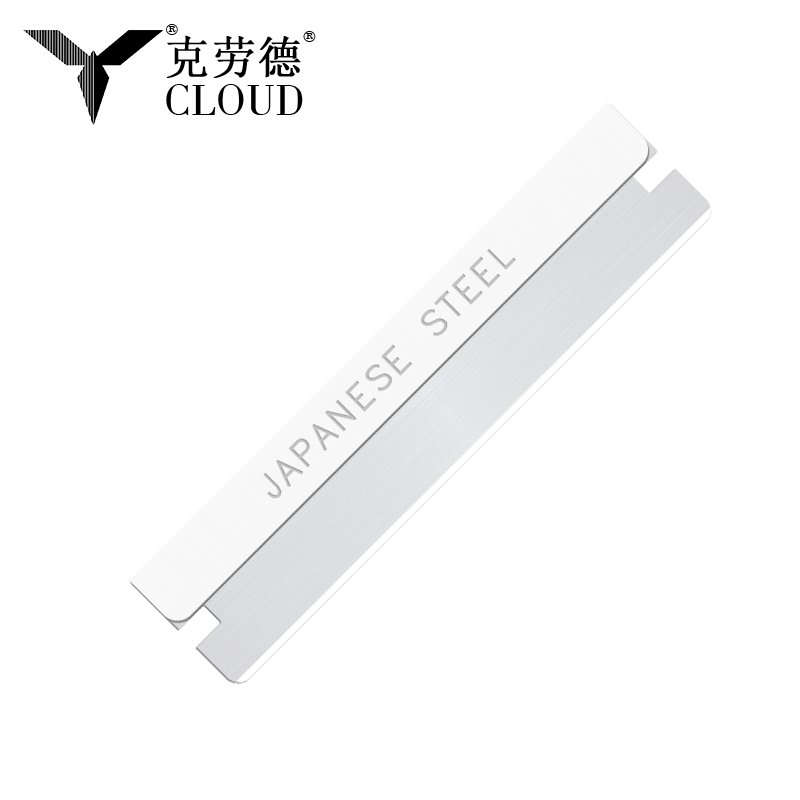
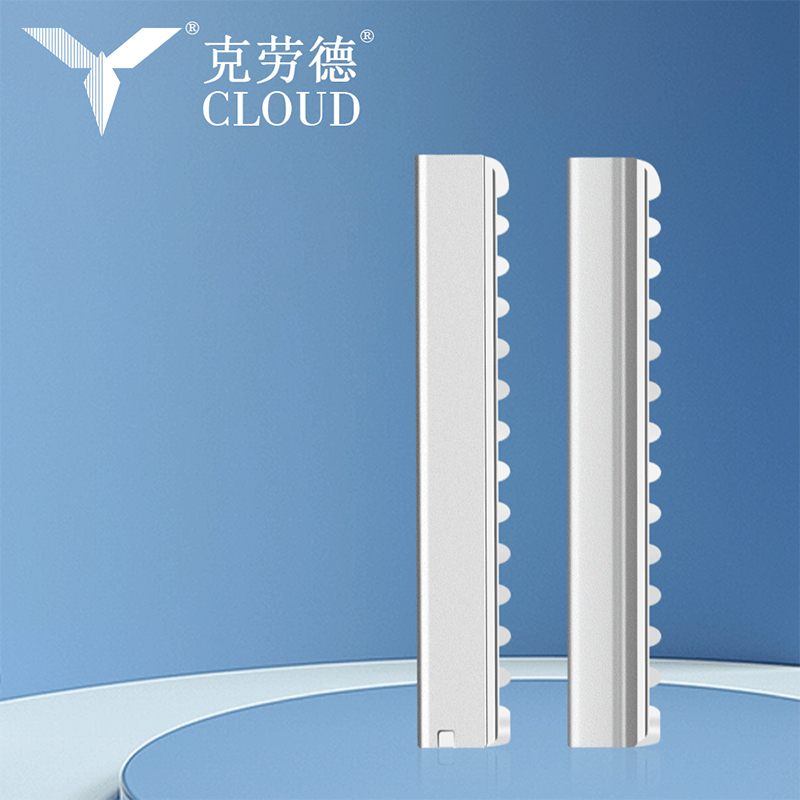 Stainless Steel Single Edge Hair Cutting Blades for Professional UseThese 57.5mm single-edge blades use Japanese steel for sharpness and edge retention, suited for barbers and stylists who need consistent performance during precise hair trimming and shaping.View Product →
Our stainless steel single-edge hair-cutting blades are an example of that approach in practice: a grade chosen for edge retention in repeated barber use, not for corrosion chemistry.
When Paying for 904L Actually Makes Sense
904L is a lifecycle purchase. It costs considerably more than 316L because nickel and molybdenum dominate the raw material price, and fabricating it requires qualified welders and extra care in machining. Buyers specify 904L when the alternative is expensive downtime, early replacement, or contamination of a process stream.
Typical applications include:
- Chemical processing equipment for sulfuric acid and phosphoric acid service
- Heat exchangers and condensers in refineries and petrochemical plants
- Seawater cooling systems and offshore platforms
- Pulp and paper bleaching plants
- Flue gas desulfurization scrubbers
- Pharmaceutical and food equipment exposed to hot chlorides
In these environments, corrosion data, not appearance, justify the price.
What This Means for Blade and Razor Sourcing
If you are buying razors, razor blades, or any cutting tool, 904L should not appear in the specification. What should appear are hardness range, edge geometry, coating type, and batch-to-batch consistency. Those parameters, not an exotic grade name, decide whether a blade cuts cleanly, stays sharp, and resists corrosion through months of wet use.
The same logic applies to handles and fixtures. A handle needs corrosion resistance in a damp bathroom and a surface that feels comfortable in the hand; a blade needs hardness and edge stability above all else. Whenever we manufacture blades and razors at our Shanghai facility, we choose the grade according to the application, which is why our catalog contains several stainless alloys instead of one premium label.
For classic wet shaving, the double-edge blade is where the steel choice becomes visible in comfort and cut quality.
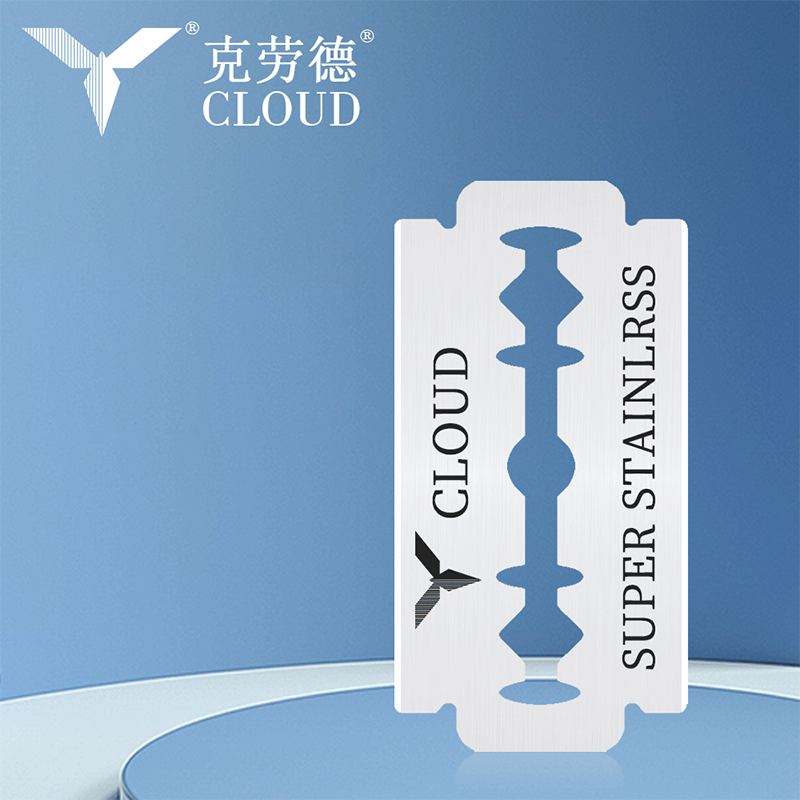 Super Steel 74 Double Edge Razor Blades for Wet ShavingPrecision-engineered double-edge blades with a hardened stainless substrate and functional coating deliver reduced drag and steady sharpness, contributing to comfort and cut quality in classic wet shaving.View Product →
Our Super Steel 74 double-edge razor blades follow that logic: a hardened stainless substrate, precise edge geometry, and a functional coating to reduce drag on the skin.
The practical takeaway is simple. 904 steel, in the form of 904L, is a specialist corrosion-resistant alloy for chemical, marine, and processing industries. It is not a blade steel, and the metallurgical reasons are clear once you compare hardness requirements and edge demands. Match the grade to the job: corrosion tests for process equipment, hardness and edge retention for cutting tools.
Our engineering team has worked on blade steel selection since the company was founded in 1997, and we are happy to discuss the right grade for a specific product. If you are evaluating blades for your brand, compare steel data rather than grade names on a datasheet.
Related Products
Looking for a Reliable Blade?
Work with a Manufacturer.
Inquiry Us Now

-
 +86-400 9915 887
 -
 +86-021-57644936
 -
 [email protected]
 -
 No. 2066, Yushu Road, Songjiang District, Shanghai, China
QUICK LINKS
 Home
HomePRODUCTS
QR CODE
Copyright © 2025 Shanghai Cloud Blade Manufacturing Co., Ltd. All rights reserved.
 Custom Double Razor Blade Factory
