

 ENG
ENG
 English
 Español
Message Feedback

Industry News
Apr 23,2026
Straight Razor Handle Guide & Shaving Tips
Content
- 1 What Makes a Straight Razor Handle Worth Your Attention
- 2 Cut Throat Razor Handle Designs: What the Differences Actually Mean
- 3 Straight Razor Shaving Tips: Building the Right Foundation
- 4 How to Use a Cut Throat Razor: Zone-by-Zone Breakdown
- 5 Wet and Dry Shaving: Choosing the Right Handle Configuration
- 6 Maintenance Habits That Extend Handle and Blade Life
What Makes a Straight Razor Handle Worth Your Attention
Most straight razor shaving tips focus on technique — angle, pressure, stroke direction. But before any of that matters, you need a handle that actually works in your hand. The straight razor handle, often called the scale, is the foundation of every shave. It dictates how the blade sits against your skin, how much control you have on curved surfaces like the jaw and upper lip, and how fatigued your hand becomes over a 15–20 minute full shave session.
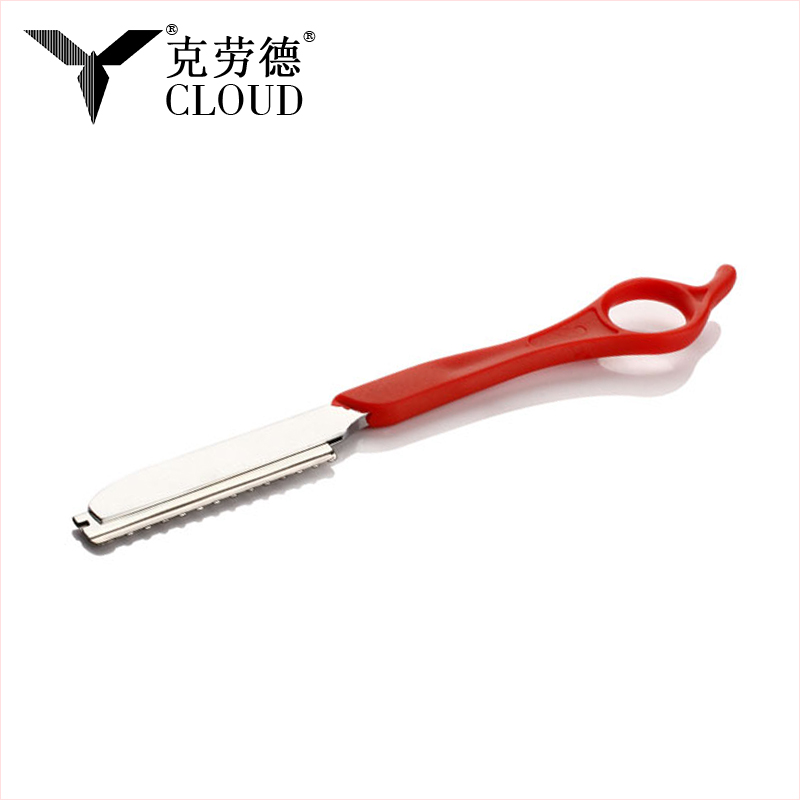
A handle made from imported high-quality steel brings a meaningful weight advantage. Steel scales add a natural counterbalance to the blade, reducing the tendency to over-grip — a common mistake that causes skin dragging and micro-cuts. Compared to plastic or resin handles, steel resists warping from repeated hot water exposure and maintains dimensional stability over years of use. For anyone investing in a cut throat razor, the handle is not an afterthought. It is half the tool.
The Shaving/Straight Razor Handle series addresses this directly, offering a range of handle configurations built from quality steel, designed to match different grip styles, shaving environments, and skill levels. Understanding the differences between these options is the first step to finding a setup that genuinely improves your shave.
Cut Throat Razor Handle Designs: What the Differences Actually Mean
When people search for cut throat razor how to use guides, the grip section receives surprisingly little attention despite its direct impact on outcome. Handle geometry determines how naturally the razor pivots between strokes and how precisely you can reposition the blade without breaking skin contact.
The core design variations in the Shaving/Straight Razor Handle series each serve a specific purpose:
- Traditional straight handle: A single flat profile that aligns the blade parallel to the fingers. Best suited for experienced shavers who have developed a consistent wrist-rotation technique. The clean geometry makes it easy to assess blade angle visually.
- Dual-surface handle: Features two distinct grip zones — typically a textured upper face and a smooth lower face. This configuration allows the thumb and index finger to find separate reference points, making angle correction more intuitive during the shave. Particularly useful on the neck where the skin surface changes direction.
- Ergonomic contoured handle: Shaped to follow the natural curve of the fingers at rest. Reduces pinch force required to hold the razor steady, which directly lowers the risk of unintentional pressure spikes — one of the most common causes of nicks for beginners.
- Travel handle: A more compact profile, often with a protective fold mechanism optimized for portability. Maintains full shaving function while fitting securely in a toiletry kit without risk of accidental blade exposure.
Color options across the series also serve a practical purpose beyond aesthetics. Owning multiple razors — one for face, one for head shaving or edge work — becomes significantly easier to manage when handles are visually distinct at a glance.
Straight Razor Shaving Tips: Building the Right Foundation
Effective straight razor shaving tips are only useful when the physical setup supports them. These practices apply whether you are picking up a cut throat razor for the first time or refining a technique you have used for years.
Skin and Hair Preparation
Straight razor shaving demands properly softened hair. Facial hair that has been exposed to warm water or steam for at least two minutes absorbs moisture and swells, reducing the cutting force required by up to 70% compared to dry hair. Apply a dense lather using a shaving brush — the mechanical action of the brush further lifts and separates individual hairs, allowing the blade to cut cleanly at the base rather than dragging across the skin surface.
Angle and Pressure Control
The blade should contact the skin at approximately 30 degrees relative to the face surface. This is not a rigid rule but a practical starting point — many experienced shavers work between 25 and 35 degrees depending on beard density and blade grind. With a well-weighted steel handle, the razor essentially guides itself at the correct angle when you allow gravity to do the work. Applying downward pressure is the most counterproductive habit a beginner can develop. The blade's own mass, combined with a sharp edge, provides all the cutting force needed.
Stroke Direction and Skin Stretching
Always shave with the grain on the first pass — meaning in the direction of hair growth. This reduces the likelihood of ingrown hairs and post-shave irritation significantly. Use the non-razor hand to stretch the skin taut ahead of each stroke. A flat, tensioned skin surface allows the blade to glide consistently without catching on loose folds, which is the primary cause of small cuts in the cheek and neck areas. A second pass, if desired, should be made across the grain rather than directly against it, and only after reapplying a fresh layer of lather.
How to Use a Cut Throat Razor: Zone-by-Zone Breakdown
Understanding cut throat razor how to use instructions in general terms is helpful, but applying technique correctly varies significantly across different facial zones. Each area requires a specific grip adjustment and stroke approach.
| Face Zone | Recommended Grip | Stroke Direction | Common Mistake |
|---|---|---|---|
| Cheeks | 3-finger hold, thumb on spine | Downward, with grain | Too much wrist rotation |
| Upper lip | Pinch grip, short strokes | Downward from nose | Insufficient skin stretch |
| Jaw line | Relaxed 3-finger hold | Follow jaw curve | Flat angle on curved surface |
| Neck | Loose grip, let weight work | Map grain direction first | Assuming uniform grain direction |
| Under chin | Switch to non-dominant hand | Upward or across grain | Over-extending wrist angle |
The neck deserves particular attention. Hair growth direction on the neck frequently differs from the face — many men have swirling or upward-growing patches below the jaw. Running a finger down the neck before lathering to map these directions is a simple habit that prevents significant irritation on every shave.
Wet and Dry Shaving: Choosing the Right Handle Configuration
The Shaving/Straight Razor Handle series includes options suited for both wet and dry shaving environments, which reflect genuinely different use cases rather than marketing distinctions. Wet shaving — the traditional method using lather, warm water, and a brush — is the most skin-friendly approach for straight razor use. The lather layer acts as a lubricant and cushion, reducing friction between the steel edge and the epidermis. Handles used in wet shaving need to maintain a secure grip even when both the hand and the handle surface are wet. Dual-surface and textured handle designs solve this directly.
Dry shaving with a straight razor is less common but practiced by some users for quick touch-ups or beard line definition. In this scenario, grip security is even more important since there is no lather providing any slip buffer. Ergonomic steel handles with defined finger grooves perform best here, as they require less active gripping force to maintain stable blade control.
For travelers, the compact handle options in the series offer a meaningful practical advantage. A full-size steel handle in a toiletry kit adds unnecessary bulk. Travel-configured handles preserve the handling characteristics of their full-size counterparts while reducing pack weight and storage footprint — important considerations for anyone who maintains a straight razor shaving routine away from home.
Maintenance Habits That Extend Handle and Blade Life
A straight razor handle built from quality steel will outlast the user under normal conditions — but only with consistent basic maintenance. After each shave, rinse the entire razor under cool running water to remove soap residue and hair. Hot water accelerates mineral deposit buildup in pivot joints, which can cause the blade to stiffen over time. Dry the handle and blade separately with a soft cloth, paying attention to the pivot pin area where moisture tends to accumulate.
A light application of camellia oil or mineral oil to the blade once a week prevents surface oxidation, particularly important for carbon steel blades. The handle itself benefits from occasional wiping with a slightly damp cloth to remove skin oil buildup, which can degrade grip texture on patterned surfaces over time. Store the razor in an open position or in a breathable case — sealed pouches trap moisture and accelerate corrosion at the pivot.
Blade maintenance — stropping before each shave and honing every few months depending on use — is well documented, but handle maintenance is equally important for long-term performance. A loose pivot pin, for example, introduces play between blade and handle that makes consistent angle control nearly impossible. Checking and retightening the pivot periodically is a two-minute task that preserves the precision the handle was designed to deliver.

Related Products
Looking for a Reliable Blade?
Work with a Manufacturer.
Inquiry Us Now

-
 +86-400 9915 887
 -
 +86-021-57644936
 -
 [email protected]
 -
 No. 2066, Yushu Road, Songjiang District, Shanghai, China
QUICK LINKS
 Home
HomePRODUCTS
QR CODE
Copyright © 2025 Shanghai Cloud Blade Manufacturing Co., Ltd. All rights reserved.
 Custom Double Razor Blade Factory
