

 ENG
ENG
 English
 Español
Message Feedback

Industry News
Mar 17,2026
Single Edge Razor Blades: Uses, Care & Selection
Content
- 1 What Are Single Edge Razor Blades?
- 2 Steel Quality: The Foundation of Blade Performance
- 3 Applications Across Industries: Versatility in Practice
- 4 Blade Oil: Why It Matters for Blade Longevity and Performance
- 5 Comparing Single Edge Razor Blade Specifications
- 6
- 7 Safe Handling, Storage, and Disposal of Single Edge Razor Blades
What Are Single Edge Razor Blades?
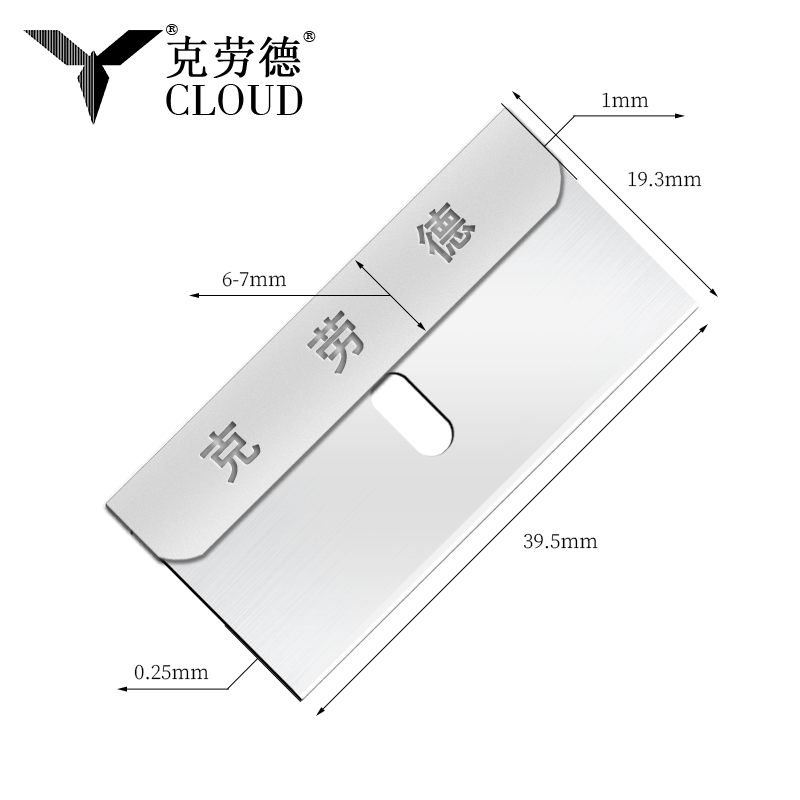
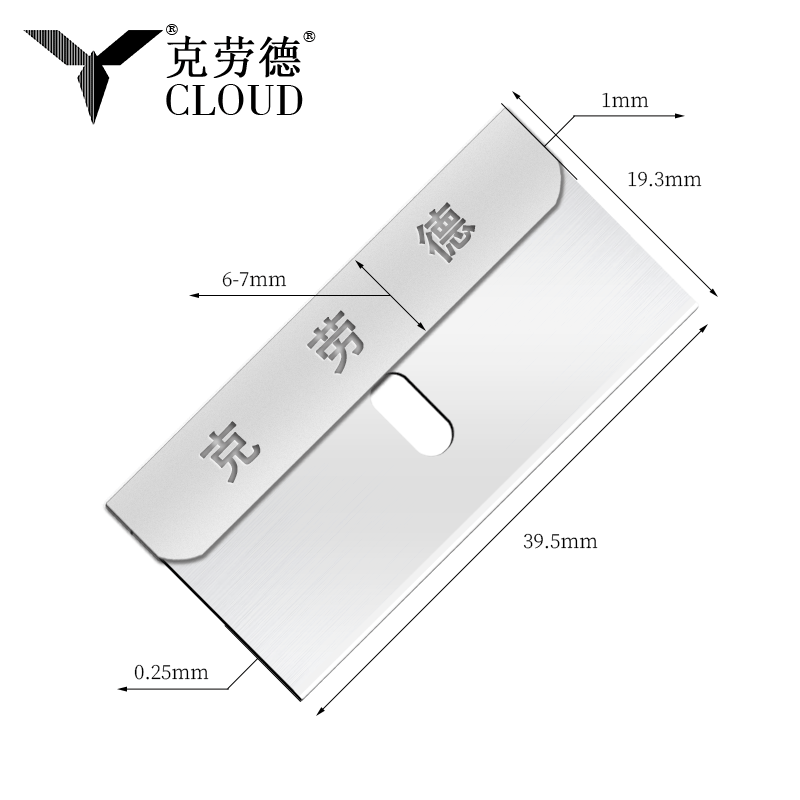
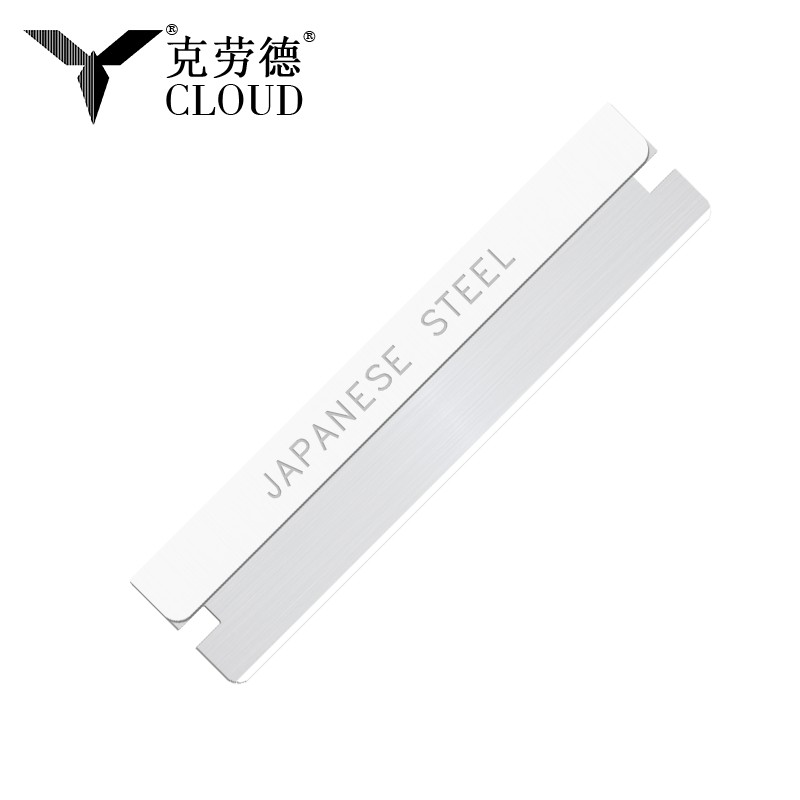
Single edge razor blades are precision-ground cutting tools featuring a sharpened edge on one side of the blade only, with the opposite side left flat and unsharpened to serve as a safe gripping or backing surface. This asymmetric design distinguishes them from double edge razor blades used in safety razors and gives single edge blades a unique combination of rigidity, control, and versatility that makes them valuable across a remarkably wide spectrum of applications — from personal grooming and professional barber work to industrial scraping, medical procedures, laboratory specimen preparation, and precision craft cutting.
The single edge razor blades series offers a versatile range of high-performance blades designed to meet various industry needs. Crafted from imported high-quality steel, each blade is engineered for precision, durability, and exceptional cutting quality. Whether you require blades for personal grooming, industrial tasks, or medical use, this series has you covered with configurations sized and tempered specifically for each application category. The combination of metallurgical quality, precision grinding geometry, and appropriate surface treatment — including blade oil application where specified — determines whether a single edge blade delivers the clean, controlled cuts its users depend upon or disappoints through poor edge retention, flexing under load, or premature corrosion.
Steel Quality: The Foundation of Blade Performance
The performance of any single edge razor blade begins with the quality of the steel from which it is manufactured. Not all steel is equal in its suitability for razor blade production — the grade must achieve the correct balance of hardness for edge retention, toughness to resist chipping or snapping under lateral stress, and sufficient corrosion resistance to maintain performance across the blade's intended service life. The use of imported high-quality steel in premium single edge razor blade production reflects the recognition that raw material quality cannot be compensated for by manufacturing process excellence alone — the steel's intrinsic properties set the ceiling on what the finished blade can achieve.
Martensitic stainless steel grades — particularly those in the 400 series such as 420HC and 440C — are the most widely used materials for high-performance single edge razor blades. These grades contain sufficient carbon (typically 0.6–1.0% by weight) to achieve high hardness through heat treatment, while their chromium content (13–18%) provides meaningful corrosion resistance in wet shaving and industrial environments. After hardening to Rockwell hardness values of 56–62 HRC, the steel can be ground to a razor-sharp edge geometry and maintain that sharpness through many cuts before the microscopic serrations of the cutting edge collapse to the point where blade replacement becomes necessary.
How Steel Grade Affects Blade Sharpness and Durability
- Carbon Content: Higher carbon content enables greater hardness after heat treatment, allowing the blade to be ground to a finer edge angle without the apex rolling over under cutting pressure — directly translating into initial sharpness and the precision cutting quality that professional users demand.
- Chromium Content: Sufficient chromium forms a passive oxide layer on the blade surface that resists rust formation during wet use and storage — essential for shaving blades and medical applications where blade integrity in moist environments is critical.
- Grain Structure: Fine, homogeneous grain structure in the steel — achieved through controlled melt composition and rolling processes — produces a more uniform edge at the microscopic level, reducing the occurrence of micro-chipping that causes the dragging sensation users experience with lower-quality blades.
- Tempering: After hardening, controlled tempering at precisely specified temperatures reduces brittleness while retaining the hardness required for edge retention — a critical processing step that separates premium blade manufacturers from lower-quality producers who use simplified heat treatment protocols.
Applications Across Industries: Versatility in Practice
The single edge razor blades series addresses the needs of multiple distinct application categories, each placing different demands on blade geometry, edge sharpness, steel grade, and coating treatment. Understanding the specific requirements of each application type helps buyers select the correct blade configuration from the range and ensures optimal performance in their intended use environment.
Personal Grooming and Barbering
In personal grooming and professional barbering, single edge razor blades are used in straight-style shavers, replaceable-blade shavettes, and hair trimming tools that require a consistently sharp edge to cut facial or body hair cleanly without pulling or irritating the skin. The blade's single edge design allows the barber or user to maintain precise directional control over the cut, using the unsharpened spine as a stable guide surface against the skin or scalp. For this application, blade sharpness and smoothness of the cutting edge are the primary performance criteria — a blade with microscopic burrs or an inconsistent edge bevel will drag across skin and produce a harsh, uncomfortable shaving experience regardless of the user's technique.
Industrial Scraping and Surface Preparation
Industrial single edge razor blades are among the most effective tools available for scraping adhesive residues, paint overspray, silicone sealant, and labels from glass, ceramic tile, metal surfaces, and smooth plastic substrates. The blade's rigid geometry — typically 0.2–0.3mm thick carbon or stainless steel — allows it to be held in a scraper handle at a low angle to the work surface, undercutting adhesive or paint layers without gouging the substrate below. This makes them invaluable in glazing, automotive detailing, commercial kitchen cleaning, and building maintenance contexts where chemical solvents alone cannot remove bonded surface contamination efficiently.
Medical and Laboratory Use
In medical and laboratory environments, single edge razor blades serve as disposable cutting tools for tissue sectioning, specimen preparation, histology work, and microbiology procedures requiring contamination-free cutting surfaces. The premium steel grades and stringent manufacturing tolerances applied to medical-grade blades ensure that each blade is sterile, free from surface contamination, and sufficiently sharp to produce clean tissue cuts without crushing or tearing cellular structures that would compromise microscopic examination results. Single-use disposable protocols in medical settings mean that blade oil maintenance is less relevant in this context — each blade is used once and discarded, making initial sharpness and sterility the dominant selection criteria.
Blade Oil: Why It Matters for Blade Longevity and Performance
Blade oil is a light mineral or synthetic lubricant oil applied to single edge razor blades to protect the cutting edge and blade body from corrosion, reduce friction during cutting, and extend the usable service life of the blade by preserving the integrity of the finely ground edge geometry between uses. While disposable single-use blades in medical and some industrial contexts do not require blade oil maintenance, reusable blades in grooming, industrial scraping, and craft applications benefit significantly from correct blade oil application and storage practices.
The mechanism by which blade oil protects single edge razor blades operates on multiple levels simultaneously. At the most basic level, the oil forms a thin hydrophobic barrier on the blade surface that displaces moisture — the primary driver of corrosion in steel blades — and prevents the electrochemical reactions that produce rust from occurring at the highly reactive freshly ground metal surface of the cutting edge. At the tribological level, residual blade oil on the cutting edge reduces the coefficient of friction between the blade and the material being cut, producing a smoother cutting action that both improves cut quality and reduces the mechanical stress on the cutting edge that causes microscopic deformation and edge dulling over repeated use cycles.
How to Apply Blade Oil Correctly
- Apply a single small drop of blade oil to the flat side of the single edge razor blade and spread it evenly across both the flat surface and the bevel of the cutting edge using a clean soft cloth or the blade's own stropping motion — a thin, uniform coverage is more effective than a heavy application that leaves excess oil to attract dust and debris.
- Apply blade oil immediately after cleaning the blade following use, while the metal surface is clean and receptive to the oil's adhesion — applying oil to a contaminated or wet surface significantly reduces its protective effectiveness.
- Store oiled blades in a dry environment away from direct sunlight and temperature extremes — heat cycles can cause the oil film to thin and flow away from the edge, leaving areas of unprotected metal vulnerable to corrosion during extended storage periods.
- For industrial scraping applications, apply blade oil before each use session rather than only for storage — the lubrication benefit during active scraping reduces the force required to separate adhesive from the substrate, making the work less fatiguing and producing cleaner results.
- Use a food-safe blade oil formulation for any single edge razor blade that will come into contact with food preparation surfaces, cutting boards, or kitchen equipment — standard mineral oils are not food-safe and must not be used in food-contact applications.
Comparing Single Edge Razor Blade Specifications
| Application | Steel Grade | Thickness | Blade Oil Required | Key Priority |
| Personal Grooming | 420HC Stainless | 0.10 – 0.15mm | Yes (between uses) | Sharpness, skin comfort |
| Industrial Scraping | Carbon Steel / 440C | 0.20 – 0.30mm | Yes (before use) | Rigidity, edge retention |
| Medical / Lab | Premium Stainless | 0.10 – 0.20mm | No (single use) | Sterility, precision |
| Craft and Hobby | 420HC Stainless | 0.15 – 0.25mm | Yes (storage) | Sharpness, control |
Safe Handling, Storage, and Disposal of Single Edge Razor Blades
The exceptional sharpness that makes single edge razor blades effective cutting tools also demands careful attention to safe handling practices at every stage of use, storage, and disposal. A blade that is sharp enough to cut cleanly through adhesive residue, skin hair, or biological tissue will cut human skin with equal ease under accidental contact — making the development of safe handling habits a non-negotiable requirement for all users of this product category regardless of application context.
Blades should always be handled by the unsharpened spine or the non-cutting end of the flat body, never by sliding fingers along the cutting edge — even when applying blade oil or inspecting the blade for damage. Industrial scraper handles that fully enclose the blade body except for the working cutting edge projection are the safest way to use single edge razor blades for surface scraping tasks, ensuring that the operator's fingers remain protected throughout the work. Used blades — particularly medical and grooming blades that may carry biological contamination — must be disposed of in appropriate sharps containers that prevent the blade from cutting through the disposal packaging and creating a risk of injury to waste handlers. Following blade manufacturer guidance on maximum use cycles before replacement, combined with consistent blade oil maintenance for reusable applications, ensures that blades are replaced before edge degradation leads users to apply excessive force that increases the risk of the blade slipping or snapping during use.
Related Products
Looking for a Reliable Blade?
Work with a Manufacturer.
Inquiry Us Now

-
 +86-400 9915 887
 -
 +86-021-57644936
 -
 [email protected]
 -
 No. 2066, Yushu Road, Songjiang District, Shanghai, China
QUICK LINKS
 Home
HomePRODUCTS
QR CODE
Copyright © 2025 Shanghai Cloud Blade Manufacturing Co., Ltd. All rights reserved.
 Custom Double Razor Blade Factory
