

 ENG
ENG
 English
 Español
Home / News / Industry News / Stainless Steel Eyebrow Blades: Material Quality, Coatings & Sourcing Guide
Message Feedback

Industry News
May 26,2026
Stainless Steel Eyebrow Blades: Material Quality, Coatings & Sourcing Guide
Content
- 1 Why the Steel in Your Eyebrow Blade Matters More Than the Handle
- 2 Why Stainless Steel Became the Standard for Eyebrow Blades
- 3 Steel Grade Differences: What Imported High-Grade Steel Actually Means
- 4 Surface Treatments: Nano-Coating, PTFE, and What They Actually Do
- 5 Sharpness vs Durability: The Trade-Off Buyers Need to Understand
- 6 How to Evaluate Stainless Steel Eyebrow Blade Quality Before Committing to a Supplier
Why the Steel in Your Eyebrow Blade Matters More Than the Handle
When buyers evaluate eyebrow razors, the handle design, color, and packaging tend to attract the most attention. The blade — the component that actually contacts skin and cuts hair — is often treated as a commodity afterthought. This is a common sourcing mistake, and one that shows up in product reviews as complaints about tugging, skin irritation, and blades that dull after a single use.
A stainless steel eyebrow blade is not a single specification. The steel grade, hardness level, grinding precision, and surface treatment each contribute independently to how the blade performs at first use, how it holds its edge across repeated shaving sessions, and how safely it interacts with sensitive facial skin. Understanding what separates a quality stainless steel eyebrow blade from a lower-cost alternative is the first step toward sourcing or specifying a product that performs reliably in the market.
This article covers the material science, surface treatment options, and practical evaluation criteria relevant to anyone sourcing or manufacturing stainless steel eyebrow blades — whether for consumer retail, professional salon supply, or OEM production.
Why Stainless Steel Became the Standard for Eyebrow Blades
Before stainless steel became the industry standard for razor blades, carbon steel was the primary blade material. Carbon steel can be ground to a very sharp edge, but it corrodes quickly when exposed to water and skin acids — making it impractical for a personal care tool used repeatedly in a wet or semi-wet environment.
Stainless steel resolved the corrosion problem while retaining the ability to achieve and hold a sharp cutting edge. For eyebrow blades specifically, the advantages of stainless steel include:
- Corrosion resistance — The chromium content in stainless steel (typically 13–18%) forms a passive oxide layer that protects the blade surface from rust and surface degradation when exposed to water, sweat, and skin contact.
- Grindability — Stainless steel grades with adequate carbon content can be hardened and then precision-ground to create a fine cutting edge suitable for facial grooming work.
- Hygienic surface properties — The smooth surface of a properly finished stainless steel blade is easier to clean and disinfect than porous materials, which is critical for tools used in the sensitive skin area around the eyes and brows.
- Production scalability — Stainless steel is available in consistent strip form suitable for high-speed stamping and grinding production, supporting large-volume blade manufacturing without sacrificing dimensional consistency.
The full range of stainless steel eyebrow razor blades produced by our facility draws on imported high-grade stainless steel strip as the base material — a sourcing decision that directly affects edge quality and batch consistency.
Steel Grade Differences: What Imported High-Grade Steel Actually Means
Not all stainless steel used in blade production is equivalent. The two variables that most affect eyebrow blade performance are carbon content and the quality consistency of the steel strip used in production.
Carbon Content and Blade Hardness
Razor-grade stainless steel typically falls in the range of 0.6–1.0% carbon content. Higher carbon content allows the steel to be heat-treated to a higher hardness level — measured on the Rockwell C scale, with quality razor blades typically targeting HRC 57–62. At this hardness range, the steel can hold a fine ground edge through multiple shaving cycles without deforming or rolling.
Steel with insufficient carbon content or inconsistent carbon distribution across the strip will produce blades that feel sharp out of packaging but lose their edge rapidly — often within one or two uses. This is one of the most common quality failure modes in low-cost eyebrow blade production.
Strip Consistency and Dimensional Tolerance
Beyond composition, the physical consistency of the steel strip — its thickness uniformity, flatness, and surface finish — determines how precisely the blade can be ground. Imported high-grade stainless steel strip from established mill sources is produced to tighter dimensional tolerances than lower-cost alternatives, which means the blade factory can grind to a more consistent edge angle and achieve greater batch-to-batch uniformity.
For OEM buyers specifying blades to supply a branded razor product, steel strip consistency is directly linked to product review scores — customers notice when blade sharpness varies between packages even if the blades look identical.
The Impact of Imported Raw Material on Final Blade Quality
The sourcing decision for raw steel strip is made at the blade manufacturer level, not the razor brand level. This makes it important for brands and procurement buyers to ask their blade suppliers explicitly about steel origin and specification — not just finished product price. Our article on the impact of imported raw materials on eyebrow trimming blade products covers this topic in detail from a production standpoint.
Surface Treatments: Nano-Coating, PTFE, and What They Actually Do
Surface coatings on stainless steel eyebrow blades serve two main functions: reducing the friction between the blade edge and the skin surface during the shaving stroke, and providing a degree of protection to the cutting edge itself. The three most common coating approaches are:
PTFE (Polytetrafluoroethylene) Coating
PTFE is the most widely used blade coating in consumer razor products. It is applied in a very thin layer — typically a few microns — to the cutting edge of the blade after grinding. PTFE has an extremely low coefficient of friction, which means the blade encounters less resistance as it moves across skin. The result is a perceptibly smoother shaving feel, reduced risk of skin dragging, and a lower pressure requirement from the user. PTFE coating is the standard on most mid-to-premium consumer eyebrow blades, including the nano-coated stainless steel eyebrow razor blade series.
Nano-Coating Technologies
Nano-coating refers to surface treatments applied at the nanometer scale — thinner than conventional PTFE layers and often incorporating diamond-like carbon (DLC) or specialized polymer formulations. The primary advantage of nano-coating over standard PTFE is coating adhesion and longevity: a properly applied nano-coating maintains its low-friction properties for more shaving cycles before wearing through to the bare steel surface. For reusable eyebrow blades that are expected to last through five or more shaving sessions, nano-coating is the specification that makes that longevity commercially credible.
Uncoated Blades
Uncoated stainless steel blades are not a lower-quality option by definition — they are a different specification suited to different use cases. Professional straight-razor-style eyebrow shaping tools often use uncoated blades because the esthetician applies shaving preparation products that manage friction externally, and the uncoated edge can provide a marginally more precise cutting feel at the correct angle. For consumer products without professional user guidance, however, coated blades consistently produce better user experiences.
| Coating Type | Friction Reduction | Durability | Best Suited For |
|---|---|---|---|
| None (bare steel) | Baseline | N/A | Professional / esthetician use with shaving prep |
| PTFE coating | High | 3–5 shaves | Consumer single-use or short-cycle blades |
| Nano-coating (DLC/polymer) | Very high | 5–10+ shaves | Reusable blades, premium retail, sensitive skin |
Sharpness vs Durability: The Trade-Off Buyers Need to Understand
A common misconception in blade sourcing is that maximum sharpness is always the best specification. In reality, sharpness and durability exist in tension with each other at the edge geometry level.
A blade ground to a very fine edge angle is exceptionally sharp at first use but loses that edge more quickly — because the thinner geometry at the tip has less material to absorb the mechanical stress of each shaving stroke. A blade ground to a slightly less acute angle is marginally less sharp out of the package but holds a functional cutting edge for more shaving cycles.
For eyebrow razor blades specifically, the right balance depends on the product's intended use model:
- Single-use disposable blades can be ground to a sharper angle since longevity is not a requirement — the blade will be discarded after one use.
- Multi-use reusable blades require a more conservative edge angle backed by higher-hardness steel to maintain a functional cutting edge across the expected use cycle. The durable reusable stainless steel eyebrow cutting blade is engineered with this balance in mind.
- Precision professional blades prioritize sharpness and edge accuracy over longevity — they are replaced frequently by trained users who understand when a blade has passed its optimal performance window.
How to Evaluate Stainless Steel Eyebrow Blade Quality Before Committing to a Supplier
For brands, distributors, and OEM buyers, practical evaluation of a stainless steel eyebrow blade before placing a production order should cover the following areas:
- Request a sample batch of 20–50 pieces, not a single unit. Test sharpness and smoothness across the full sample set — batch consistency is a stronger indicator of production quality than a single perfect blade.
- Ask for the steel specification sheet from the blade manufacturer, including the steel grade, carbon content, temper hardness target, and strip source. Reputable manufacturers disclose this information without hesitation.
- Perform a multi-use durability test on reusable blade specifications: use the same blade on the same skin area across the claimed number of shaving sessions and assess whether the cutting feel degrades before that cycle count is reached.
- Check corrosion resistance by rinsing the blade, allowing it to air-dry as a consumer would, and inspecting the edge under magnification after 7–10 days. Surface oxidation or edge spotting indicates steel quality or surface treatment deficiencies.
- Confirm packaging meets the target channel requirements — individually wrapped blades in sealed foil for salon and professional supply; bulk retail-friendly packaging for consumer products.
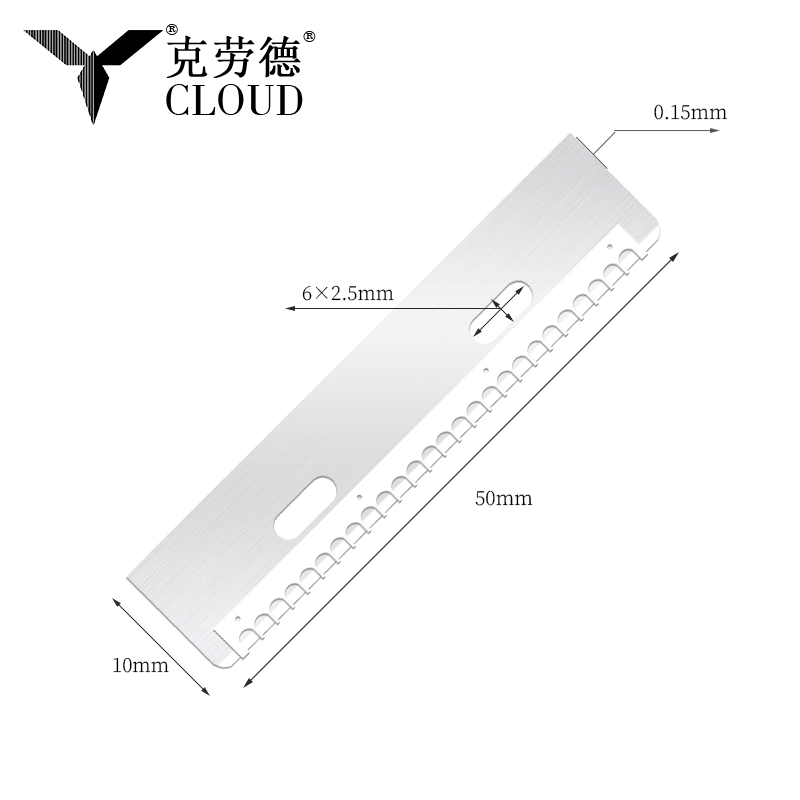
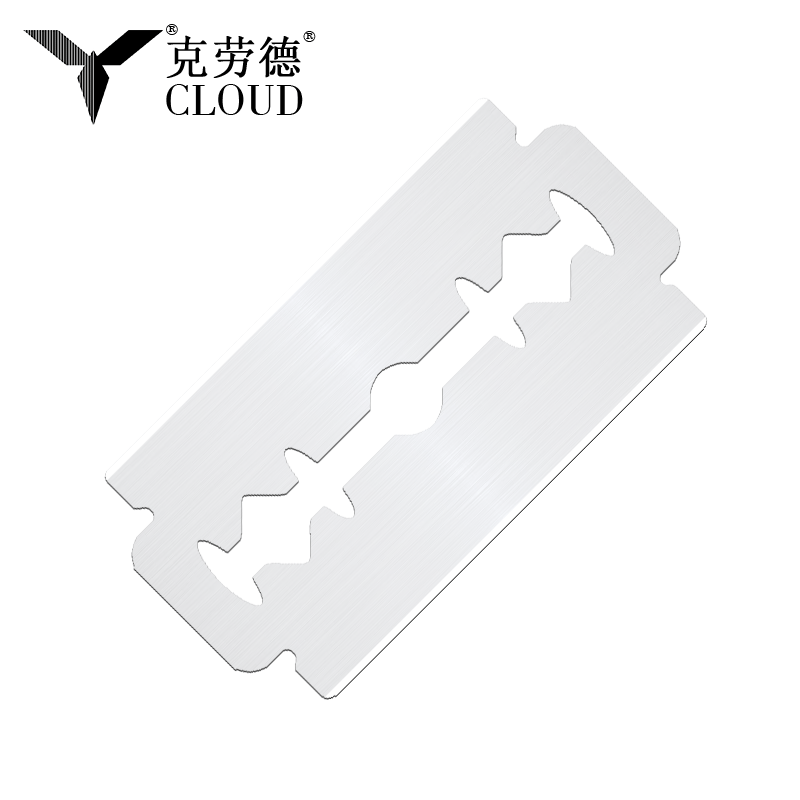
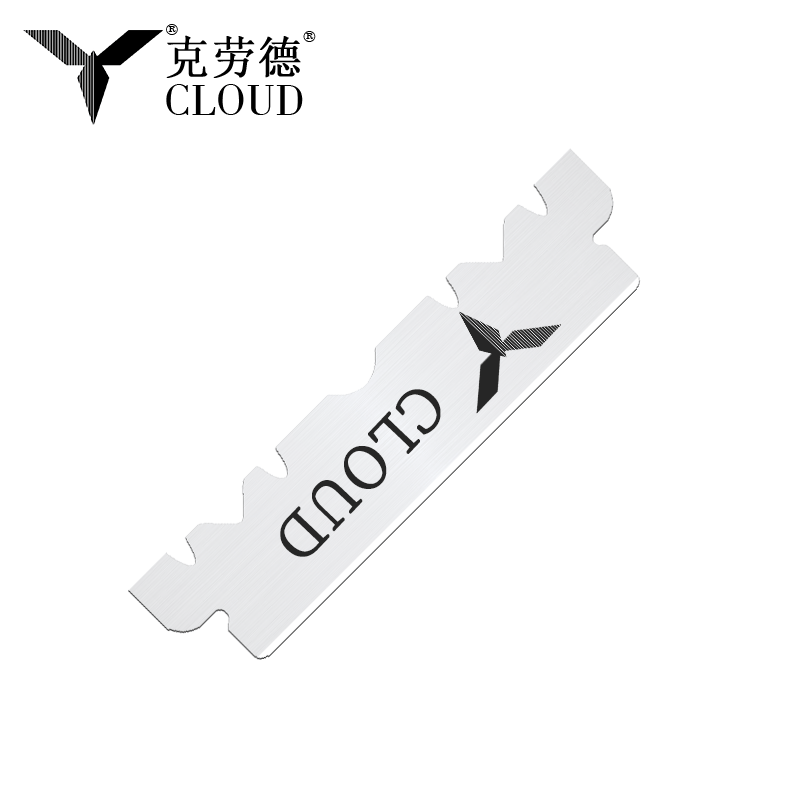
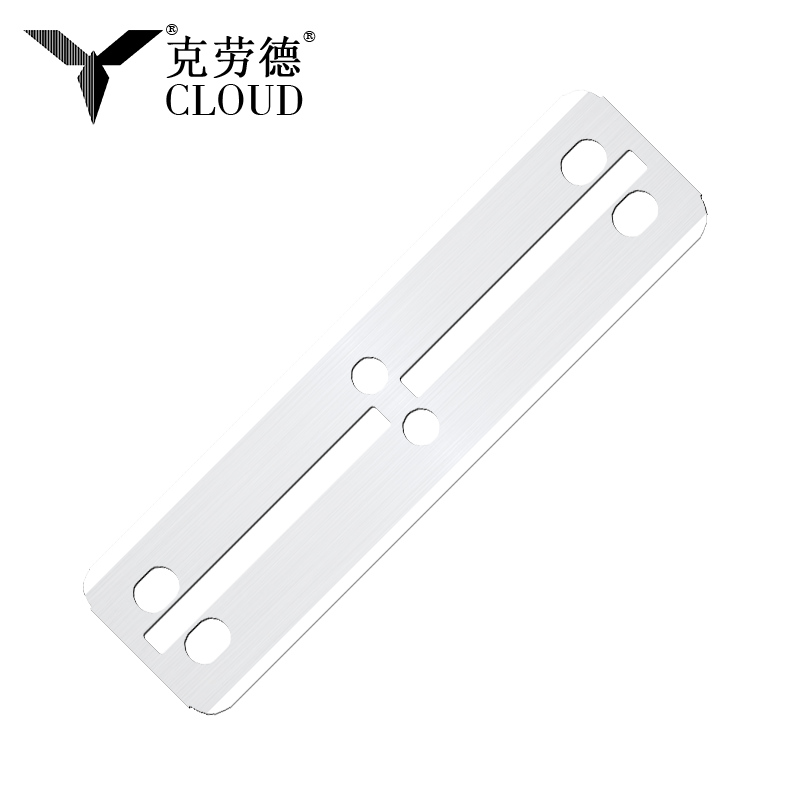
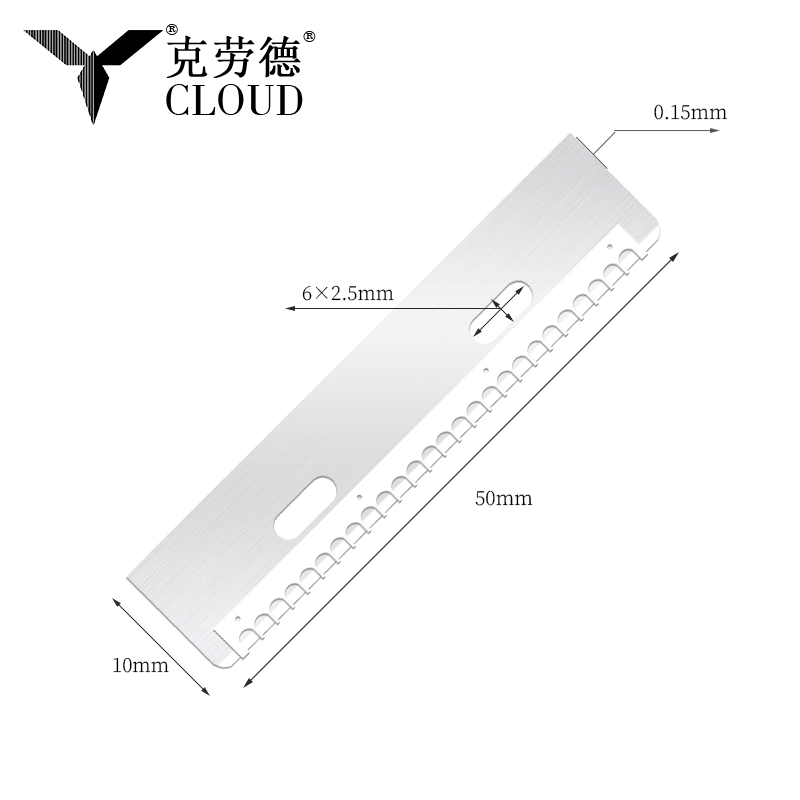
Our eyebrow razor blade series covers the full range from single-edge to nano-coated, multifunctional, and precision shaping variants. All blades are manufactured from imported high-grade stainless steel, with quality control checkpoints across the tempering, grinding, and coating stages of production. Inquire directly to discuss specifications, sample availability, and production lead times.
Related Products
Looking for a Reliable Blade?
Work with a Manufacturer.
Inquiry Us Now

-
 +86-400 9915 887
 -
 +86-021-57644936
 -
 [email protected]
 -
 No. 2066, Yushu Road, Songjiang District, Shanghai, China
QUICK LINKS
 Home
HomePRODUCTS
QR CODE
Copyright © 2025 Shanghai Cloud Blade Manufacturing Co., Ltd. All rights reserved.
 Custom Double Razor Blade Factory
