

 ENG
ENG
 English
 Español
Message Feedback

Industry News
Jun 15,2026
How to Use Double Edge Razor Blades: A Complete Step-by-Step Guide
Cartridge razors are engineered for convenience. Double edge razor blades are engineered for results. The difference shows up immediately in the quality of the shave — closer contact with the skin, a single sharp edge doing the cutting cleanly rather than multiple blades dragging across the surface, and a level of control that changes once you understand the technique. That technique is what this guide covers, from safely loading the blade to disposing of it correctly when it's done its job.
Content
Why Double Edge Razor Blades Deliver a Better Shave
The mechanics are straightforward. A double edge blade presents a single, acutely sharp cutting edge to the skin at a controlled angle. There's no stacking of multiple blades that skip over short stubble, no pivoting head that removes the shaver's control over blade exposure, and no plastic cartridge driving up the cost of every shave.
What you get instead: a closer cut at the skin surface, significantly reduced ingrown hair risk because each hair is cut cleanly rather than pulled, and blade cost that runs to cents per unit rather than dollars per cartridge. For barbers running a busy chair, that economics gap is substantial at volume. For the everyday shaver, the difference in skin quality — less irritation, less razor burn, smoother finish — tends to make the switch permanent once the technique is dialed in.
The two cutting edges of a DE blade serve a practical purpose during the shave: you alternate sides as one edge loads with lather and cut hair, keeping each pass cleaner without stopping to rinse every few strokes. It also means each blade goes further per unit cost. Our double edge razor blades for professional and personal use are manufactured from premium imported steel, precision-ground and coated for a sharpness level and edge retention that supports this kind of consistent performance across multiple shaves.
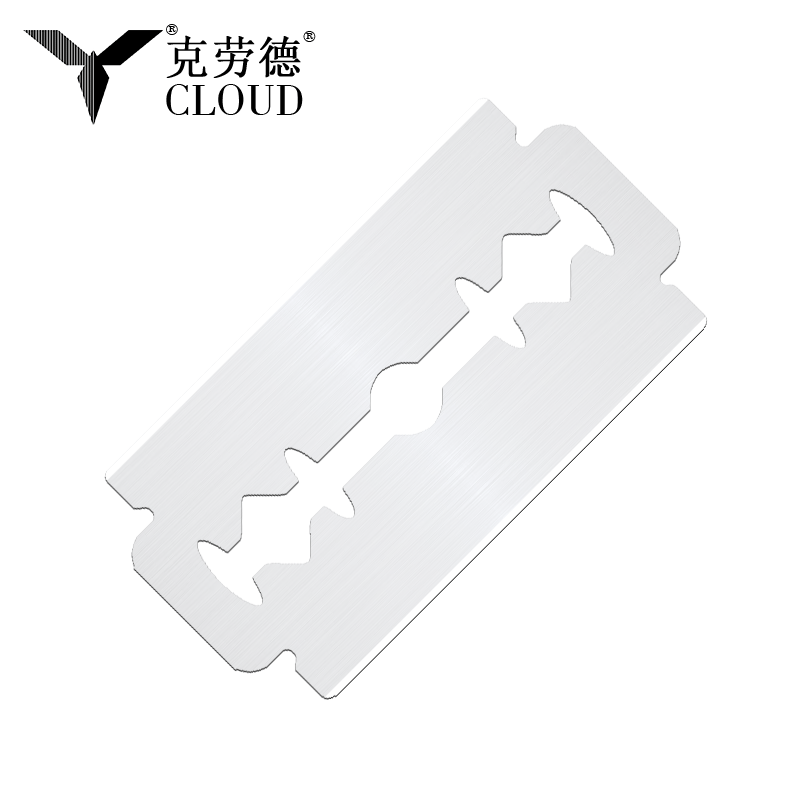
How to Load a Double Edge Razor Blade Safely
Before the shave starts, the blade needs to be seated correctly in the razor. The loading method depends on which of the three standard razor head designs you're using.
- Three-piece razor. Unscrew the handle and separate the top cap, base plate, and handle into three parts. Place the blade flat on the base plate, aligning it with the center posts. Lower the top cap over it and reassemble by threading the handle back in until snug. The blade should sit centered with equal exposure on both sides — check this visually before shaving.
- Two-piece razor. The handle unscrews from the top, which comes away with the base plate attached. Place the blade on the base plate, then screw the handle back onto the top cap. Fewer parts to manage, same alignment principle.
- One-piece (butterfly) razor. Twist the handle base to open the top cap butterfly-style, drop the blade flat onto the head, close the cap, and tighten. The fastest loading method and the easiest to use without touching the blade edges directly.
Critical safety point for all types: always handle the blade by its short ends only — the narrow edges at the top and bottom of the blade — never by the long cutting edges. New blades are sharp enough to cut skin on light contact. Take it slow, work over a flat surface, and never rush this step.
If you're pairing blades with a new handle, check our range of safety razor handles compatible with DE blades to find the right weight and grip for your shaving style.
Preparing Your Skin Before the First Stroke
Preparation is where most shaving problems are prevented. A blade cutting through dry, unprepared stubble drags — and dragging causes razor burn, nicks, and irritation that get blamed on the razor when the real issue was skipping this step.
The minimum is warm water contact for 60–90 seconds. Shaving immediately after a shower is ideal because the combination of steam, heat, and water has already done the softening work. If you're not shaving post-shower, splash warm water generously over the face and hold a warm damp towel against the skin for 30–60 seconds. The goal is to swell the hair shafts and soften the keratin, which reduces the force needed at the cutting edge and cuts the risk of irritation significantly.
Lather quality matters more than most people expect. A shaving brush builds a denser, more lubricating lather than applying cream by hand — the brush lifts hairs away from the skin surface and coats them individually, which makes each stroke cleaner. Work the brush in circular motions to build a lather with a yogurt-like consistency. Airy foam sits on the surface; dense lather stays between the blade and skin where it's needed. Apply generously — you'll need enough for two or three passes, and re-lathering between passes is non-negotiable.
Shaving Technique: Angle, Pressure, and Passes
This is the section that changes everything for people switching from cartridge razors. The instinct built by years of cartridge use — press the razor against the skin and drag — is exactly wrong for DE shaving. Relearn it once and the results are immediately better.
The angle. Hold the razor with the handle pointing away from your face and the head flat against your cheek. From there, tilt the handle downward until you're at roughly 30 degrees between the blade and skin. At this angle, you'll hear and feel the blade cutting cleanly. Too steep and it scrapes; too shallow and it skips over hair. The cheek is the easiest place to find this angle because the surface is flat — learn it there before moving to the jawline and neck.
The pressure. Use almost none. The weight of the razor itself provides all the cutting force needed — the blade is sharp enough that pressing harder adds nothing except irritation and the risk of nicks. Let the razor glide. Short strokes of one to two inches, rinsing or alternating blade sides frequently to keep the cutting edge clear.
The passes. Work in up to three passes, re-lathering between each:
- First pass — with the grain (WTG). Shave in the direction your hair grows. For most men this means downward on the cheeks and sides, and downward or at an angle on the neck. This removes the bulk of the stubble with the least skin contact and is sufficient on its own for daily maintenance shaves.
- Second pass — across the grain (XTG). Shave horizontally, perpendicular to the hair growth direction. This catches what the first pass left and brings the shave noticeably closer without the irritation risk of going directly against the grain.
- Third pass — against the grain (ATG). Optional, and recommended only once you've built technique and confirmed your skin handles the first two passes without irritation. Going ATG gives the closest possible result but increases the risk of razor burn and ingrown hairs on sensitive skin. Never attempt it without fresh lather on the area.
Keep your free hand working throughout — pull skin taut before the razor passes over curved areas like the jawline, the area under the nose, and the neck. Loose skin folds catch blade edges and cause nicks that tight skin prevents entirely.
How Many Shaves Per Blade — and When to Change
The answer varies by beard coarseness, blade steel quality, and shaving frequency — but the general range for a quality DE blade is 3 to 7 shaves before replacement. Fine beards on daily shavers may push further; coarse, heavy beards or less frequent shaving may call for a change sooner.
The signal to change is unmistakable: the blade begins to tug rather than cut. You'll feel resistance where there was none, and the razor will drag across stubble instead of gliding through it. That tugging causes more irritation than a fresh blade ever would. The correct response is to swap immediately — adding more passes with a dull blade compounds the problem rather than solving it.
Blade quality directly affects how long this interval lasts. Premium imported steel holds its edge geometry under repeated use in a way that lower-grade alternatives don't. Our double edge razor blades are engineered precisely for edge retention across multiple shaves — the sharpness on the fifth use should feel meaningfully closer to the first than what budget blades typically deliver. For further guidance on blade selection across different specifications and sharpness levels, our FAQ covers common questions about matching blade type to beard type and shaving frequency.
Blade Care, Storage, and Safe Disposal
A DE blade's lifespan between shaves is largely determined by how it's treated afterward. The primary enemy is moisture — water left on the blade accelerates oxidation and degrades the edge between uses, shortening the effective life of each blade regardless of its starting quality.
After each shave, rinse the razor thoroughly under running water, shake out excess water, and set it head-up in a stand or on a dry surface to air out. Don't dry the blade by rubbing it against a towel — that motion dulls the edge. Some shavers apply a very light touch of mineral oil to the blade surface between uses in humid bathroom environments to further slow oxidation, though this is optional with quality stainless steel blades.
When the blade is ready for disposal, never place it loose in household waste. A used DE blade is a serious sharps hazard for anyone handling rubbish downstream. The correct method is a blade bank — a small sealed metal container designed specifically for used razor blades. Drop each spent blade through the slot; when the container is full, dispose of it as sealed metal waste according to your local guidelines. If you don't have a blade bank, a tightly sealed rigid container such as a small metal tin serves the same purpose.
Shanghai Cloud Blade Manufacturing Co., Ltd. produces a complete range of blades for every shaving application — from our double edge razor blades for professional and personal use to single edge razor blades for barbershop applications including hair cutting and shavette use. All products are manufactured to consistent quality standards from our Shanghai facility, with OEM and custom specification options available for trade buyers and barbershop suppliers. Contact us to discuss specifications, sample orders, or volume pricing.
Related Products
Looking for a Reliable Blade?
Work with a Manufacturer.
Inquiry Us Now

-
 +86-400 9915 887
 -
 +86-021-57644936
 -
 [email protected]
 -
 No. 2066, Yushu Road, Songjiang District, Shanghai, China
QUICK LINKS
 Home
HomePRODUCTS
QR CODE
Copyright © 2025 Shanghai Cloud Blade Manufacturing Co., Ltd. All rights reserved.
 Custom Double Razor Blade Factory
