

 ENG
 English
 Español

Home / News / Industry News / How the Safety Razor Was Invented: Jean-Jacques Perret’s Guarded Blade
Message Feedback

Industry News
Nov 02,2026
How the Safety Razor Was Invented: Jean-Jacques Perret’s Guarded Blade
Ask a room full of wet shavers who invented the safety razor and you will usually hear one name. The real story is older, and a good deal messier. The safety razor did not arrive in a single flash of genius; it grew out of a very old problem, which is how to press a sharp edge against skin without opening it. The eventual answer was almost embarrassingly simple: put something between the blade and the face, so that only a sliver of steel can ever reach the skin.
Content
- 1 Before the Name: The Wooden Guard of Jean-Jacques Perret
- 2 1880: The Term Itself Enters the Patent Record
- 3 1901 to 1904: Thin Steel Rewrites the Economics
- 4 The Invention in One Timeline
- 5 Why the Design Survived the Century
- 6 From Workshop Idea to Production Line
- 7 Questions Buyers Still Ask About the Invention
Before the Name: The Wooden Guard of Jean-Jacques Perret
In the eighteenth century, shaving was a barber's job and a risky one. Straight razors were long, stiff and unforgiving, and a moment of inattention left a cut. In 1762 a French cutler named Jean-Jacques Perret published a treatise on shaving in which he described a straight razor fitted with a wooden guard running along the edge.
The idea came from the carpenter's plane, where a wooden mouth controls how much iron can bite into the wood. Perret applied the same thinking to steel and skin. The guard limited exposure, the blade could no longer dig in, and the angle of the cut became something the tool decided rather than the hand.
Perret never used the phrase safety razor, and his device was still a straight razor that needed stropping. It worked best as a training tool for young men learning to shave themselves. But the principle he put on paper in the 1760s, control the exposure and control the angle, is exactly the principle every safety razor still follows today.
1880: The Term Itself Enters the Patent Record
The phrase safety razor first appears in a patent issued in 1880 to the Kampfe brothers, German-American cutlers working in New York. Their design was a frame rather than a bare blade: a hollow-ground blade sat inside a holder with a comb-like guard at the front, and a handle at the back.
The frame did two jobs at once. It held the edge at a fixed angle, so the shaver no longer needed a steady wrist, and it shielded the skin from everything except the narrow strip of blade the comb exposed. Early models were not cheap, and the blade still had to be taken out, stropped and honed. Even so, by the late 1880s guarded razors were reaching the market in growing numbers, and the shape of the modern shave, a handle, a head and one small worry, was already visible.
1901 to 1904: Thin Steel Rewrites the Economics
Then came King C. Gillette, an American salesman with a stubborn idea. Instead of a thick, rigid blade that had to be resharpened, he imagined a thin sheet-steel blade, stamped, hardened and sharpened in a factory, then clamped between two plates on a reusable handle. When the edge dulled, the blade went into the bin and a new one cost a few cents.
The company was set up in 1901, the patent came through in 1904, and the first sales in 1903 were small enough to carry home in one crate. What changed everything was the First World War, when millions of soldiers were issued the new razors. Men who had never owned a strop came home expecting a fresh edge in a paper wrapper. The straight razor never disappeared, but it stopped being the default.
The Invention in One Timeline
| Period | What happened | Why it mattered |
|---|---|---|
| 1762 | Perret adds a wooden guard to a straight razor | The first recorded attempt to control blade exposure |
| 1880 | The Kampfe patent uses the term safety razor | The blade is held in a frame behind a comb guard |
| 1888 | Guarded razors reach the market in quantity | Home shaving becomes practical for ordinary buyers |
| 1901 to 1904 | Thin stamped blade plus a two-piece handle | Disposable edges replace stropping and honing |
| 1918 | Military issue during the First World War | Millions of men learn the format at once |
| 1960s onward | Stainless steel and coated edges | Longer edge life and far less corrosion |
Why the Design Survived the Century
What Perret discovered with a block of wood, later engineers measured in numbers. Three of them decide how a razor feels on the face:
- Blade gap, the distance between the blade edge and the guard.
- Blade exposure, how far the edge sits beyond the line of the guard and cap.
- Shaving angle, how the whole head meets the skin.
Adjust any one of these and the razor changes character, from mild and forgiving to efficient and demanding. This is why two razors that look almost identical can shave completely differently.
The blade matters just as much as the frame. A modern double-edge blade is a strip of steel roughly a tenth of a millimetre thick, honed to an edge measured in fractions of a micron and then coated. Sputtered chromium or platinum alloys on the edge slow down wear, and a top layer of PTFE lowers friction so the blade glides instead of tugging. Stainless steel keeps that edge from corroding between shaves, which is why blades made today outlast the carbon steel versions that dominated the first half of the twentieth century. If you want to go deeper into the geometry, our guide to safety razor design and materials covers it step by step.
From Workshop Idea to Production Line
We have been making blades in Songjiang, Shanghai since 1997, and the questions we answer every week are the same ones Perret and the Kampfe brothers were working on: how much edge should show, how thick should the steel be, and what coating keeps it smooth on the second shave as well as the first. Nobody in our factory claims to have invented the safety razor, but we do spend our days on the details that make the invention usable.
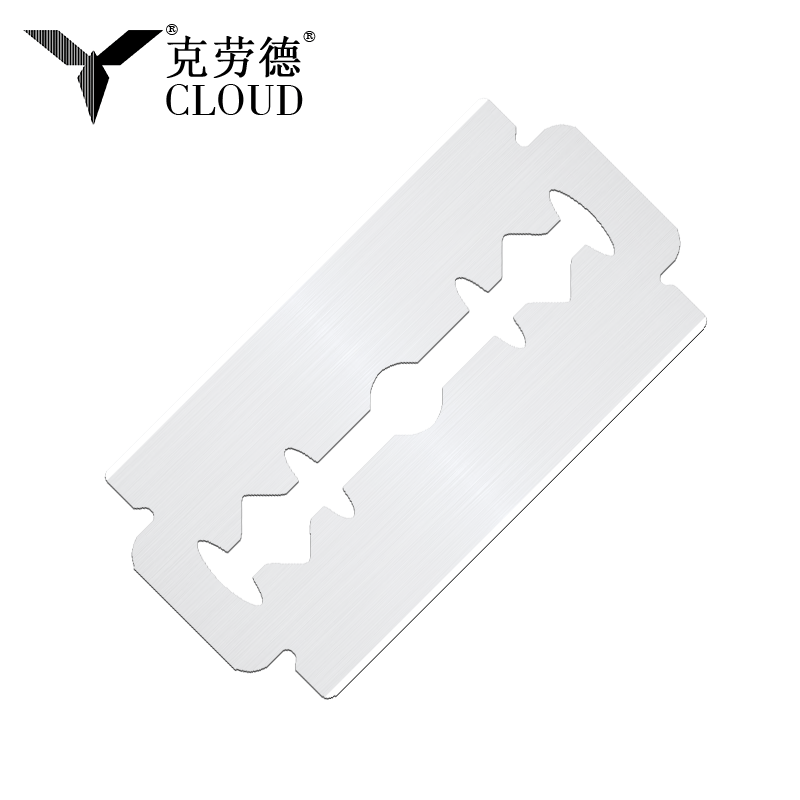
 Custom Super Steel 74 Double-Edge Razor BladesPrecision double-edge blades in 42.8 mm length and 0.1 mm thickness, with premium rolled steel and OEM customization for razor brands.View Product →
Our own shop runs eight automated lines and produces a few hundred million blades a year, from double-edge and single-edge blades to eyebrow blades and the handles that hold them. Along the way we invested in magnetron sputtering equipment to lay down thin metallic coatings, and in automated welding and inspection machines that check edges faster and more consistently than any pair of eyes. The quality system follows ISO 9001, and the everyday work is a long argument about steel grades, grinding angles and coating thickness, argued politely.
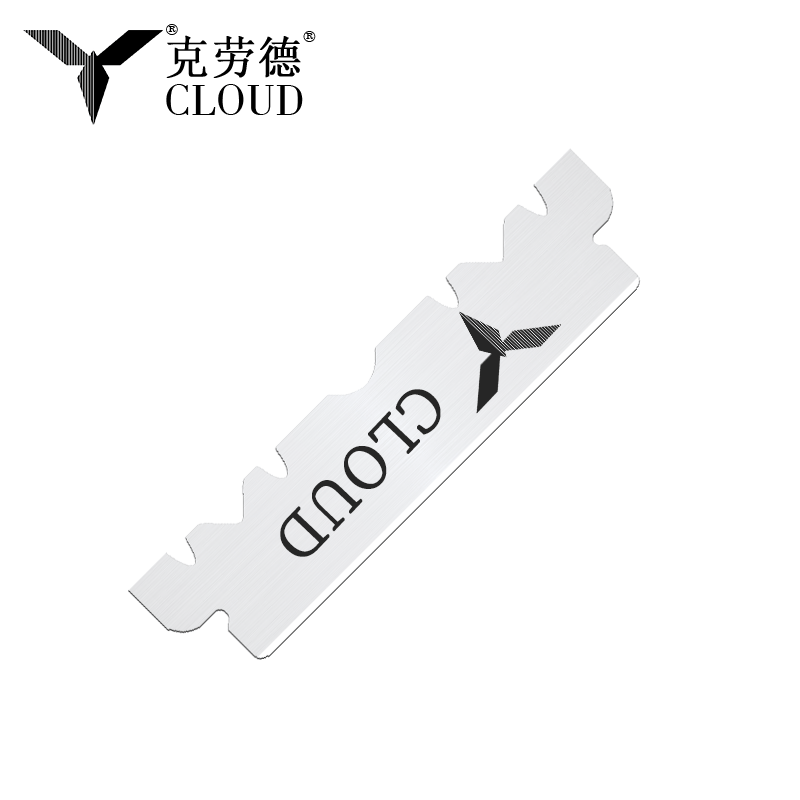
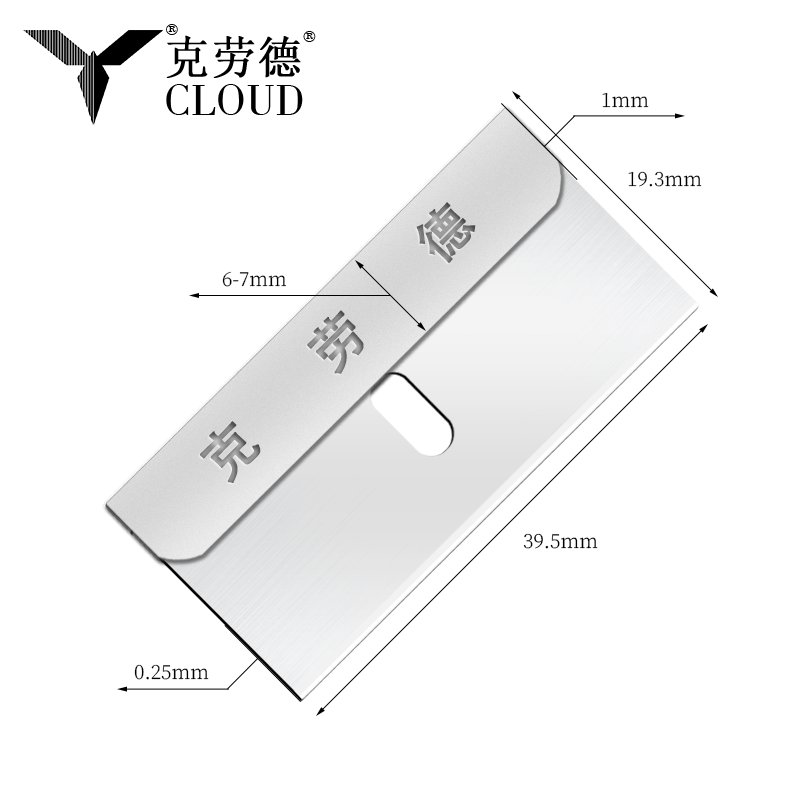
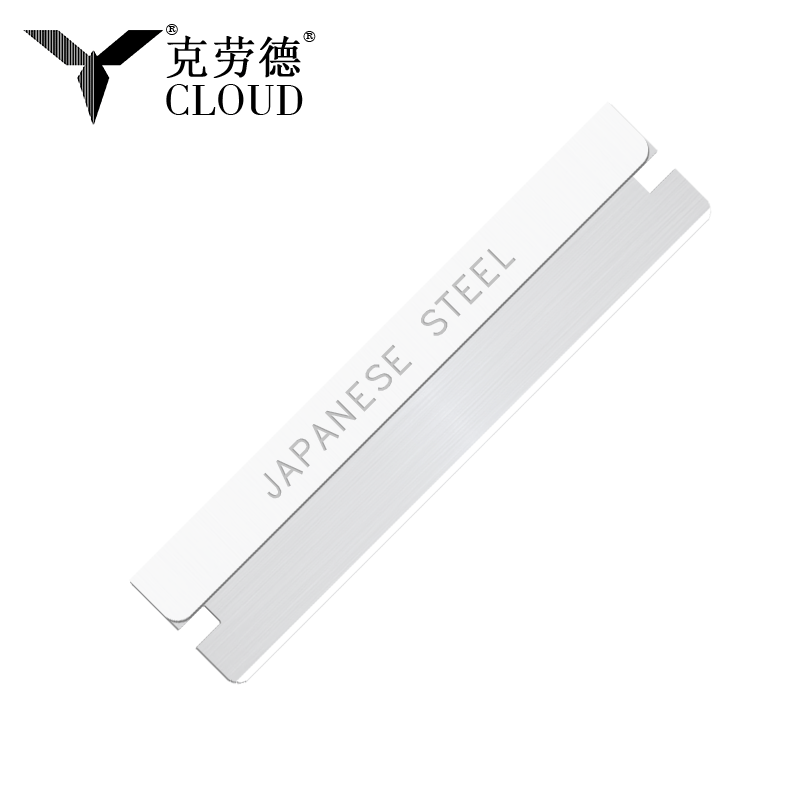
 Multipurpose Single-Edge Safety Razor BladesSingle-edge blades for scraping, trimming and fine cutting, compatible with varied holders and available in Tokkin steel options with OEM customization.View Product →
What that means for buyers is fairly simple. A blade that feels harsh usually has a geometry or coating problem rather than a mysterious one, and a blade that rusts in the pack has a material problem. Sorting those out before a container ships is cheaper than sorting them out afterwards.
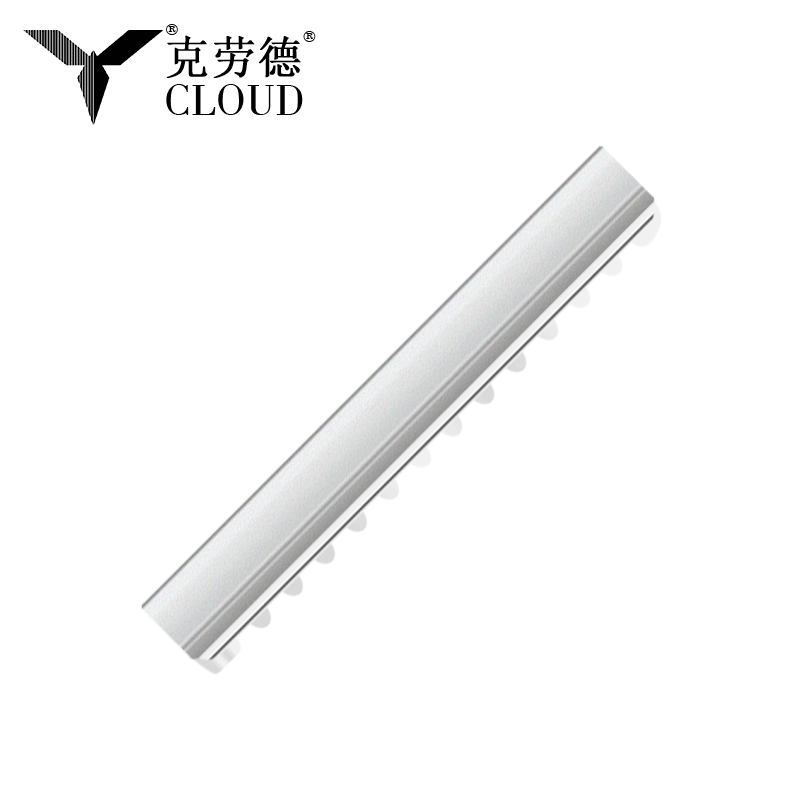
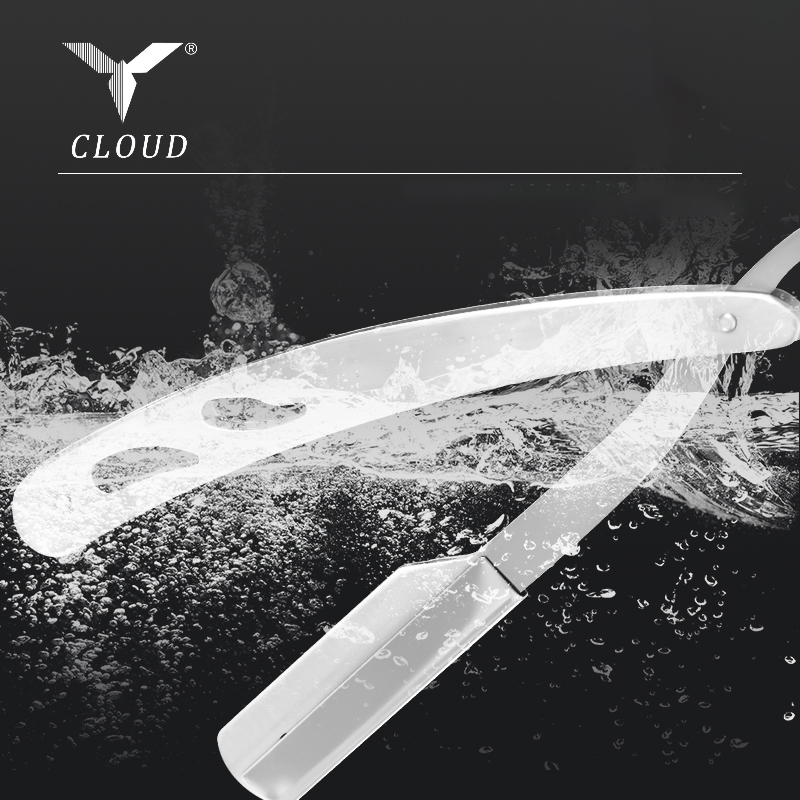 Custom 74 Manual Razor Handle SetStainless steel and ABS-handle razor set in standard and extended models, offering durable holders for shaving or straight-razor applications.View Product →
Questions Buyers Still Ask About the Invention
Who invented the first safety razor?
Jean-Jacques Perret is the name most often credited. His guarded straight razor of the 1760s was the first widely described attempt to make a blade safer through a physical guard rather than through a steadier hand.
When was the safety razor invented?
It depends on which milestone you count. The guarded design appeared in 1762, the phrase itself entered a patent in 1880, and the thin disposable blade that most people picture today arrived between 1901 and 1904.
Why is it called a safety razor?
Because the guard, cap or comb limits how much blade can touch the skin. Compared with an open straight razor, the risk of a deep cut drops sharply, even though a safety razor can still nick a careless shaver.
Two and a half centuries on, the invention has not really changed shape. A guard still sets the exposure, a handle still sets the angle, and a thin piece of coated steel still does the cutting. Everything else, from alloy choice to sputtering targets, is refinement. That is an encouraging thought for anyone who works in this trade: the good ideas tend to stay, and the job is to make them a little better each decade.
Related Products
Looking for a Reliable Blade?
Work with a Manufacturer.
Inquiry Us Now

-
 +86-400 9915 887
-
 +86-021-57644936
-
 [email protected]
-
 No. 2066, Yushu Road, Songjiang District, Shanghai, China
QUICK LINKS
 Home
PRODUCTS
QR CODE
Copyright © 2025 Shanghai Cloud Blade Manufacturing Co., Ltd. All rights reserved.
 Custom Double Razor Blade Factory
