

 ENG
 English
 Español

Home / News / Industry News / Carbon Steel Razor Blades: Sharpness, Rust Care and Sourcing Explained
Message Feedback

Industry News
Oct 20,2026
Carbon Steel Razor Blades: Sharpness, Rust Care and Sourcing Explained
Carbon steel razors occupy a curious place in the shaving world. Traditional straight razor users talk about them with genuine affection, while supply chain managers often flinch at the words "rust" and "replacement rate." Neither reaction is wrong. After close to thirty years of manufacturing blades in Shanghai — from double edge formats to eyebrow blades and barber tools — we have learned that the carbon steel question is rarely "is it better?" It is almost always "better for which shaver, in which climate, stored which way?"
This guide gathers what we have seen on the shop floor and heard from customers who buy both carbon steel and stainless steel products, so you can judge the material on its real merits rather than on reputation alone.
Content
- 1 What "Carbon Steel" Actually Means in a Razor
- 2 Carbon Steel vs Stainless Steel at a Glance
- 3 Why Traditional Shavers Still Choose Carbon Steel
- 4 The Trade-Off Nobody Escapes: Rust
- 5 What This Looks Like on Our Production Floor
- 6 What to Ask Before You Source Carbon Steel Razors
- 7 So Which Should You Choose?
What "Carbon Steel" Actually Means in a Razor
Carbon steel is a broad family, not a single recipe. In razor terms it usually means steel with roughly 0.6% to 1.3% carbon, very little chromium — well below the 12% or so that defines stainless — and small additions of manganese or silicon for toughness. Heat treated with care, it can hold a hard, thin edge without turning brittle, which is exactly why generations of straight razors were forged from it.
Stainless steel, often stamped INOX, adds 12% to 18% chromium. That chromium forms the passive oxide layer that keeps a blade from reddening and pitting. It also makes the steel tougher overall, and in most mass-market strip it is slightly less willing to accept an ultra-fine edge. Both families can shave beautifully. The differences show up in maintenance routines, in honing behaviour, and in manufacturing economics.
One caution when buying: "carbon steel razor" is sometimes used loosely for any non-stainless blade steel, and grades vary enormously between suppliers. Ask for the grade designation and the heat treatment target rather than accepting a category label on a specification sheet.
Carbon Steel vs Stainless Steel at a Glance
The comparison below reflects the general ranges we work with and see quoted across the industry. Treat it as a starting point for a conversation with your supplier, not as a substitute for test shaves and salt spray data.
| Property | Carbon steel | Stainless steel (INOX) |
|---|---|---|
| Typical composition | Iron with 0.6–1.3% carbon, trace chromium | Iron with 12–18% chromium, 0.3–0.7% carbon |
| Edge keenness potential | Very high | High |
| Hardness after heat treatment | Approximately 58–63 HRC | Approximately 50–58 HRC |
| Honing and stropping | Responds quickly, easy to refresh | Slower to refine, needs more effort |
| Corrosion resistance | Low; rusts if left damp | High |
| Daily maintenance | Dry thoroughly, oil, keep away from humidity | Rinse and dry |
| Relative material cost | Lower | Higher |
| Typical applications | Straight razors, traditional double and single edge blades | Modern double edge, disposable and medical blades |
Why Traditional Shavers Still Choose Carbon Steel
There is a tactile reason carbon steel keeps its following. A well-ground carbon blade feels different on the skin — it tends to cut with less pressure, and the feedback through a straight razor handle is clearer. For someone who shaves with a straight razor and refreshes the edge on a stone every few weeks, that matters more than corrosion charts.
- It takes a finer edge. Lower alloy content means a cleaner, more uniform grain structure at the apex.
- It is forgiving to hone. A few passes on a finishing stone usually restore a carbon edge, while stainless often needs more time and patience.
- It strops back to life. Barbers who use a leather strop daily can keep a carbon blade working for a long time between honings.
- It is honest about wear. Discolouration and patina tell you when the blade needs attention, rather than hiding the problem.
For disposable double edge blades, the picture shifts. Carbon steel blades are often sold uncoated, so they can feel exceptionally sharp out of the wrapper but begin to degrade once the wrapper is opened. Most shavers treat them as a short-life, high-sharpness option rather than a blade to leave in a razor for a month.
The Trade-Off Nobody Escapes: Rust
We would rather say this plainly than let a customer discover it in a bathroom cabinet. Carbon steel rusts. Not because it is badly made, but because the chemistry leaves it without the chromium shield that stainless enjoys. In humid climates, an uncoated carbon blade can show spotting within a day of use.
A routine that works, in our experience:
- Rinse the blade in cool water and shake off excess droplets immediately after shaving.
- Pat it dry with a clean towel rather than leaving it to air dry in a damp razor.
- Wipe a thin film of mineral oil or a dedicated blade oil along the edge for storage.
- Keep the razor out of the shower enclosure; a dry drawer or a ventilated case is far kinder.
- For inventory, store blades in sealed packaging with vapour-phase corrosion protection and control warehouse humidity.
Handled this way, a carbon straight razor can serve for decades. Handled carelessly, it will teach the same lesson in a week.
What This Looks Like on Our Production Floor
Shanghai Cloud Blade has been manufacturing blades since 1997, and we run eight automated lines with an annual capacity of around 300 million blades under an ISO 9001 quality system. Our engineers invest heavily in edge and surface technology — magnetron sputtering equipment installed in 2004 and again in 2017, nano-chromium and nitride alloy coatings, and automated welding and inspection machinery added in 2021. That coating know-how is what allows a manufacturer to offer a steel with modest corrosion resistance in a form that still survives real-world use.
If you are weighing carbon steel against stainless for a traditional double edge line, our double edge range is a practical reference point for edge geometry, coating options and packaging formats.
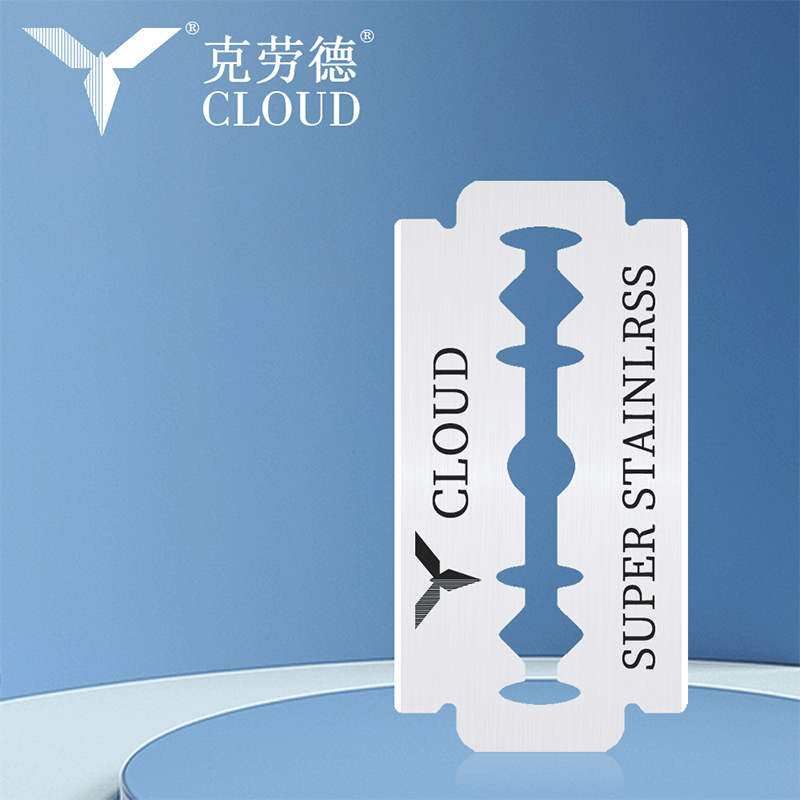 Super Steel 74 Double Edge Razor BladesPrecision double-edge blades in premium rolled steel, sized for secure alignment and offered with OEM packaging options for traditional shaving lines.View Product →
Single edge formats follow similar metallurgical logic but different grinding and handling, which is why barber and medical buyers usually evaluate them separately.
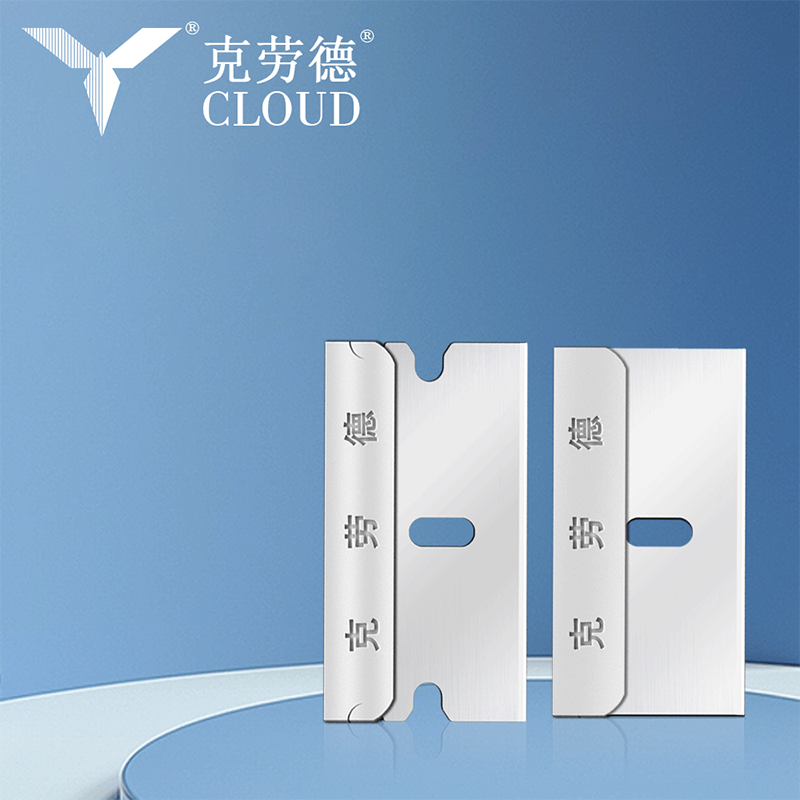 Custom Multipurpose Single Edge Safety Razor BladesSingle-edge blades for scraping, trimming and fine cutting, available in Tokkin steel options with OEM specifications and free samples for tool-compatible utility use.View Product →
The science behind edge sharpness and how it interacts with steel choice is covered in more depth in our article on what defines a super sharp razor blade, which explains why hardness alone never tells the full story.
What to Ask Before You Source Carbon Steel Razors
Whether you are developing a heritage-style straight razor or a niche double edge blade, the difference between a good and a disappointing shipment is usually in the questions asked before the purchase order. These are the ones we recommend:
- Grade and carbon content. Ask for the steel designation, not just "carbon steel," along with the mill certificate.
- Heat treatment target. A specified hardness range in HRC, plus how the supplier verifies it.
- Coating. Uncoated, PTFE, nano-chromium or nitride, and how the coating affects the first shave versus the fifth.
- Corrosion testing. Salt spray or humidity chamber results, even short-duration, tell you more than adjectives.
- Packaging protection. Oiled wrap, vapour-phase paper, foil sealing and carton humidity control for export routes.
- Consistency data. Batch-to-batch cut force measurements and defect rates, not just sample blades.
So Which Should You Choose?
If your customers are traditionalists who strop and hone, carbon steel is the more faithful choice and the better story to tell. If your product will sit in a humid bathroom between uses, or travel through long distribution channels before it reaches a shelf, stainless steel will protect your brand reputation far more reliably.
- Choose carbon steel for straight razors, enthusiast DE blades and small-batch heritage lines.
- Choose stainless steel for disposables, medical and grooming blades with long shelf life.
- Consider a mixed range: carbon for the connoisseur, stainless for the everyday buyer.
For a complete straight razor set that pairs a durable handle with traditional blade formats, this option is a useful starting point for barber and retail programmes.
 Custom Wet and Dry Straight Razor SetReplaceable-blade straight razor set with Sandvik steel blades, folding PP handle and stainless steel head for wet or dry grooming and retail programmes.View Product →
If you would like to talk through grades, coatings or minimum order quantities, our team is glad to help — and our frequently asked questions cover the basics of ordering and customisation.
Carbon steel is not a shortcut and not a relic. It is a material with a clear personality: extraordinarily sharp, pleasant to maintain, and entirely unforgiving of neglect. Once a buyer understands that trade-off, choosing between carbon and stainless stops being a debate about superiority and becomes a straightforward question about the shaver you are serving. That is a conversation we are always happy to have.
Related Products
Looking for a Reliable Blade?
Work with a Manufacturer.
Inquiry Us Now

-
 +86-400 9915 887
-
 +86-021-57644936
-
 [email protected]
-
 No. 2066, Yushu Road, Songjiang District, Shanghai, China
QUICK LINKS
 Home
PRODUCTS
QR CODE
Copyright © 2025 Shanghai Cloud Blade Manufacturing Co., Ltd. All rights reserved.
 Custom Double Razor Blade Factory
