

 ENG
ENG
 English
 Español
Message Feedback

Industry News
May 08,2026
Surgical Shaver & Medical Blades Guide
Content
What Makes a High-Performance Single Edge Razor Blade
Not all blades are created equal. The difference between a blade that performs and one that fails often comes down to the raw material and manufacturing precision behind it. Single edge razor blades engineered from imported high-quality steel deliver a measurably sharper edge, longer service life, and more consistent cutting behavior across repeated use. These advantages are not cosmetic — they translate directly into reduced material waste, lower replacement frequency, and fewer quality defects in the final output.
The geometry of a single edge blade also matters. Unlike double edge designs, a single edge blade provides a rigid spine on the back, enabling controlled pressure and predictable depth of cut. This structural characteristic makes the format a natural fit for applications where the operator needs tactile feedback — from precision industrial trimming to medical procedures where tissue handling demands exactness.
Key indicators of blade quality include:
- Edge hardness measured on the Rockwell scale, typically HRC 56–62 for premium blades
- Surface finish consistency, which affects friction and drag during cutting
- Corrosion resistance, especially critical for stainless steel grades used in humid or sterile environments
- Dimensional tolerances held within ±0.01 mm for repeatable fit in blade holders and equipment
Surgical Shaver Medical Blades: Standards That Cannot Be Compromised
In medical environments, blade performance is not a preference — it is a patient safety requirement. Surgical shaver medical blades used in procedures such as arthroscopic debridement, tissue resection, and pre-operative skin preparation must meet strict biocompatibility and sterility standards. Any deviation in edge sharpness or blade integrity introduces risk of tearing rather than clean cutting, which prolongs healing and increases infection exposure.
Medical-grade blades in this category are typically manufactured under ISO 13485 quality management systems, and the finished product is tested for sterility per ISO 11135 or equivalent sterilization validation protocols. The steel alloy selected for surgical shaver medical blades must also pass biocompatibility screening under ISO 10993, confirming the material does not trigger cytotoxic, sensitizing, or inflammatory responses.
From a design standpoint, these blades are engineered for single-use application. Re-using a surgical blade after even one procedure introduces micro-deformation at the cutting edge that cannot be detected visually but significantly degrades cutting performance. Single-use design also eliminates the sterilization re-processing burden on facility staff and reduces cross-contamination risk to near zero when proper disposal protocols are followed.
Procurement teams sourcing surgical shaver medical blades for hospital networks or surgical centers should evaluate suppliers on the following criteria:
- Regulatory clearance status (FDA 510(k), CE Mark, or equivalent)
- Documented sterilization method and shelf-life validation
- Lot traceability and batch release documentation
- Compatibility with existing shaver handpiece systems used in the facility
Matching Blade Type to Application: A Practical Guide
The single edge format spans a broad range of specialized blade types. Selecting the right variant for the task eliminates workarounds, reduces operator fatigue, and protects the integrity of the material being cut. The table below outlines the primary blade types within the single edge series and their corresponding best-fit applications.
| Blade Type | Primary Application | Key Advantage |
|---|---|---|
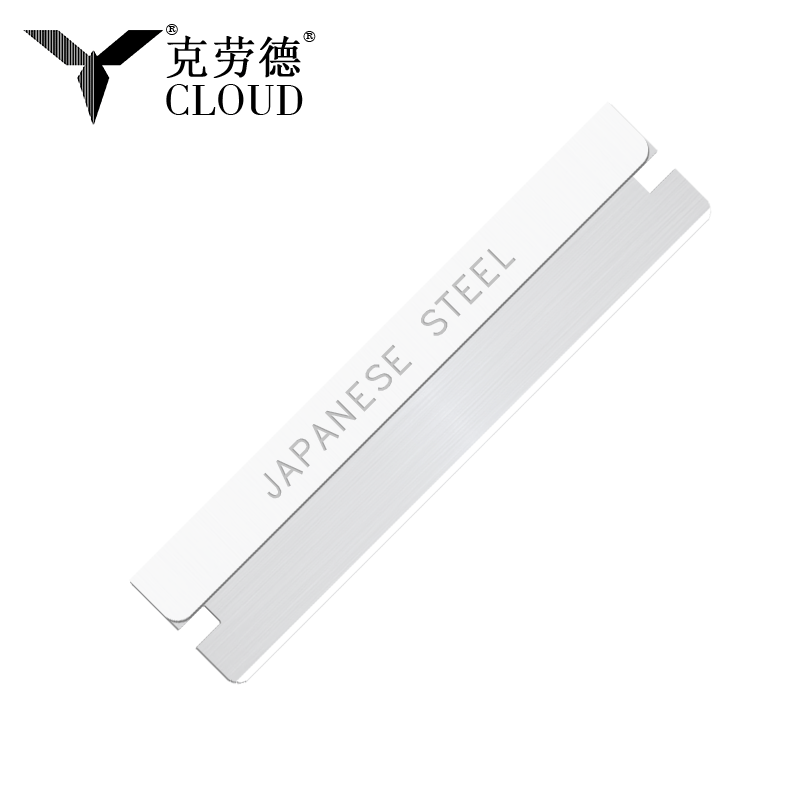
| Multipurpose Single Edge Safety Razor Blades | General industrial and household cutting | Versatility across substrates |
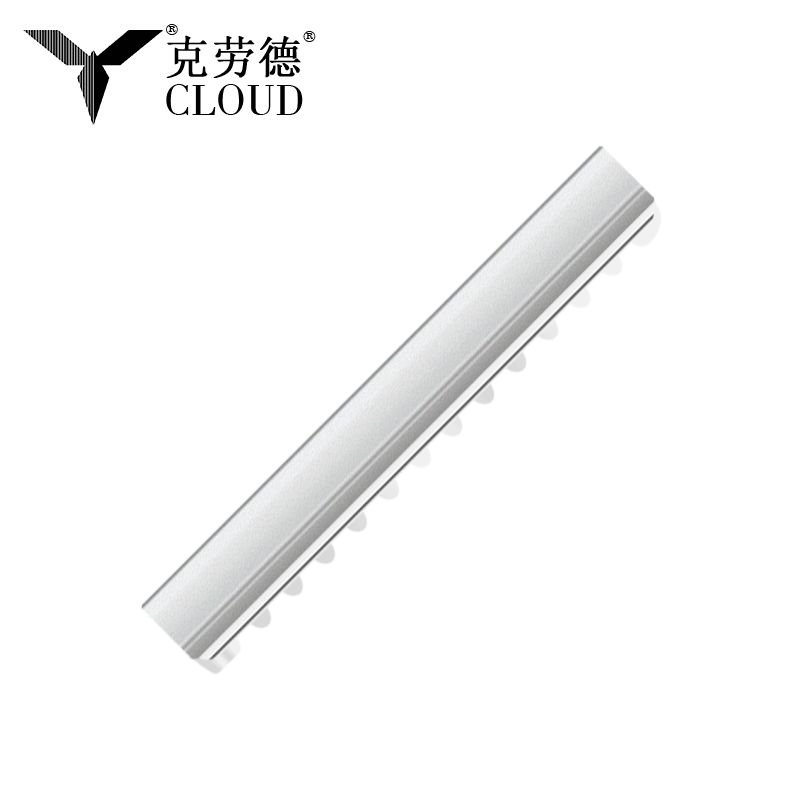
| Single Edge Corrugated Razor Blades | Packaging and corrugated board cutting | Reduced drag through layered material |
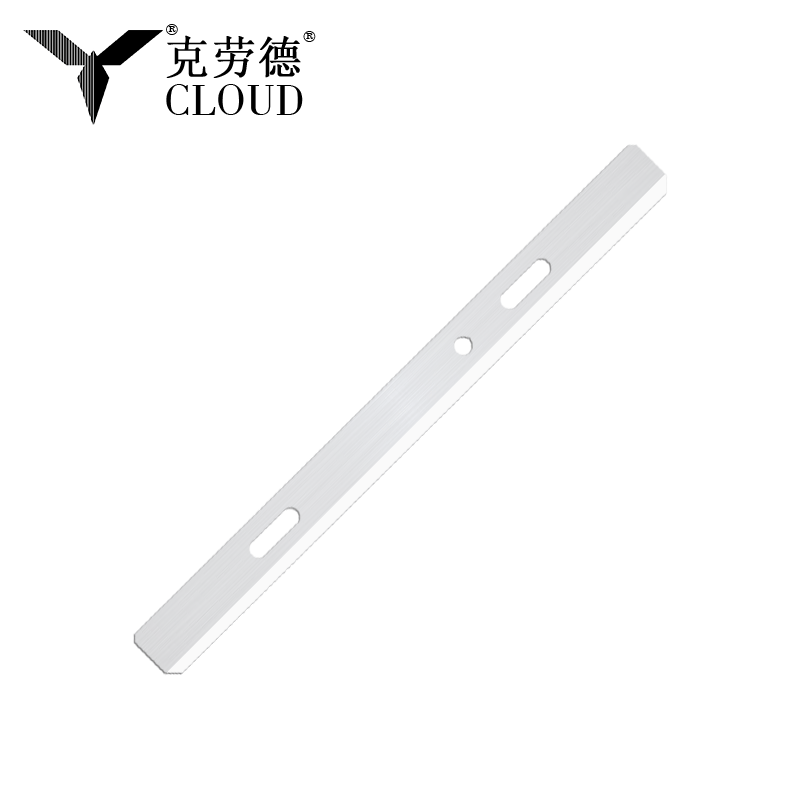
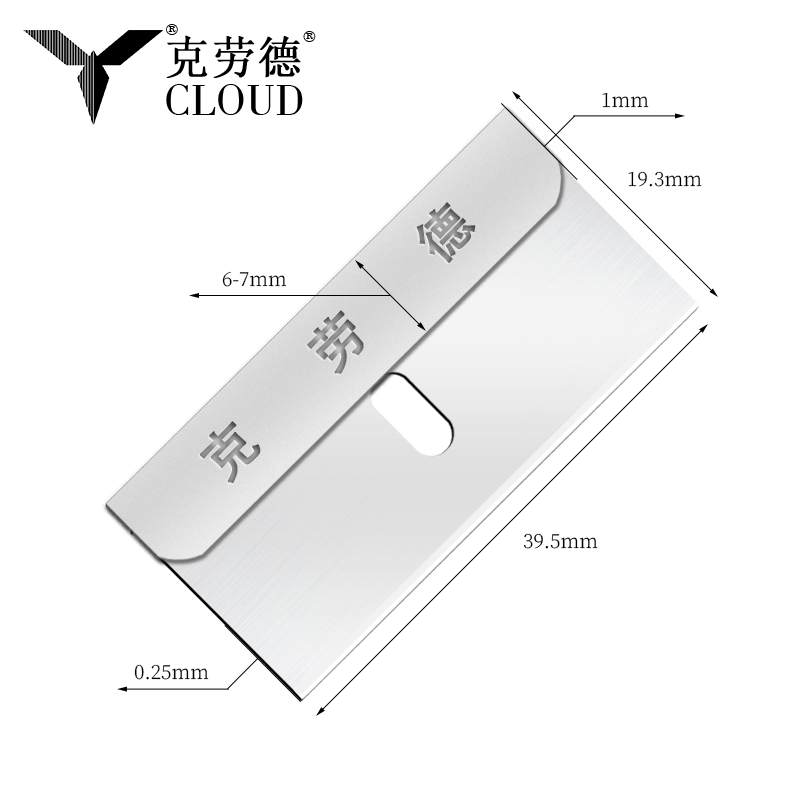
| Single Edge Flat Razor Blades | Precision trimming and surface finishing | Smooth, consistent cuts with minimal burring |
| Stainless Steel Single Edge Hair Cutting Blades | Barbering and cosmetic applications | Long edge retention, rust resistance |
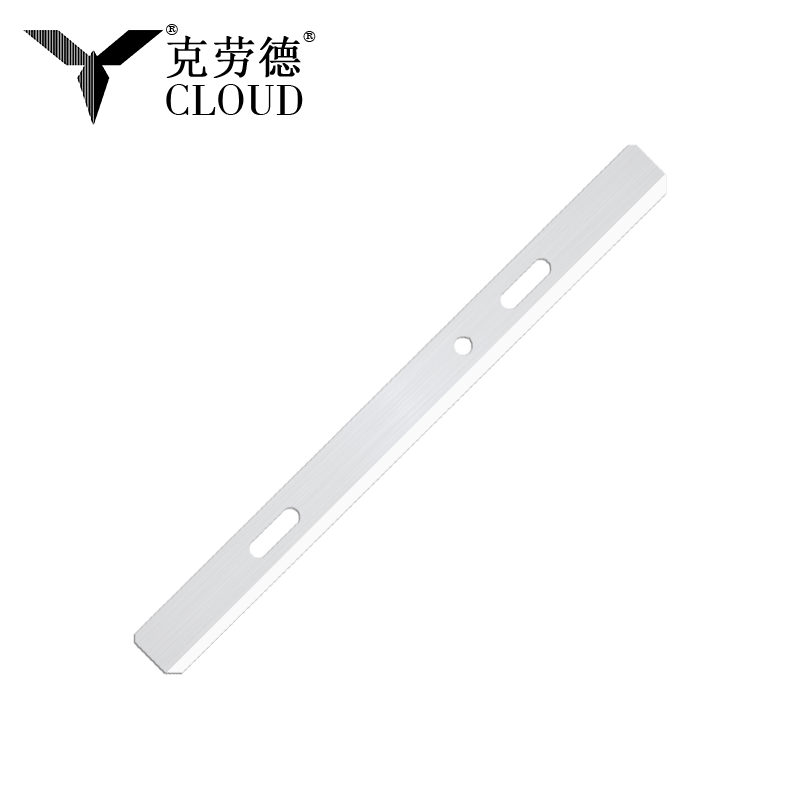
| Surgical Shaver Medical Blades | Pre-operative shaving and tissue resection | Sterile, biocompatible, single-use |
For buyers sourcing across multiple categories — for instance, a medical supply distributor stocking both surgical shaver medical blades and general-purpose scalpel blades — consolidating procurement under a single manufacturer with a broad product line reduces qualification burden and simplifies logistics. Consistent steel sourcing and manufacturing process across blade types means quality predictability across the entire order.
Scalpel Blades and Medical Supply: Understanding the Broader Ecosystem
Scalpel blades remain one of the most fundamental tools in surgical and clinical environments. While surgical shavers handle soft tissue preparation and debridement, scalpel blades handle incision — and the precision requirements for both are equally demanding. A scalpel blade must maintain its edge through the full depth of an incision without deflecting or requiring excess force, which would distort surrounding tissue.
Standard scalpel blade numbering (such as #10, #11, #15, #22) reflects differences in blade curvature, tip geometry, and intended tissue type. Curved blades like the #10 are suited to large incisions in open surgery, while narrow pointed blades like the #11 serve fine dissection work. Medical supply distributors stocking a comprehensive blade portfolio need to maintain adequate inventory across these variants, as surgical teams frequently request specific blade numbers by procedure type.
The global scalpel blade market was valued at approximately USD 430 million in 2023 and is projected to grow at a CAGR of around 4.8% through 2030, driven by increasing surgical volumes, expanding outpatient procedure centers, and rising demand from emerging healthcare markets. For medical supply companies, this growth trajectory represents both volume opportunity and a pressure to ensure supply chain reliability — especially for high-turnover consumables like blades.
Stocking Strategy for Medical Supply Distributors
Efficient inventory management for medical blades requires balancing stock depth against expiration risk, since sterile single-use blades carry shelf-life limits typically ranging from 3 to 5 years from sterilization date. Distributors serving hospital systems should work with manufacturers offering:
- Flexible minimum order quantities for low-volume blade variants
- Clear lot dating and FIFO-compatible packaging
- Private label or custom branding options to support distributor identity
- Consolidated shipping for mixed blade type orders to reduce freight overhead
Customization Options That Add Real Value
Off-the-shelf blades cover most standard applications, but many professional buyers — particularly in medical supply, industrial manufacturing, and professional grooming — benefit from blades tailored to specific workflows. Customization does not need to be complex to deliver meaningful performance gains.
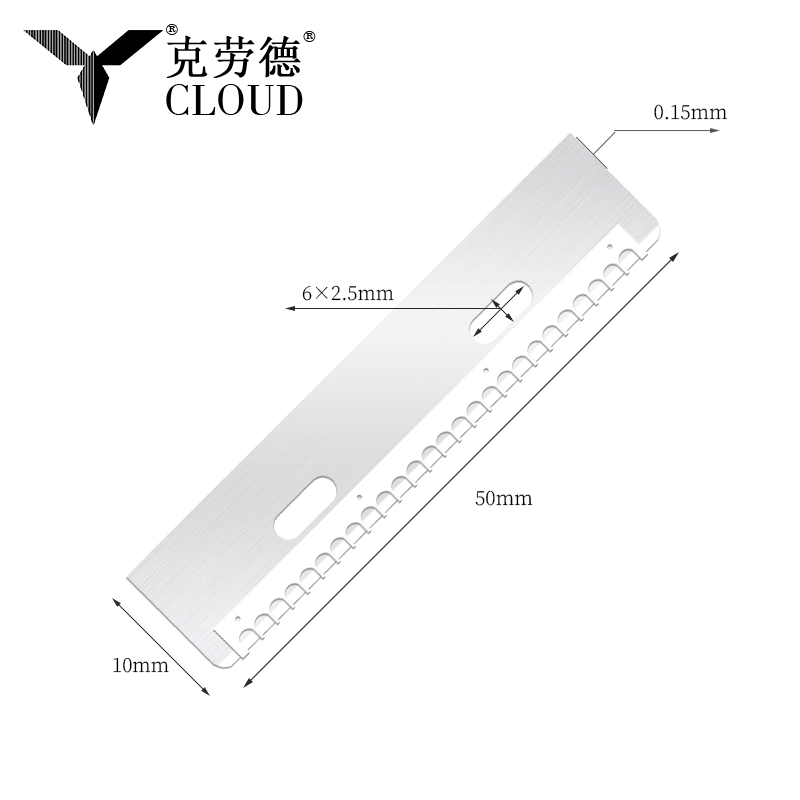
Common customization options for single edge blades include edge angle adjustment, blade length modification, custom coating (such as PTFE or titanium nitride for reduced friction), and custom packaging — including sterile individual wrap for medical applications or bulk dispensing packs for industrial use. For stainless steel single edge hair cutting blades used in professional barbershops, custom blade thickness can make a measurable difference in how the blade interacts with different hair textures.
Surgical shaver medical blades, in particular, benefit from configuration customization when a surgical facility uses proprietary handpiece systems that require non-standard blade geometry. Rather than sourcing an adapter workaround, working directly with a blade manufacturer capable of modifying dimensions and attachment profiles ensures seamless integration and eliminates the liability of using non-validated adapter components in a sterile field.
Before initiating a custom blade program, buyers should clarify the following with their supplier:
- Minimum order quantities for custom specifications
- Lead time for tooling or mold changes versus standard production runs
- Validation and testing documentation available for the custom configuration
- Re-order flexibility and whether the specification will be held on file
A supplier with an integrated manufacturing capability — covering steel sourcing, blade forming, heat treatment, edge grinding, and sterilization in-house — is better positioned to execute and quality-control custom orders than one relying on subcontractors at multiple process stages. For medical supply buyers in particular, a vertically integrated supplier also simplifies the audit trail required for regulatory submissions and facility accreditation reviews.
Related Products
Looking for a Reliable Blade?
Work with a Manufacturer.
Inquiry Us Now

-
 +86-400 9915 887
 -
 +86-021-57644936
 -
 [email protected]
 -
 No. 2066, Yushu Road, Songjiang District, Shanghai, China
QUICK LINKS
 Home
HomePRODUCTS
QR CODE
Copyright © 2025 Shanghai Cloud Blade Manufacturing Co., Ltd. All rights reserved.
 Custom Double Razor Blade Factory
