

 ENG
ENG
 English
 Español
Message Feedback

Industry News
Jul 27,2026
Multi-Purpose Razor For Eyebrow: Precision Grooming Guide
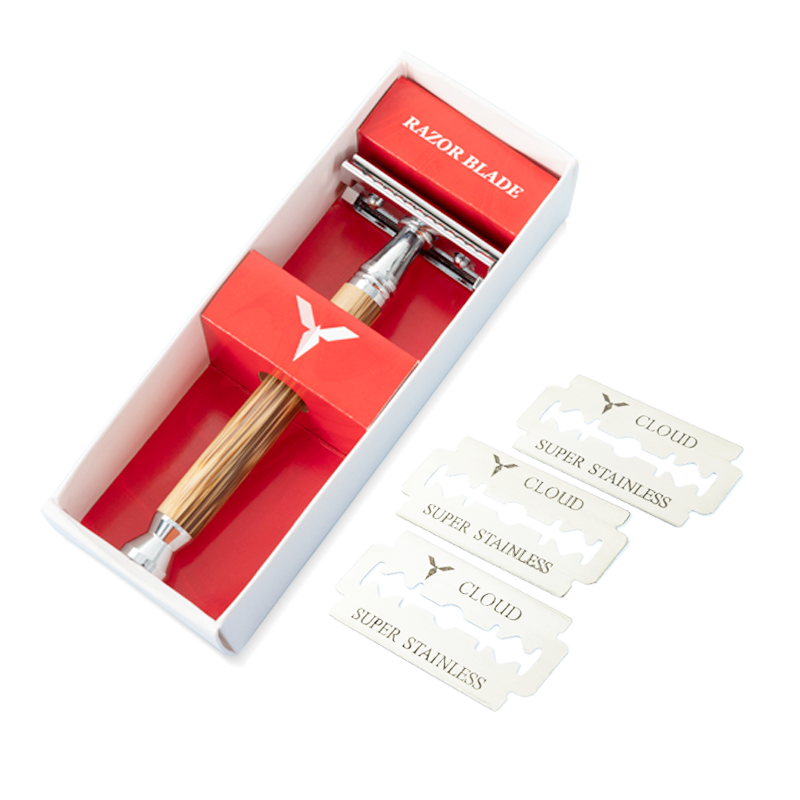
A multi-purpose razor for eyebrow shaping succeeds not by doing one thing perfectly, but by engineering a blade-handle interface that adapts to vastly different pressure angles and stroke lengths. The same tool that executes a precise, millimeter-accurate stroke along the brow arch must also perform broad, sweeping passes across the curve of a calf or the contour of an underarm. The defining characteristic of such a razor is its handle geometry—a design that places the blade at an optimal presentation angle for both detail work and surface clearing. When the handle positions the blade edge at approximately 30 degrees to the skin during a light grip, the user can perform the delicate sculpting required for eyebrow definition. A simple adjustment of the grip, rotating the handle to a 45-degree presentation, shifts the same blade into a configuration suitable for efficiently clearing larger areas of leg or back hair without requiring a separate tool.
The practical value of a precision sharp multi-purpose razor lies in the consolidation of grooming tools. Rather than owning a dedicated eyebrow razor, a separate facial hair trimmer, and a distinct body razor, the user relies on a single handle engineered to accept disposable blades of varying specifications. The handle itself, typically constructed from anodized aluminum or glass-fiber-reinforced nylon, provides the weight and balance needed for controlled fine motor movements at the brow while remaining light enough to maneuver comfortably when reaching across the shoulders to address back hair. This adaptability is not a compromise; it is a deliberate design philosophy that recognizes the common ergonomic demands underlying seemingly disparate grooming tasks.
Content
Handle Ergonomics and the Spectrum of Grip Positions
The handle of a multi-purpose razor is the primary interface through which precision is transmitted from the user's hand to the blade edge. A handle designed for eyebrow work alone would be short and pencil-like, facilitating the fine motor control of the fingertips. A handle intended for leg hair would be longer, with a contoured grip that fills the palm. The multi-purpose design must accommodate both extremes. The most effective handles feature a length of 100 to 130 mm with a flattened or faceted cross-section that provides rotational indexing—the user can feel the blade's orientation without looking at it, a critical safety feature when working near the eyes or reaching behind the back.
The weight distribution within the handle determines fatigue during extended use. A handle that places its center of mass within the first 40% of its length from the blade end provides fingertip control for eyebrow detailing, while a slightly rear-biased balance suits the longer strokes of leg shaving. The table below maps the relationship between grip position, blade angle, and the intended grooming application, illustrating how a single handle adapts across the body.
| Grip Style | Blade-to-Skin Angle | Stroke Length | Primary Application |
|---|---|---|---|
| Fingertip Pencil Grip | 25-30° | 3-10 mm | Eyebrow arch definition, upper lid |
| Pinch Grip with Index Support | 30-35° | 15-30 mm | Facial hair, jawline, upper lip |
| Full-Hand Palm Grip | 40-45° | 50-150 mm | Leg, arm, and underarm hair |
| Extended Reach Grip | 35-40° | 100-200 mm | Back hair, shoulder, rear thigh |
The transition between these grip positions must feel intuitive. A handle with a textured, non-slip surface—whether knurled metal or overmolded thermoplastic elastomer—ensures that the rotational force applied during a fingertip stroke does not cause the handle to roll unpredictably. This is particularly important when the blade is positioned millimeters from the eyebrow, where a loss of control could result in an uneven line or a nick. The same texture that provides this precision grip remains effective when the handle is held in a full palm grip for leg shaving, where moisture from shower water or shaving cream would cause a smooth handle to become dangerously slippery.
Blade Compatibility and the Quick-Change Mechanism
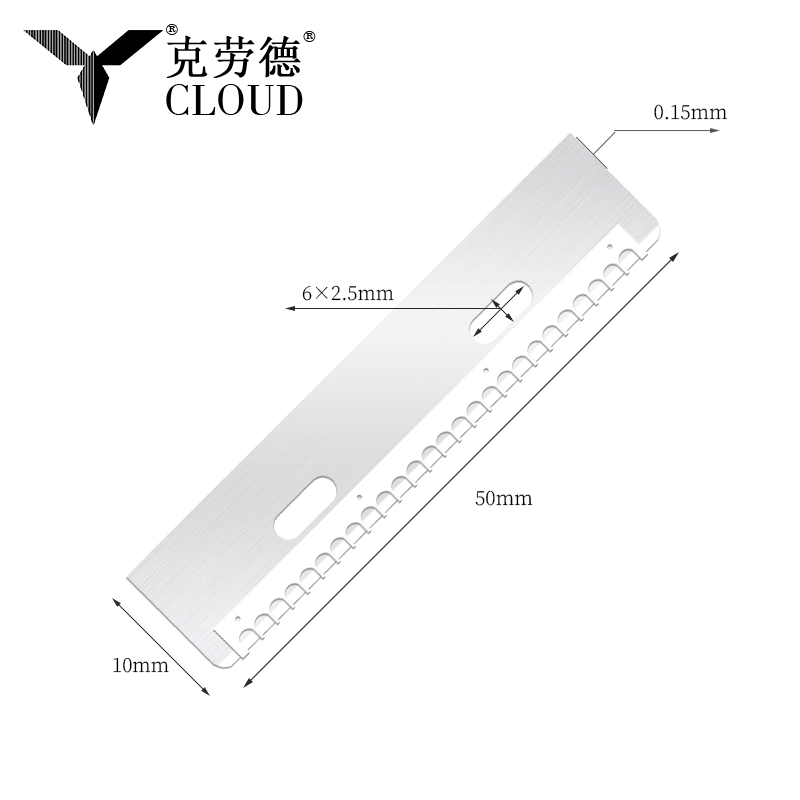
The versatility of a multi-purpose razor is defined by its ability to accept blades of different specifications. A single handle that locks securely onto a narrow 5-8 mm precision blade for eyebrow sculpting must also hold a wider 14-18 mm blade for clearing back hair with equal security. The quick-change mechanism that enables this interchange is the engineering element that separates professional-grade multi-purpose razors from disposable single-use tools. The most reliable systems use a bayonet-style twist lock or a spring-loaded clamp that exerts a consistent clamping force of 15 to 20 Newtons across the blade's mounting surface, preventing the blade from shifting or chattering during use.
Blade chatter—the microscopic vibration that occurs when a blade is not rigidly secured—is the primary cause of uneven cutting and skin irritation. In eyebrow shaping, chatter produces a ragged edge that requires additional strokes to clean up, increasing the risk of over-plucking the brow line. In leg shaving, chatter translates to missed patches of hair that require the user to go over the same area repeatedly. A precision quick-change mechanism eliminates this variable entirely, ensuring that whether the user is performing a single-hair removal at the brow or a broad clearing stroke across the shin, the blade behaves as a rigid extension of the handle rather than a loosely attached accessory.
Application-Specific Techniques with a Single Tool
A multi-purpose razor for eyebrow use demands a fundamentally different technique than the same tool applied to the underarm or leg. The common thread is the principle of skin tensioning: the non-dominant hand stretches the skin taut ahead of the blade stroke, flattening the surface and presenting the hair at a more perpendicular angle to the cutting edge. This universal technique is applied differently across body areas, and the multi-purpose razor's adaptable handle enables each variation without forcing the user into an awkward wrist position.
Eyebrow and Facial Hair Precision Work
When shaping eyebrows, the handle is held in a fingertip pencil grip, and the strokes are short, directional, and always moving against the grain of hair growth. For the upper arch, the stroke direction is downward and outward, following the natural fan of the brow hairs. For the area beneath the arch, the stroke moves upward and outward. The multi-purpose razor's precision sharp edge allows the user to remove individual hairs that fall outside the desired shape without creating a hard, unnatural line—the hallmark of amateur shaping. The same handle, fitted with a mid-size blade, transitions to facial hair removal along the upper lip or chin, where the stroke length increases but the need for controlled, deliberate movement remains.
Leg and Arm Hair Surface Clearing
For leg hair removal, the grip shifts to a full-hand hold, and the stroke length extends to 100-150 mm. The blade angle increases to approximately 40 degrees, which is more aggressive than the eyebrow angle but appropriate for the thicker skin and coarser hair of the lower extremities. The multi-purpose handle's longer body provides the leverage needed to maintain consistent pressure across the entire stroke without requiring the user to bend awkwardly at the waist. Shaving cream or gel is recommended for this application, as the lubrication reduces the friction that would otherwise cause the blade to drag and increases the risk of razor burn on the sensitive skin behind the knee.
Back and Hard-to-Reach Area Strategies
Back hair removal presents a unique challenge: the user cannot see the area being shaved and must rely entirely on tactile feedback and an extended reach grip. The multi-purpose razor handle, when equipped with a wide blade and held at the far end, effectively extends the user's reach by 150-200 mm beyond the natural arm extension. The strokes are broad and overlapping, and the user must periodically check the blade for accumulated hair that can clog the cutting edge and reduce effectiveness. A quick rinse under running water clears the blade, and the quick-change mechanism allows for a fresh blade to be installed mid-session if the original dulls against the typically coarser hair of the back and shoulders.
Hygiene and Blade Maintenance Across Applications
Using a single multi-purpose razor handle across different body areas introduces cross-contamination risks that must be managed through disciplined hygiene protocols. The bacteria present on the skin of the underarm, for example, differ significantly from those on the face, and transferring them to the eyebrow area can trigger folliculitis or breakout. The solution is not to maintain separate handles—which defeats the purpose of a multi-purpose tool—but to change the blade and disinfect the handle between application zones. A quick-change mechanism makes blade swapping a matter of seconds, and the handle itself should be wiped down with 70% isopropyl alcohol between uses on different body areas.
The blade disposal schedule should be segmented by application intensity. A blade used for fine eyebrow work may last 5 to 8 sessions because the hair is soft and the stroke count is low. That same blade, if subsequently used for leg hair, would be dull within 1 to 2 sessions due to the coarser hair and higher stroke count. The practical approach is to designate blades by application zone: a fine detail blade for facial and eyebrow work, and a separate blade for body grooming, both fitting the same multi-purpose handle. The handle's quick-change mechanism enables this separation without adding clutter to the grooming kit, preserving the consolidation benefit that makes the multi-purpose razor a practical choice.
Material Construction and Long-Term Durability
The multi-purpose razor handle must endure repeated exposure to water, shaving products, and the mechanical stress of blade changes without degradation. Handles constructed from 6061 anodized aluminum offer the optimal balance of weight, corrosion resistance, and tactile feel. The anodizing process creates a surface layer 15 to 25 microns thick that prevents the aluminum substrate from oxidizing or pitting in the humid bathroom environment. This surface is also non-reactive with the alcohols and astringents commonly used in post-shave skincare, ensuring that the handle does not discolor or develop a chalky residue over time.
Glass-fiber-reinforced nylon handles, while lighter and less expensive, can develop stress cracks at the blade mounting point after repeated blade changes, particularly if the clamping mechanism relies on a threaded plastic collar. A metal insert molded into the nylon at the blade interface resolves this vulnerability and is a specification worth seeking out. Regardless of material, the handle should be disassembled and allowed to dry completely between uses to prevent the growth of mold or mildew in the blade clamping area—a common issue with multi-piece razor designs that are stored in a closed bathroom cabinet without ventilation. A handle that is properly maintained will outlast hundreds of blade changes, making it a durable platform for a lifetime of adaptable grooming.
Related Products
Looking for a Reliable Blade?
Work with a Manufacturer.
Inquiry Us Now

-
 +86-400 9915 887
 -
 +86-021-57644936
 -
 [email protected]
 -
 No. 2066, Yushu Road, Songjiang District, Shanghai, China
QUICK LINKS
 Home
HomePRODUCTS
QR CODE
Copyright © 2025 Shanghai Cloud Blade Manufacturing Co., Ltd. All rights reserved.
 Custom Double Razor Blade Factory
