

 ENG
ENG
 English
 Español
Message Feedback

Industry News
Jul 07,2026
Customizable Eyebrow Razor Series: Design, Branding & Selection
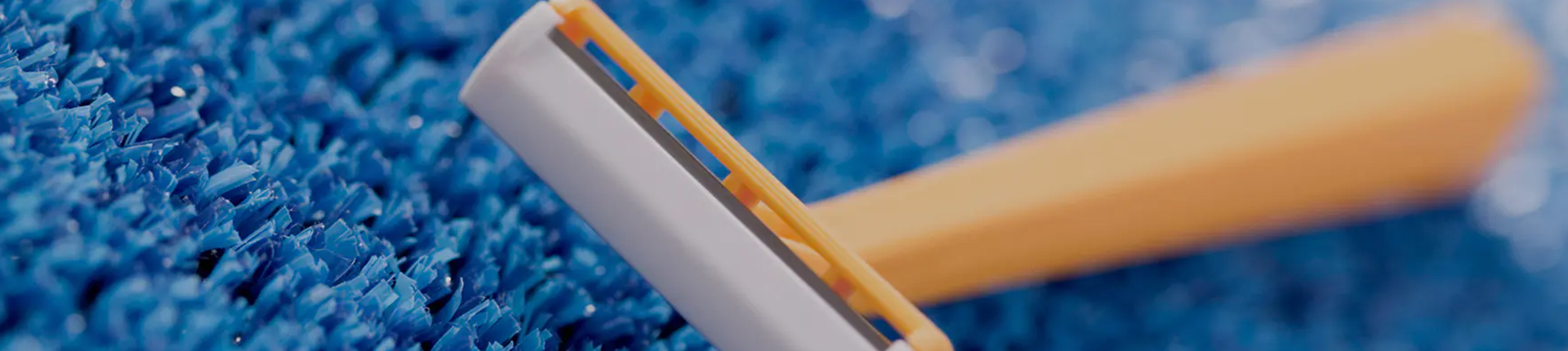
The defining value of a customizable eyebrow razor series lies in the ability to tailor every component—the blade edge geometry, the safety guard design, the handle material and ergonomics, and the visual branding—to match a specific market segment or brand identity. Unlike an off-the-shelf stock razor, a customizable series allows a brand to differentiate on blade quality (stainless steel vs. carbon steel, coated vs. uncoated), handle form factor (straight, angled, folding, ergonomic grip), and aesthetic finish (color, texture, logo placement, packaging). The core technical consideration that determines performance is the micro-serration pattern on the blade edge and the design of the protective guard comb, which together control the balance between efficient hair removal and skin safety on the delicate periorbital area.
Content
- 1 Blade Technology: The Core of a Customizable Series
- 2 Safety Guard and Comb Design for Customization
- 3 Handle Customization: Ergonomics, Materials, and Branding Real Estate
- 4 Blade-to-Handle Interface and Interchangeability
- 5 Custom Branding Techniques: From Logo Placement to Full Private Label
- 6 Packaging as Part of the Customizable Series
- 7 Regulatory Compliance and Safety Labeling
- 8 Supply Chain: Choosing a Manufacturing Partner for Custom Razors
Blade Technology: The Core of a Customizable Series
The blade is the component that ultimately defines the user's experience, and a customizable razor series must offer blade options that address different skin types, hair textures, and user skill levels. The primary blade differentiation factors are the steel grade, the edge processing method, and the presence of a safety coating.
Stainless Steel Blades: The Premium Custom Option
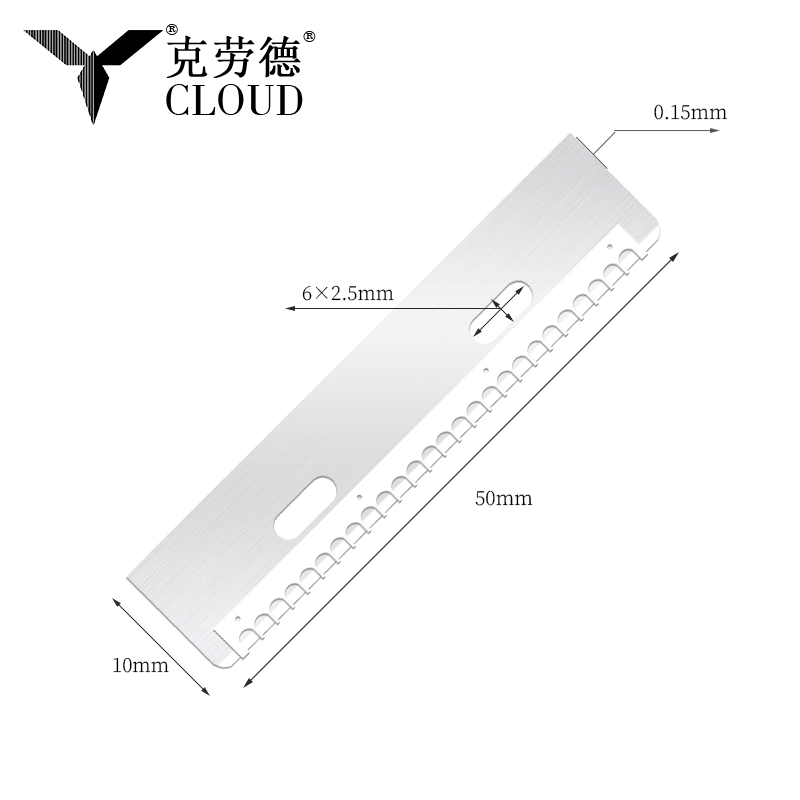
Stainless steel blades, typically manufactured from AISI 420 or 440A martensitic stainless steel, are the standard for premium customizable eyebrow razors. These steels offer a combination of corrosion resistance, edge retention, and biocompatibility that carbon steel cannot match. The steel strip is hardened to 54-58 HRC, ground to a precise edge angle—typically 12 to 15 degrees total included angle for an eyebrow razor—and then processed to create the micro-serration pattern that grips fine brow hairs without pulling. The serration geometry can be customized: a finer pitch (more teeth per inch) produces a smoother feel suitable for sensitive skin and fine vellus hair, while a coarser pitch provides more aggressive cutting action for coarse terminal hairs.
Coating options for the stainless steel blade include PTFE (Teflon) for reduced friction, titanium nitride for a gold-colored hard coating, and ceramic coatings for extended edge life. A PTFE-coated blade reduces the cutting force required by approximately 30% compared to an uncoated blade, which translates to less tugging and a lower risk of skin irritation. The coating color also becomes part of the custom branding: a rose-gold titanium nitride coating or a classic silver PTFE finish each convey a different brand aesthetic.
Carbon Steel Blades: The Value-Oriented Custom Path
Carbon steel blades offer a sharper initial edge at a lower material cost but require a protective coating or oil film to prevent rust. For a customizable series targeting the value segment or single-use disposable applications, carbon steel with a tin or zinc electroplated coating provides a cost-effective platform. The trade-off—which the brand must communicate clearly through packaging and instructions—is that the blade will degrade more quickly if exposed to moisture between uses. A carbon steel eyebrow razor is best positioned as a single-use or travel-use product, where its superior initial sharpness provides an excellent first-use experience and the corrosion concern is addressed by the disposable format.
Safety Guard and Comb Design for Customization
The safety guard is the physical interface between the blade and the skin, and its design is the primary determinant of the razor's aggressiveness and safety profile. A customizable eyebrow razor series should offer multiple guard configurations that can be matched to different user profiles and application niches.
| Guard Type | Blade Exposure | Best For | Customization Implication |
|---|---|---|---|
| Fine-tooth plastic comb (20-25 teeth/inch) | Minimal, 0.2-0.3 mm | Beginners, sensitive skin, fine hair | Can be molded in brand colors, co-branded texture |
| Serrated metal guard with rounded tips | Moderate, 0.3-0.5 mm | Professional use, coarse hair, precision shaping | Stainless steel can be etched with logo, different finish |
| Floating blade with spring-loaded guard | Self-adjusting, variable | Contoured areas, face shaving for peach fuzz | Premium positioning, patentable mechanism |
| Open blade with minimal guard (shaping razor) | High, 0.5-0.8 mm | Professional estheticians, clean defined lines | Pro-only branding, distinctive open design |
The guard material itself becomes a customization opportunity. A plastic comb guard can be injection-molded in any Pantone-matched color to align with a brand's visual identity. The tooth profile—the spacing, the tip radius, the height above the blade plane—can be modified within the injection mold to create a proprietary guard geometry that differentiates the brand. A metal guard can be stamped from stainless steel and given a brushed, polished, or electroplated finish in gold, rose gold, or black oxide to create a premium aesthetic.
Handle Customization: Ergonomics, Materials, and Branding Real Estate
The handle is the largest visible surface of the eyebrow razor and the primary canvas for brand expression. A customizable series should offer handle options that span the spectrum from disposable economy to reusable premium, each with its own manufacturing process and customization possibilities.
Injection-Molded Plastic Handles
The most common and cost-effective platform for a customizable eyebrow razor series. Handles are typically molded from ABS (acrylonitrile butadiene styrene) or PP (polypropylene), chosen for their balance of rigidity, chemical resistance, and low cost. ABS provides a harder, glossier surface finish suitable for premium branding; PP offers a softer, more tactile grip with a natural matte texture. The customization options for a molded handle include: the handle shape and ergonomic contours designed to the brand's specification, the color matched to any Pantone reference, a soft-touch overmold in TPE (thermoplastic elastomer) for grip zones, a textured pattern etched into the mold cavity, and a recessed logo area for pad printing, hot stamping, or an in-mold label.
The minimum order quantity (MOQ) for a custom injection mold is the primary economic barrier. A single-cavity prototype mold may cost $3,000 to $8,000, while a production multi-cavity mold can range from $15,000 to $50,000. This cost is amortized over the production volume, making custom handles viable for brands projecting 50,000 to 100,000 units per year or more. For lower volumes, a semi-custom approach—selecting an existing handle mold and customizing the color, pad-printed logo, and packaging—provides brand differentiation without the tooling investment.
Metal and Wood Handles for the Premium Tier
For the top tier of a customizable series, handles manufactured from aluminum alloy, brass, or sustainably sourced wood position the razor as a luxury beauty tool rather than a disposable commodity. An aluminum handle can be CNC-machined, anodized in a range of colors, and laser-engraved with a brand logo or decorative pattern. A wood handle—typically beech, birch, or bamboo—can be turned on a lathe, sealed with a water-resistant lacquer, and laser-branded. These premium handles are designed for blade replacement rather than full-razor disposal, creating a recurring revenue stream from replacement blade cartridges while the reusable handle builds long-term brand presence on the user's vanity.
Blade-to-Handle Interface and Interchangeability
A customizable razor series must define the mechanical interface between the blade assembly and the handle. This interface determines whether the razor is a sealed disposable unit or a system with replaceable blades, and it affects manufacturing complexity, cost, and the user's perception of value. The primary interface options are:
- Fixed-blade disposable: The blade and guard are permanently attached to the handle during manufacturing, typically by ultrasonic welding or mechanical staking of the plastic head around the blade. The entire unit is discarded after the blade dulls. This is the simplest manufacturing model and the lowest per-unit cost but generates the most plastic waste. Customization is limited to the handle color, shape, and decoration.
- Replaceable head system: The blade and guard assembly is a separate cartridge that snaps onto or slides into the handle. The user retains the handle and replaces only the head. This model supports a premium handle strategy—the handle is a branded asset that the user keeps, and the replacement heads are the consumable revenue stream. The snap-fit geometry must be precisely toleranced to provide secure retention without excessive insertion force, and the latch mechanism must survive at least 50 insertion and removal cycles without loosening.
- Universal compatibility (standard double-edge or injector format): The handle is designed to accept industry-standard blades rather than proprietary cartridges. This approach is common in professional esthetician razors that use a standard single-edge or split double-edge blade. Customization is concentrated on the handle and the blade loading mechanism, and the brand does not need to manufacture blades. The trade-off is that the brand does not capture the blade replacement revenue.
Custom Branding Techniques: From Logo Placement to Full Private Label
The depth of customization available for an eyebrow razor series ranges from simple logo application on a stock product to a fully bespoke design manufactured exclusively for one brand. The table below maps the customization levels to the required investment and the resulting brand differentiation.
| Customization Level | What Can Be Customized | Typical MOQ | Time to Market |
|---|---|---|---|
| Stock product with logo | Pad-printed or laser-engraved logo on existing handle | 500-1,000 units | 2-4 weeks |
| Custom color and packaging | Pantone-matched handle, custom-printed retail box or blister card | 2,000-5,000 units | 4-8 weeks |
| Modified stock tooling | Custom overmold texture, modified guard comb, blade type selection | 10,000-20,000 units | 8-12 weeks |
| Full custom tooling | Entirely new handle design, proprietary blade interface, unique packaging | 50,000-100,000 units | 16-24 weeks |
The pad printing process for logo application uses a silicone pad to transfer ink from an etched printing plate to the curved handle surface. This is the most economical branding method for small volumes. Laser engraving produces a permanent, wear-resistant mark by ablating the handle surface to reveal the underlying material color or by creating a contrasting oxidation layer on metal handles. For premium branding, a metal badge or an electroformed nameplate can be mechanically attached to the handle, creating a tactile, three-dimensional brand mark that conveys luxury positioning.
Packaging as Part of the Customizable Series
The packaging completes the customizable razor series by communicating the brand's value proposition at the point of sale. For a retail-facing product, the packaging must protect the blade from damage, prevent accidental contact with the blade edge during handling, and convey the product's key features and the brand's visual identity. Customizable packaging options include:
- Blister card with printed backing card: The most common retail format. The razor is sealed in a clear PET blister that allows the customer to see the product. The backing card is full-color printed and can incorporate the brand logo, product information, usage instructions, and regulatory compliance markings. MOQ for custom-printed cards is typically 1,000 to 3,000 units.
- Individual sleeve box: A premium packaging option where each razor is housed in a printed cardboard sleeve or a rigid set-up box. This format elevates the perceived value and is suitable for reusable handle systems or gift sets. The box can include a magnetic closure, a foam insert, and a debossed or foil-stamped logo.
- Multi-pack display carton: For a series sold as a set—for example, a pack containing three razors with different guard types for brow shaping, face shaving, and detail work—a printed carton with internal dividers organizes the products and presents them as a coordinated system.
- Sustainable packaging option: Kraft paper boxes, molded pulp trays, and soy-based inks address the growing consumer demand for environmentally responsible packaging. The reduction of plastic in the packaging can itself be a brand differentiator that is communicated on the packaging.
Regulatory Compliance and Safety Labeling
A customizable eyebrow razor series sold in regulated markets must comply with specific labeling and safety requirements. The blade is a sharp instrument, and the packaging must include appropriate warnings. In the European Union, eyebrow razors fall under the General Product Safety Directive (GPSD) and must carry warnings regarding the sharp blade, keep-out-of-reach-of-children advisories, and safe disposal instructions. In the United States, the FDA classifies facial razors as cosmetic devices and requires compliance with 21 CFR Part 700 for labeling, including the identity of the product, the net quantity of contents, and the name and place of business of the manufacturer or distributor.
For brands developing a customizable series, the regulatory compliance burden falls on the manufacturer or the private-label partner. The contract manufacturer should provide a certificate of compliance confirming that the blade material is compliant with EU REACH regulations for chemical substances and that the plastic handle materials are free of restricted phthalates and heavy metals. The packaging artwork should be reviewed by a regulatory consultant familiar with the target market's labeling requirements before it is finalized for production.
Supply Chain: Choosing a Manufacturing Partner for Custom Razors
The majority of the world's eyebrow razors are manufactured in China, South Korea, and Japan, with each country occupying a distinct position in the quality-cost spectrum. Chinese manufacturers dominate the volume market and offer the widest range of customization options at competitive prices. South Korean manufacturers are known for innovative ergonomic designs and high-quality plastic molding, reflecting the country's strong beauty and skincare industry. Japanese manufacturers produce the highest-quality blades, with edge grinding and coating processes that are difficult to replicate elsewhere, but they typically have higher MOQs and longer lead times.
When evaluating a manufacturing partner for a customizable series, the key due diligence points include: requesting production samples from a recent run for a comparable customer, verifying the blade grinding and coating equipment on the factory floor (a factory tour or a third-party audit report is essential), confirming the in-house tooling and mold-making capability, reviewing the factory's social compliance and environmental certifications, and establishing a clear quality specification that includes the acceptable defect rate (typically less than 1.0% for AQL 2.5 sampling) and the specific criteria for rejection: blade dullness, coating defects, handle molding flash, and packaging damage.
Related Products
Looking for a Reliable Blade?
Work with a Manufacturer.
Inquiry Us Now

-
 +86-400 9915 887
 -
 +86-021-57644936
 -
 [email protected]
 -
 No. 2066, Yushu Road, Songjiang District, Shanghai, China
QUICK LINKS
 Home
HomePRODUCTS
QR CODE
Copyright © 2025 Shanghai Cloud Blade Manufacturing Co., Ltd. All rights reserved.
 Custom Double Razor Blade Factory
